Pinch For Bushiness
Pinch out soft shoot tips once or twice in spring to encourage branching and a denser canopy with more flowering sites.

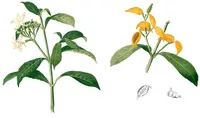
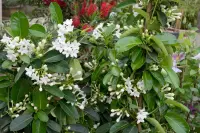
Banana bush, Tabernaemontana pandacaqui, is a small evergreen shrub from tropical Asia and the Pacific, grown mainly for its glossy foliage and fragrant white flowers. It usually forms a dense, rounded shape with leathery leaves and small banana-shaped seed pods that give the plant its common name.
In warm climates it is used in hedges or as a specimen shrub, while in cooler regions it is often grown in containers and protected from frost. It is considered moderately easy to grow if its need for bright light, warmth, and evenly moist but well-drained soil is respected.
Understanding how to care for Banana Bush starts with providing a stable, warm environment and avoiding long periods of cold or drought stress.

Care Difficulty
Moderate Care

Light Preference
Partial Sun

Water Requirements
Regular Water

Temperature Preference
Tropical / Frost Sensitive

Hardiness Zone
10–11

Soil Texture
Loamy, Sandy, Organic-rich

Soil pH
Acidic (5.5–6.5), Slightly acidic (6.5–7.0)

Soil Drainage
Moist but well-drained

Fertilization
Light (every 4–6 weeks)
Scan your plant to receive care tips personalized for your specific plant
Available on iOS and Android
This shrub prefers bright, gentle light that mimics dappled tropical sun.
This plant prefers evenly moist, well-drained soil without prolonged dryness or soggy conditions.
This tropical shrub thrives in consistently warm, frost-free conditions.
This species benefits from moderately high humidity for best growth.
This shrub prefers a moist, aerated, well‑draining mix that resists compaction.
This shrub adapts well to container growing when the pot supports its root system and top growth.
Tabernaemontana pandacaqui responds well to modest feeding during its active growing season.
Pruning Tabernaemontana pandacaqui helps maintain a compact, branching shrub with good flowering.
Container-grown Tabernaemontana pandacaqui benefits from occasional repotting or careful transplanting to support steady growth.
New plants of Tabernaemontana pandacaqui are most often produced from semi-ripe cuttings under warm, humid conditions.
Tabernaemontana pandacaqui is frost-tender and requires protective winter care in climates with cool or freezing conditions.

Plant Health Check
Not sure what's wrong with your plant? Check your plant's health inside the app.
When a leaf or stem is damaged, the plant exudes a white, sticky latex similar to many other Apocynaceae species, which helps deter herbivores due to its bitter and irritating compounds.
The species produces narrow, curved follicles that often develop in pairs, resembling small boats; when mature, they split open to reveal bright orange to red inner tissue contrasting with dark seeds.
This shrub naturally occurs on seashores, lowland forests, and islands across parts of Southeast Asia and the western Pacific, showing good tolerance to salt-laden winds and sandy, nutrient-poor soils.

In several Pacific island habitats, birds are attracted to the brightly colored interior of the ripe follicles and help disperse the seeds, allowing the shrub to colonize coastal edges and disturbed sites efficiently.
Poor flowering often results from insufficient light, heavy pruning at the wrong time, or low nutrients. Ensure bright conditions, avoid cutting new shoots before flowering, and provide balanced fertilizer with moderate phosphorus to support bud formation.
Keep your plants happy and healthy with plant identification, disease detection, and easy care guidance.