White bat flower Care (Tacca integrifolia)

White bat flower

About White bat flower

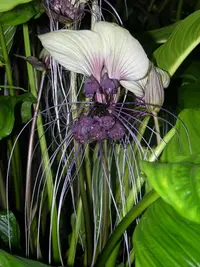
White bat flower, Tacca integrifolia, is a tropical understory plant known for its unusual, bat-shaped blooms with long whisker-like bracts. It is grown mainly as a collector’s ornamental rather than a casual houseplant. In nature it occurs in warm, humid forests of Southeast Asia, where it grows in dappled shade under taller vegetation. The plant forms clumps of broad, pleated leaves that emerge from a rhizome, creating a lush, architectural look. It can be demanding, as it reacts poorly to dry air, inconsistent moisture, and low light. Those who learn how to care for White bat flower usually succeed by mimicking stable, warm, shaded jungle conditions with evenly moist, well-drained soil.

Main Plant Requirements

Care Difficulty

Hard Care

Light Preference

Bright Indirect Light

Water Requirements

Keep Soil Moist

Temperature Preference

Tropical / Frost Sensitive

Hardiness Zone

11–12

Soil Texture

Loamy, Peaty, Organic-rich

Soil pH

Acidic (5.5–6.5), Slightly acidic (6.5–7.0)

Soil Drainage

Moist but well-drained

Fertilization

Moderate (every 2–4 weeks)

Get Personalized Care Plan

Scan your plant to receive care tips personalized for your specific plant

Available on iOS and Android

How to Care for the White bat flower

Tacca integrifolia prefers bright, filtered light that mimics a sheltered tropical forest floor.

  • Provide 6–8 hours of bright, indirect light daily; morning sun through an east window or dappled garden shade suits White bat flower well.
  • Avoid harsh midday and afternoon sun, which can scorch leaves and fade bracts; use sheer curtains or overhead canopy outdoors.
  • In winter, shift the plant to a slightly brighter position, but still out of direct sun, to compensate for shorter days and weaker light.

Watering for Tacca integrifolia aims to keep the root zone evenly moist without waterlogging.

  • Check soil often and water when the top 2–3 cm feels dry; soil below should stay slightly damp, never soggy or bone dry.
  • Use loose, well-drained, organic-rich soil; excess water must drain freely to prevent root rot, yellowing leaves, and a sour smell in the mix.
  • In cooler months reduce frequency so the surface dries a bit deeper; drooping, crisp edges suggest underwatering, while limp, yellowing foliage indicates overwatering.

This species thrives in consistently warm, humid conditions with minimal temperature swings.

  • Target 70–85°F (21–29°C) for active growth; avoid exposure below 60°F (16°C) to prevent slowed growth and stress.
  • Protect from frost at all times, as brief drops near 40°F (4°C) can cause leaf damage or tuber loss in the ground.
  • In hot spells above 90°F (32°C), increase shade and airflow, and avoid placing the plant near hot walls or reflective surfaces that amplify heat.

This species needs high, stable humidity to maintain healthy foliage and flower bracts.

  • Aim for 60–80% humidity; use a room hygrometer to monitor levels near the plant.
  • Tacca integrifolia tolerates brief dips to 50%, but prolonged dry air causes leaf tip browning and curling.
  • Increase humidity with a nearby humidifier, grouped plants, and a wide pebble tray, avoiding direct misting on flowers.

This plant prefers loose, organic-rich soil that holds moisture yet drains freely.

  • Use a mix of 50% peat or coco coir, 25% fine bark, and 25% perlite to mimic a light, humusy forest floor.
  • Aim for slightly acidic soil, around pH 5.5–6.5, which supports nutrient uptake and healthy root growth in Tacca integrifolia.
  • Ensure the mix feels springy and airy; large bark and perlite pieces create macropores that prevent suffocating, waterlogged roots.
  • Avoid heavy clay, unamended garden soil, or pure compost, which compact easily and keep roots saturated for too long.

This species is well suited to container growing when moisture and root space are carefully managed.

  • Choose a deep, relatively narrow pot so the fleshy rhizomes sit slightly below the rim yet have vertical room to expand.
  • Select a heavier pot material such as ceramic to stabilize tall flowering stems that can make the plant top-heavy.
  • Raise the container on feet or pot risers so drainage holes release water quickly and the mix does not stay saturated at the base.

This species benefits from light, consistent nutrition during active growth but is sensitive to overfeeding.

  • Use a balanced liquid fertilizer (around 10-10-10 or 20-20-20) at 1/4–1/2 strength for White bat flower in spring and summer.
  • Apply every 4–6 weeks when growth is active, skipping feedings if soil stays cold or very wet.
  • Stop or reduce feeding to once in 8–10 weeks during fall and winter dormancy.
  • Avoid fresh manure; use compost or a slow-release organic product only in very small amounts mixed into the topsoil.

Tacca integrifolia needs only light, hygienic pruning to stay healthy and presentable.

  • Best time is late winter to early spring, before strong new growth starts.
  • Remove yellowing, dead, or damaged leaves at the base with clean, sharp scissors or pruning snips.
  • Thin out only badly crowded leaves to improve air flow while keeping the plant’s natural shape.
  • Inspect during pruning for pests or rot so problems are caught early.

Container-grown plants appreciate careful, infrequent repotting to avoid disturbing their fleshy roots and rhizomes.

  • Repot every 2–3 years in spring when roots circle the pot, emerge from drainage holes, or growth slows despite good care.
  • Move up just 1 pot size, using a deep container with free-draining, rich, slightly acidic mix containing bark or perlite.
  • Water thoroughly after repotting, then keep soil just lightly moist for 1–2 weeks to limit root stress.
  • Keep the plant shaded, warm (70–80°F), and out of drafts for several weeks so roots can re-establish.

This plant is usually propagated by division or seeds, but success requires stable warmth and moisture.

  • Divide mature clumps in late spring, ensuring each division has at least 1–2 healthy growth points and roots.
  • Plant divisions in a loose, humus-rich mix, keep at 75–80°F, and maintain high humidity with bright, indirect light.
  • For seeds, sow fresh on the surface of moist, sterile mix and keep consistently warm (75–85°F).
  • Cover trays with a clear dome or plastic to maintain humidity, ventilating regularly to limit fungal problems.

This tropical species is frost-tender and requires warm, protected conditions through winter in most climates.

  • In USDA zones below 10, grow in containers and move indoors before temperatures drop below 55°F.
  • Indoors, place in bright, indirect light with temperatures around 65–75°F and away from cold drafts.
  • Reduce watering in winter, keeping the mix barely moist while the plant grows more slowly.

Care Tips

Shading flower bracts

Provide a sheer shade cloth or position taller plants nearby so the long whiskers and bracts are protected from direct drafts and harsh light, which reduces tearing and desiccation during blooming.

Deep pot selection

Use a tall, slightly narrow pot with generous drainage holes so the thick, tuberous rhizomes can extend downward without crowding, and rotate the pot a quarter turn monthly for even structural growth.

Gentle air movement

Place a low-speed fan several feet away to create mild air circulation, which helps prevent fungal spots on leaves and flowers without causing the delicate bracts to dry out or whip around.

Quarantine after purchase

Keep new plants isolated from other houseplants for 2–3 weeks and inspect leaf undersides and petiole bases with a hand lens to detect early spider mites or scale that can be hard to see on this species.

Cool rest adjustment

In late autumn provide a slightly cooler, stable location and reduce disturbance of the root zone, which supports the plant’s natural semi-rest phase and improves flowering performance the following season when growing White bat flower.

Common Pests and Diseases

Spider mites

This pest thrives in warm, dry indoor air and feeds on the undersides of leaves, causing fine stippling, dull foliage, and delicate webbing. Symptoms include slowed growth and leaves that look dusty or speckled.

Solution

Rinse foliage thoroughly with a strong, lukewarm water spray, including leaf undersides, then increase humidity around the plant and improve air movement. For persistent infestations, apply insecticidal soap or a neem oil solution weekly until new growth appears clean, taking care to avoid spraying in direct sun or on heat-stressed leaves.

Mealybugs

These insects hide in leaf axils and along stems as white, cottony clusters and feed on plant sap, leading to yellowing leaves, sticky honeydew, and potential sooty mold growth. This pest often appears when plants are stressed by low light or irregular watering.

Solution

Remove visible insects with a cotton swab dipped in isopropyl alcohol and rinse the plant gently to clear honeydew. Follow with repeated applications of insecticidal soap or neem oil every 7–10 days, and isolate the plant from others until no new mealybugs appear.

Fungal leaf spot

This disease produces brown or black water-soaked spots on leaves, often with yellow halos, that can merge into larger dead patches in humid, stagnant air. Symptoms include premature leaf yellowing and drop, especially on older foliage.

Solution

Remove and discard affected leaves, then improve airflow and avoid wetting the foliage when watering. If new spots continue to appear, use a copper- or sulfur-based fungicide labeled for ornamental foliage plants and space plants so leaves dry quickly after any moisture exposure.

Rhizome rot

This disease affects the thick underground rhizomes in overly wet, poorly drained media, leading to soft, foul-smelling tissue, wilting, and collapse of foliage despite moist soil. Symptoms include yellowing and drooping leaves that do not recover after watering.

Solution

Unpot the plant, cut away all soft or darkened rhizome tissue with a sterile tool, and discard all old soil. Repot only firm, healthy sections into a very well-draining mix, water lightly, and adjust routine to keep the medium evenly moist but never waterlogged, which is essential for long-term Tacca integrifolia care.

Scale insects

These insects appear as small, dome-shaped brown or tan bumps on stems and leaf midribs and remain fixed while sucking sap, causing yellowing, leaf drop, and sticky honeydew. This pest can weaken plants over time, especially in low-light indoor conditions.

Solution

Gently scrape or wipe off individual scales with a soft cloth or cotton swab dipped in isopropyl alcohol, then rinse the plant. Follow up with 2–3 rounds of horticultural oil or neem oil at label rates, focusing on stems and leaf veins, and monitor new growth closely for several weeks.

Interesting Facts

Unusual bract “whiskers”

This species produces long, threadlike bracts that can exceed 30 cm and hang below the flower cluster, likely helping to guide pollinators toward the small, less conspicuous flowers.

Bristly bat-shaped bracts

The large purple to black bracts are bat-shaped and overshadow the true flowers, functioning as visual attractors for pollinators that are active in the shaded forest understory.

Forest floor specialist

In its native Southeast Asian habitat, this plant grows on the humid forest floor in deep to partial shade, adapted to filtered light and consistently warm, moist conditions beneath taller vegetation.

Botan icon

Did you know?

The species belongs to the yam family, Dioscoreaceae, which is dominated by climbing and vining plants, making its non-climbing, bat-flowered growth form an unusual evolutionary offshoot within the family.

FAQs about White bat flower

Lack of flowering usually comes from low light, temperature stress, or irregular moisture. Ensure bright, indirect light, evenly moist but not soggy soil, and warm, stable conditions. Crowded roots or recent repotting can also delay blooms.

Grow Healthy Plants with Botan Care

Keep your plants happy and healthy with plant identification, disease detection, and easy care guidance.

Botan plant care app — identify plants on mobile

Explore More Plants