Rhizome Division Timing
Lift and divide clumps every 3–4 years in early spring, replanting only the youngest, firm rhizome sections to maintain dense, floriferous growth and prevent congestion-related decline.

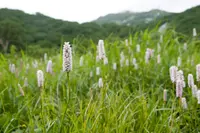
Meadow bistort (Bistorta plumosa) is a hardy herbaceous perennial known for its upright clumps of slender stems and soft, bottlebrush-like flower spikes. It typically forms a neat, low mound of foliage with taller blooms rising above.
This species is native to cool, moist meadows and mountain regions in parts of Asia, where it grows in open, sunny to lightly shaded sites. It suits gardeners who prefer resilient, low-maintenance perennials and want to care for Meadow Bistort in mixed borders or naturalistic plantings.
The plant generally prefers consistently moist, well-drained soil and benefits from cooler summer conditions. Its robust nature and stable clumping habit make it suitable for beginner and intermediate gardeners who like long-lasting structure and gentle color in the garden.

Care Difficulty
Moderate Care

Light Preference
Partial Shade

Water Requirements
Keep Soil Moist

Temperature Preference
Cold Hardy

Hardiness Zone
4–7

Soil Texture
Loamy, Silty, Organic-rich

Soil pH
Acidic (5.5–6.5), Slightly acidic (6.5–7.0)

Soil Drainage
Moist but well-drained

Fertilization
Minimal (feed rarely)
Scan your plant to receive care tips personalized for your specific plant
Available on iOS and Android
This hardy perennial prefers consistent light that mimics open meadows with some protection from intense afternoon sun.
This moisture-loving perennial prefers evenly damp soil but does poorly in waterlogged conditions.
This cool-temperate perennial thrives in mild summers and tolerates substantial winter cold in the ground.
This species handles typical outdoor humidity well but benefits from slightly moist air in hot, dry regions.
This perennial prefers consistently moist, fertile, well-structured soil that never stays waterlogged.
This species can be grown in containers outdoors if moisture and stability are carefully managed.
This species grows acceptably in average soil, but light feeding supports stronger flowering and foliage in Meadow Bistort.
Pruning supports tidy growth and sustained flowering in Bistorta plumosa without complex techniques.
This perennial is more often grown in borders than in pots, so care focuses on transplanting established clumps.
Bistorta plumosa is usually propagated by division, which keeps cultivar traits and shortens establishment time.
This hardy perennial tolerates typical temperate winters and usually needs minimal intervention outdoors.

Plant Health Check
Not sure what's wrong with your plant? Check your plant's health inside the app.
This species is native to high-elevation tundra and rocky slopes in northeastern Asia, where it grows in cold, wind-exposed habitats with short growing seasons.
It forms low, cushion-like tufts of finely divided leaves, an adaptation that reduces heat loss and protects tissues from alpine winds and frost.
Flowering typically occurs during the brief arctic or subarctic summer, with compact spikes of pinkish flowers that complete their life cycle quickly before temperatures drop again.
This species spreads slowly by short rhizomes and self-seeding, but is not usually aggressive in managed gardens. Clumps gradually enlarge over several years and can be controlled easily by lifting and dividing unwanted sections.
Keep your plants happy and healthy with plant identification, disease detection, and easy care guidance.