pygmy sundew Care (Drosera pygmaea)

pygmy sundew

About pygmy sundew

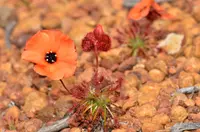
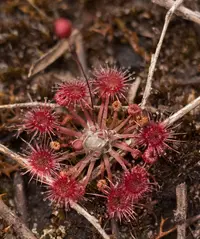
Drosera pygmaea, commonly called pygmy sundew, is a tiny carnivorous plant that forms tight rosettes close to the soil. Its leaves are covered with glistening sticky glands that trap small insects for nutrients.

This species is native to Australia and New Zealand, where it grows in open, nutrient-poor, often seasonally wet habitats. It stays very small, which makes it suitable for container growing and terrariums, but also means it can dry out quickly.

Pygmy sundews prefer bright light, consistently moist conditions, and very low-mineral, sandy soils. Understanding how to care for pygmy sundew mainly involves balancing high humidity and moisture with good air movement so the tiny rosettes stay healthy.

Main Plant Requirements

Care Difficulty

Moderate Care

Light Preference

Full Sun

Water Requirements

Keep Soil Moist

Temperature Preference

Cool Climate

Hardiness Zone

8–10

Soil Texture

Sandy, Peaty, Organic-rich

Soil pH

Strongly acidic (4.5–5.5)

Soil Drainage

Waterlogged tolerant

Fertilization

Minimal (feed rarely)

Get Personalized Care Plan

Scan your plant to receive care tips personalized for your specific plant

Available on iOS and Android

How to Care for the pygmy sundew

This species needs bright light to maintain compact growth and strong coloration.

  • Provide 4–6 hours of direct morning sun plus bright filtered light for the rest of the day for pygmy sundew rosettes to color well and set healthy traps.
  • Tolerates light partial shade, especially in hot climates, but under less than 3–4 hours of direct sun plants elongate, lose red pigment, and trap production declines.
  • Protect from intense midafternoon summer sun, which can scorch leaves and dry the fine roots; use light shade cloth or positioning near taller plants in peak heat.

This carnivorous plant prefers constantly moist, low-mineral conditions rather than a wet–dry cycle.

  • Use rainwater, distilled, or reverse-osmosis water; avoid tap water with minerals, which can burn Drosera pygmaea roots and reduce growth over time.
  • Keep the substrate moist to just damp at the surface; if the top 0.5–1 cm is drying and dew drops shrink, add water to re-moisten without flooding the crown.
  • In warmer months allow trays or soil basins to stay shallowly filled, but in cooler seasons let excess drain; signs of overwatering include algae, sour smell, and pale, mushy leaves.

This species prefers mild conditions and does best without large sudden temperature swings.

  • Aim for 60–80°F (16–27°C) for active growth; stable, moderate temperatures support good dew production and frequent leaf renewal.
  • Short exposures down to about 35–40°F (2–4°C) may be tolerated if the soil is not waterlogged, but repeated frosts or freezing of the root zone can cause loss of plants.
  • In hot spells above 90°F (32°C), provide light shade and good air movement; prolonged heat with intense sun can dry the small root system and reduce trapping efficiency.

This species prefers moderately humid air but is more tolerant than many carnivorous plants.

  • Aim for 40–60% humidity to keep leaves dewy and traps active.
  • Short periods of drier air are tolerated, but persistent low humidity reduces dew and can cause leaf tip browning.
  • Increase humidity by grouping pots on a water-filled pebble tray, avoiding direct misting on pygmy sundew to prevent mineral spotting.

This tiny carnivorous species needs a low-nutrient, open, water-retentive medium.

  • Use a mix such as 1:1 milled sphagnum peat and coarse silica sand for a fine, airy, acidic substrate.
  • Ensure the soil drains freely but stays consistently moist; water should pass through rather than pool around roots for long periods.
  • Keep pH slightly acidic, roughly 4.5–5.5, since added lime or alkaline materials can damage roots and weaken growth.
  • Avoid compost, fertilizer, bark, standard potting mix, or perlite containing added nutrients, which can burn sensitive roots.

This species is well suited to container culture due to its small size and shallow roots.

  • Select a wide, shallow pot to create a stable, cool root zone and room for colony expansion via plantlets.
  • Use inert plastic or glazed ceramic to maintain even moisture and prevent mineral leaching from porous materials.
  • Keep the pot sitting in a shallow water tray so the lower soil stays wet while the surface remains slightly airy.

This tiny carnivorous species gains most nutrients from prey, so pygmy sundew indoor care relies on very light, infrequent fertilization.

  • Use a highly diluted orchid or carnivorous-plant fertilizer (about 1⁄4 strength) applied only to the soil or tray water, never on leaves.
  • Feed during active growth in spring–summer every 4–6 weeks at most.
  • Skip fertilizer during winter dormancy or when growth slows noticeably.
  • Avoid composts or slow-release pellets, which can burn roots and disrupt low-nutrient conditions.

Drosera pygmaea needs only minimal pruning focused on hygiene rather than shaping.

  • Best timing is during active growth in spring or early summer, when recovery is fastest.
  • Remove dead or blackened leaves and spent flower stalks with fine scissors or tweezers to limit mold.
  • Thin out obviously decayed or crowded rosettes only if they trap moisture and cause rot.
  • Light grooming improves light penetration to healthy leaves but does not significantly change plant shape.

This species prefers stable, undisturbed conditions, so repotting Drosera pygmaea is infrequent and done only when necessary.

  • Repot every 2–3 years or when growth slows, roots circle the pot, or the peat-sand mix becomes compacted.
  • Best season is late winter to early spring, just before strong new growth begins.
  • Gently slide the root ball out, keeping the fragile roots and small rosettes as intact as possible.
  • Replant into a slightly wider, shallow pot with fresh nutrient-poor mix and water well to settle without firm packing.

Drosera pygmaea is commonly propagated through gemmae, tiny modified leaves produced in the cooler season.

  • Collect gemmae in late fall to early winter as they form in the rosette center.
  • Spread gemmae on the surface of a wet, nutrient-poor peat-sand mix, without burying them.
  • Maintain bright light, high humidity, and consistently damp medium for rapid establishment.
  • Seed propagation is possible but slower; keep seeds on the surface, under bright light, and evenly moist.

This small sundew prefers cool, frost-free winters and benefits from simple protection in cold climates.

  • Avoid hard frost; many forms tolerate light chills only down to about 32°F.
  • For outdoor pots, place containers in a sheltered, unheated but frost-free spot such as a cold frame.
  • Indoors, give bright light and cooler temperatures around 40–55°F to support natural seasonal slowing.
  • Keep the medium just damp, not waterlogged, as growth slows in winter.

Care Tips

Seasonal water adjustment

In winter dormancy, gradually let the water tray run almost dry before refilling so the plant stays just moist, which reduces rot risk in cooler, low-light conditions when growing pygmy sundew.

Gentle airflow management

Provide very light, indirect airflow from a fan in the room, not blowing directly on the plant, to reduce fungal issues while avoiding rapid drying of the tiny root zone.

Protective top dressing

Add a very thin layer of rinsed silica sand on the soil surface to keep leaves clean from algae and moss overgrowth, which can smother small rosettes over time.

Careful offset handling

When rosettes multiply and crowd, divide only during active growth using fine tweezers and move offsets with as much surrounding soil as possible to avoid damaging the extremely delicate roots.

Controlled feeding technique

If natural insect capture is low, place a single very small insect or a tiny piece of dehydrated bloodworm on 1–2 leaves per plant every few weeks, avoiding overfeeding that can cause blackened leaves and mold.

Common Pests and Diseases

Aphids

These insects cluster on young leaves, tentacles, and flower stalks, sucking sap and weakening growth. Symptoms include distorted new leaves, sticky honeydew, and reduced dew production on traps.

Solution

Rinse the plant gently with distilled or rainwater to dislodge aphids, repeating over several days, and avoid using soap or oil-based sprays that can damage the traps. For persistent infestations, use a low-dose, non-systemic insecticide safe for carnivorous plants, applied carefully to avoid wetting the growing medium excessively.

Fungus gnats

These insects are attracted to constantly wet, nutrient-poor media and lay eggs in the substrate. Larvae may damage fine roots and disturb pygmy sundew gemmae, leading to stunted growth or poor establishment.

Solution

Allow the surface of the medium to dry slightly between top-waterings while still keeping the pot moist via tray watering, and use yellow sticky traps above the pot to reduce adult numbers. For heavy infestations, apply a biological control such as Bacillus thuringiensis israelensis (BTI) in the water, following label rates, to target larvae without harming the plant.

Spider mites

These pests thrive in warm, dry indoor air and on plants kept in low humidity. Symptoms include dull, dry-looking leaves with reduced dew, fine webbing, and gradual decline in growth.

Solution

Increase humidity to 50–70% and rinse foliage gently with distilled or rainwater to remove mites and webs, repeating weekly. In severe cases, use a miticide or insecticidal soap formulated for delicate foliage, applying in the coolest part of the day and testing on a small area first to avoid trap burn, which is important when learning how to take care of pygmy sundew.

Botrytis (gray mold)

This disease develops in cool, stagnant, very humid conditions, especially on old leaves, dead insects, and decaying flower stalks. Symptoms include fuzzy gray mold on leaves or spent traps and rapid tissue collapse in affected areas.

Solution

Remove and discard all affected leaves, dead insects, and old flower stalks, and improve air movement around the plant while keeping the medium moist but not waterlogged on the surface. If mold persists, apply a mild fungicide compatible with carnivorous plants and avoid overhead watering that keeps foliage wet for long periods.

Interesting Facts

One of the smallest sundews

This species is among the tiniest carnivorous plants, often forming rosettes less than 1 cm across, which allows it to occupy very thin, nutrient-poor soils where larger plants cannot compete.

Gemmae-based reproduction

Instead of relying mainly on seeds, it produces specialized tiny clonal bodies called gemmae that are launched short distances from the parent rosette, rapidly forming dense colonies in suitable habitat.

Coastal heathland specialist

In the wild it is strongly associated with seasonally wet, acidic sandy or peaty soils in coastal heathlands of southern Australia and New Zealand, where frequent moisture and high light support its carnivorous lifestyle.

Botan icon

Did you know?

This species can change its leaf morphology with the seasons, producing relatively larger, flatter leaves during cooler, wetter periods and smaller, more compact leaves in hotter, drier conditions, which helps it balance photosynthesis and water loss in its highly exposed native habitats.

FAQs about pygmy sundew

Lack of flowering often comes from insufficient seasonal cues. This species tends to bloom after a cool winter rest and strong light increase in spring. Flowers are small and brief, so they are easy to miss.

Grow Healthy Plants with Botan Care

Keep your plants happy and healthy with plant identification, disease detection, and easy care guidance.

Botan plant care app — identify plants on mobile

Explore More Plants