Seasonal Dormancy Setup
Provide a cool dormancy period of 35–50°F for 2–3 months in winter by moving pots to an unheated but frost-free space, slightly reducing water while keeping the medium damp so the roots do not dry out.

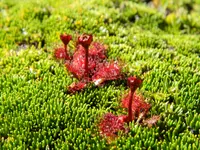
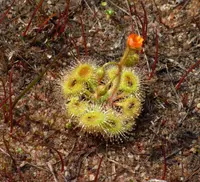
Drosera uniflora is a small, cold-adapted carnivorous plant that forms low rosettes of red-tinged leaves covered with sticky, glistening hairs. These hairs trap tiny insects that supplement the plant’s nutrients in its very nutrient-poor habitats.
It naturally occurs in cool, wet, often subantarctic or high-latitude regions, growing in bogs and seepage areas with constantly moist, acidic substrates. The species is specialized and can be challenging in cultivation because it needs cool temperatures, high humidity, and very pure, low-mineral water.
Those who want to learn how to care for Drosera uniflora should understand its need for bright, indirect light, consistently wet conditions, and an open, peat-based or sphagnum-rich medium.

Care Difficulty
Hard Care

Light Preference
Partial Sun

Water Requirements
Aquatic

Temperature Preference
Cool Climate

Hardiness Zone
Unknown

Soil Texture
Sandy, Peaty, Organic-rich

Soil pH
Strongly acidic (4.5–5.5)

Soil Drainage
Waterlogged tolerant

Fertilization
Minimal (feed rarely)
Scan your plant to receive care tips personalized for your specific plant
Available on iOS and Android
This alpine sundew thrives in bright, cool conditions with consistent moisture and strong light.
This bog plant requires constantly wet, mineral-poor conditions that mimic seepage or bog margins.
This cold-tolerant carnivorous plant is adapted to cool summers and very cold, snowy winters.
This species needs consistently high humidity to keep active traps functioning well.
Use a nutrient-poor, consistently wet medium that mimics acidic bog conditions.
This species is suitable for container growing when moisture and stability are carefully managed.
This carnivorous bog plant gains most nutrients from captured insects and should receive no conventional fertilizer.
Pruning needs for this small sundew are minimal and focus on hygiene rather than shaping Drosera uniflora.
This species resents disturbance, so repotting or transplanting should be infrequent and done with care.
Propagation of this species is possible but more advanced than for many common houseplants.
This high-latitude sundew is cold hardy but benefits from stable, cool, moist conditions in winter.

Plant Health Check
Not sure what's wrong with your plant? Check your plant's health inside the app.
Drosera uniflora is native to cold, windswept bogs and seeps of the southern Andes in Chile and Argentina, often growing at high elevations close to the tree line. It typically anchors in permanently wet, acidic peat or sphagnum moss where many other flowering plants cannot survive.
Unlike many sundews from warmer climates, this species endures frequent frosts, snow cover, and near-freezing soil temperatures in its native habitat. It survives long cold periods by maintaining low, compact rosettes that hug the ground and benefit from slight microclimate warmth near the substrate.
In its nutrient-poor Andean habitats, Drosera uniflora relies heavily on capturing small flying insects such as midges that are abundant around cold seeps and streams. The plant supplements scarce soil nitrogen and phosphorus with these prey items, which are digested by enzymes secreted from its glandular leaf tentacles.

This species has an unusually restricted distribution compared to many other South American sundews, occurring in scattered, isolated populations that make it of particular interest for studies on plant biogeography and conservation of high-Andean wetland ecosystems.
Yes. This species is routinely propagated from seed, but germination can be slow. Fresh seed, consistently cool, moist conditions, and good light are important. Many growers use a brief cold stratification period to improve germination rates.
Keep your plants happy and healthy with plant identification, disease detection, and easy care guidance.