Vertical support setup
Install thin bamboo canes or a plastic mesh trellis in the pot so the plant can climb and produce more dew-covered leaves along the stems, giving more surface for insect capture.

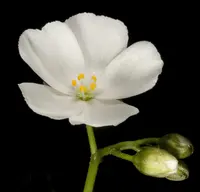
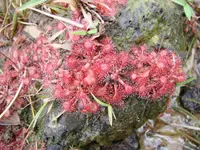
Climbing sundew (Drosera planchonii) is a carnivorous plant with slender, twining stems and sticky, dew-like droplets on its leaves that trap small insects. It often uses nearby plants or supports to climb, forming a delicate, airy tangle rather than a dense bush.
This species is native to parts of Australia, where it grows in nutrient-poor, seasonally wet habitats. Its insect-catching habit helps it survive in soils that lack minerals.
Drosera planchonii can be moderately challenging, as it needs consistently moist conditions, very low-nutrient substrate, and good light. Understanding how to care for Climbing Sundew is important because it reacts quickly to drying out, poor water quality, or heavy fertilization.

Care Difficulty
Hard Care

Light Preference
Full Sun

Water Requirements
Aquatic

Temperature Preference
Warm Climate

Hardiness Zone
Unknown

Soil Texture
Sandy, Peaty, Organic-rich

Soil pH
Strongly acidic (4.5–5.5)

Soil Drainage
Waterlogged tolerant

Fertilization
Minimal (feed rarely)
Scan your plant to receive care tips personalized for your specific plant
Available on iOS and Android
This carnivorous sundew needs strong light to maintain red coloration and sticky traps.
This species prefers consistently wet, nutrient-poor conditions similar to a bog.
This sundew prefers mild, frost-free conditions with stable moisture and airflow.
This species relies on consistently high humidity for healthy growth and dew production.
This carnivorous plant requires a very low-nutrient, acidic, open mix rather than standard potting soil.
This species is well suited to container culture when the pot supports wet, acidic, low-nutrient conditions.
Drosera planchonii is highly sensitive to nutrient buildup and usually grows best without conventional fertilizer in its soil.
Drosera planchonii needs only light, maintenance pruning to keep foliage clean and healthy.
This sundew benefits from occasional repotting to refresh its low-nutrient, acidic medium and maintain healthy roots.
This species is commonly propagated to maintain collections and share plants under controlled conditions.
This sundew needs thoughtful winter care in colder climates, especially when grown in containers.

Plant Health Check
Not sure what's wrong with your plant? Check your plant's health inside the app.
Drosera planchonii has relatively stiff, non-motile tentacles compared with many other sundews, so prey capture relies mainly on the adhesive droplets and leaf surface rather than rapid tentacle bending.
This species is native to parts of South America, where it grows in humid, nutrient-poor habitats that favor carnivorous plants adapted to capture insects for nitrogen.
Unlike most rosette-forming sundews, this species can develop a more elongate, climbing or scrambling habit, allowing it to grow through surrounding vegetation in its natural environment.
Brown leaves usually result from dry air, mineral buildup from hard tap water, or old foliage naturally dying back. Use low-mineral water, keep the medium evenly moist, and trim dead leaves to prevent mold and encourage new growth.
Keep your plants happy and healthy with plant identification, disease detection, and easy care guidance.