Shallow pot choice
Use a wide, shallow pot (7–10 cm deep) with drainage holes to encourage a dense, flat rosette and reduce the risk of waterlogging the crown.

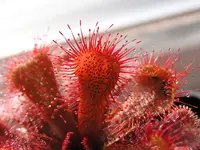
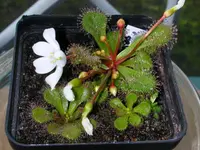
Red sundew (Drosera slackii) is a small carnivorous plant that forms tight, flat rosettes of spoon-shaped leaves covered in sticky red hairs. These glands trap small insects, which the plant digests to supplement nutrients.
This species is native to nutrient-poor, seasonally wet habitats in South Africa. It prefers bright light, constantly damp conditions, and a low-mineral, acidic substrate.
Growth is relatively slow but steady when moisture and light stay stable. With suitable water and soil, it is considered one of the easier species to care for Red sundew.

Care Difficulty
Hard Care

Light Preference
Partial Sun

Water Requirements
Keep Soil Moist

Temperature Preference
Tropical / Frost Sensitive

Hardiness Zone
10–11

Soil Texture
Sandy, Peaty, Organic-rich

Soil pH
Strongly acidic (4.5–5.5)

Soil Drainage
Waterlogged tolerant

Fertilization
Minimal (feed rarely)
Scan your plant to receive care tips personalized for your specific plant
Available on iOS and Android
Drosera slackii needs strong light to color well and form compact rosettes.
Drosera slackii prefers consistently wet, low-mineral conditions similar to a bog.
This species favors mild, frost-free conditions with stable, cool to warm temperatures.
This species benefits from consistently high humidity for stable growth of its dewy traps.
This carnivorous species needs a nutrient-poor, acidic, airy mix that stays evenly moist but never waterlogged.
This species is well suited to container culture when moisture and aeration are carefully balanced.
Drosera slackii needs almost no conventional fertilization because it captures insects for nutrients.
Pruning Drosera slackii focuses on hygiene and maintaining healthy rosettes rather than shaping.
Repotting this carnivorous sundew is infrequent but important for long-term health in containers.
Drosera slackii is commonly propagated by leaf cuttings and division under warm, bright, humid conditions.
Drosera slackii is not frost hardy and needs protection from low temperatures in most climates.

Plant Health Check
Not sure what's wrong with your plant? Check your plant's health inside the app.
This species is naturally restricted to a small area in the Cape region of South Africa, where it grows in nutrient-poor, seasonally wet sandstone or peat-sand seeps at relatively high elevations compared with many other sundews.
It forms a dense, flat rosette of broad, reddish leaves close to the ground, unlike many other African sundews that produce tall, upright stems, which makes it well suited to cultivation in small pots and terraria.
This species is frequently used in carnivorous plant breeding, and its genes contribute strong red coloration and compact form to several known Drosera hybrids favored by collectors.

In its native habitat, this species often experiences a cool, somewhat drier winter period, and plants can slow their growth or temporarily form tighter, smaller rosettes during this time, an adaptation that helps them survive seasonal changes in water availability and temperature.
Brown leaves usually indicate old traps dying off, mineral buildup from hard water, or heat stress. Remove dead foliage, use only rain, distilled, or reverse-osmosis water, and keep the potting medium consistently damp but not hot or waterlogged.
Keep your plants happy and healthy with plant identification, disease detection, and easy care guidance.