Dormancy scheduling
Use a clear annual calendar to begin reducing water and day length in late summer so the plant can form its underground tubers and enter dormancy in a controlled, predictable way.


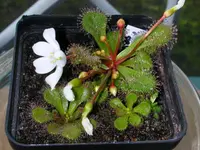
Leafy sundew (Drosera stolonifera) is a perennial carnivorous plant from southwestern Western Australia. It grows from underground tubers and produces upright stems with rounded, sticky leaves. The glistening droplets on each leaf are actually mucilage used to trap insects, which supplement the plant’s nutrient intake in poor, sandy soils. In habitat it occurs in seasonally wet areas with mild, dry summers and cool, damp winters. This species can be challenging for beginners, as it has a marked dormant period and needs stable conditions around its tubers. Anyone who wants to learn how to care for leafy sundew should focus on providing bright light, consistently moist but not waterlogged growing media, and excellent drainage.

Care Difficulty
Hard Care

Light Preference
Partial Sun

Water Requirements
Aquatic

Temperature Preference
Warm Climate

Hardiness Zone
10–11

Soil Texture
Sandy, Peaty, Organic-rich

Soil pH
Strongly acidic (4.5–5.5)

Soil Drainage
Waterlogged tolerant

Fertilization
Minimal (feed rarely)
Scan your plant to receive care tips personalized for your specific plant
Available on iOS and Android
This tuberous sundew requires bright conditions but is sensitive to intense heat and scorching light.
This species prefers moist but not flooded soil during active growth and much drier conditions in dormancy.
This Western Australian tuberous sundew experiences cool, wet winters and hot, dry summers in its native habitat.
This species needs consistently humid air to maintain active dew production on its leaves.
Use a lean, acidic, very free-draining mix that stays moist but never stagnant.
This species is suitable for container growing when planted in a deep, well-drained pot that supports its tuberous root system.
Drosera stolonifera grows in nutrient-poor substrates and usually performs best with little to no conventional fertilization.
Pruning Drosera stolonifera focuses on hygiene rather than reshaping the plant.
Container-grown Drosera stolonifera needs careful, infrequent repotting to avoid disturbing its tuberous roots.
Propagation of this tuberous sundew is possible but more advanced than for many carnivorous plants.
This species experiences a natural summer dormancy, so leafy sundew indoor care in winter is mainly about maintaining stable, cool conditions.

Plant Health Check
Not sure what's wrong with your plant? Check your plant's health inside the app.
This species survives hot, dry Australian summers as a dormant underground tuber, then resumes growth and leaf production with the cool, wet winter season.
The basal rosette bears short, ground‑hugging sticky leaves, while long, wiry stems can rise above surrounding vegetation with additional carnivorous leaves to catch flying insects.
Natural populations often occur on seasonally wet granite outcrops in southwestern Australia, growing in shallow, nutrient‑poor soils that explain its strong reliance on insect prey.

The species forms underground stolons that allow it to spread laterally and produce new tubers, a growth habit that inspired the name stolonifera and helps it persist in the patchy soils of its native granite habitats.
Flowering is closely tied to its seasonal cycle. This tuberous species usually blooms in late winter–spring after a cool, dry dormancy. Lack of a distinct rest period, insufficient maturity, or repeated disturbance of the tuber can prevent blooms.
Keep your plants happy and healthy with plant identification, disease detection, and easy care guidance.