Low-branch thinning
Remove a few of the lowest inward-growing branches each year to improve air movement under the canopy and reduce fungal leaf spot on the inner foliage.

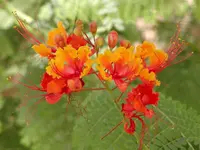
Mexican bird of paradise, Caesalpinia pulcherrima, is a fast-growing ornamental shrub or small tree valued for its bright red, orange, and yellow flower clusters. It typically has fine, fernlike foliage and an open, airy branching habit that suits warm, dry landscapes and low-maintenance gardens.
This species is native to tropical and subtropical regions of the Americas and is widely used in arid and coastal plantings. It prefers full sun, well-drained soil, and moderate watering, which makes it relatively easy to care for Mexican bird of paradise in suitable climates.

Care Difficulty
Easy Care

Light Preference
Full Sun

Water Requirements
Low Water

Temperature Preference
Tropical / Frost Sensitive

Hardiness Zone
9–11

Soil Texture
Sandy, Loamy, Rocky

Soil pH
Acidic (5.5–6.5), Slightly acidic (6.5–7.0)

Soil Drainage
Well-drained

Fertilization
Minimal (feed rarely)
Scan your plant to receive care tips personalized for your specific plant
Available on iOS and Android
Caesalpinia pulcherrima thrives in strong sun and produces best flowering with high light exposure.
Caesalpinia pulcherrima prefers deep, infrequent watering once established, with soil drying between waterings.
This species favors warm, frost-free conditions and handles considerable heat once mature.
This species handles a wide humidity range and usually does not need special humidity management outdoors.
This plant prefers lean, well-aerated, fast-draining soil to avoid root rot and promote strong flowering.
This species is suitable for container growing, especially in cooler climates where winter protection is needed.
Caesalpinia pulcherrima responds well to light, balanced feeding during the warm growing season.
Pruning helps Caesalpinia pulcherrima stay compact, healthy, and free flowering.
This species is most often grown in the ground, so focus on careful transplanting or occasional container up-potting.
Caesalpinia pulcherrima is commonly propagated from seed, with cuttings used less often.
This plant is frost sensitive and needs protection in regions colder than USDA zone 9.

Plant Health Check
Not sure what's wrong with your plant? Check your plant's health inside the app.
This species, native to tropical Americas, has been widely planted as an ornamental shrub across Asia, Africa, and the Pacific, and now naturalizes easily in many warm coastal regions.
The stamens of this species are highly sensitive; when triggered by visiting insects, they can spring forward and release pollen suddenly, improving the chances of cross‑pollination.
After flowering, the plant forms flattened seed pods that start green and mature to brown or purplish-brown, often persisting on the plant and providing a clear visual cue of seed development.

In several tropical regions, this species has become so characteristic of roadsides and gardens that it is used as a visual indicator of local climate, reliably flowering for long periods in areas with stable warmth and a distinct dry season.
Lack of flowers usually comes from insufficient light, too much nitrogen-rich fertilizer, or young age. It may also pause blooming after transplanting or pruning. Stable warmth and avoiding heavy pruning during the season help restore flowering.
Keep your plants happy and healthy with plant identification, disease detection, and easy care guidance.