Support Climbing Vines
Provide a thin stake, bamboo cane, or mesh for the vines to twine around so the plant can form more stable pitchers and avoid snapping its own stems under their weight.

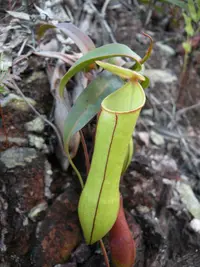
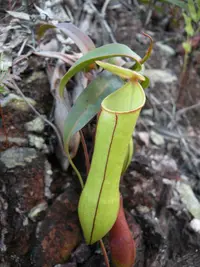
The slender pitcher plant, Nepenthes gracilis, is a small tropical carnivorous vine that traps insects in narrow, tubular pitchers. It typically grows as a climbing or scrambling plant with thin stems and delicate green to reddish pitchers.
This species is native to lowland forests and swampy areas of Southeast Asia, where it experiences warm temperatures and high humidity year-round. Its compact size and tolerance of varied light make it one of the simpler Nepenthes for hobbyists, although steady moisture and soft, low-mineral water are still important.
Those learning how to care for slender pitcher plant should know it prefers bright, filtered light, moist but airy substrate, and consistently humid conditions to maintain healthy pitchers and foliage.

Care Difficulty
Hard Care

Light Preference
Partial Shade

Water Requirements
Keep Soil Moist

Temperature Preference
Tropical / Frost Sensitive

Hardiness Zone
11–12

Soil Texture
Peaty, Organic-rich, Sandy

Soil pH
Strongly acidic (4.5–5.5)

Soil Drainage
Moist but well-drained

Fertilization
Minimal (feed rarely)
Scan your plant to receive care tips personalized for your specific plant
Available on iOS and Android
This lowland tropical species needs bright, indirect light to form strong pitchers without burning the leaves.
This species prefers consistently moist, low-mineral conditions that never dry out completely.
This lowland Nepenthes thrives in warm, stable temperatures with no exposure to frost.
This tropical carnivorous species needs consistently high humidity to maintain active pitchers and steady growth.
This species prefers a loose, airy, low-nutrient substrate rather than standard houseplant potting mixes.
This species is well suited to container culture when the pot supports its climbing habit and moist, airy root zone.
This carnivorous species is adapted to nutrient-poor conditions, so use fertilizer sparingly and with care when growing slender pitcher plant in pots.
Light pruning helps Nepenthes gracilis stay compact and maintain productive pitchers.
Container-grown plants benefit from occasional repotting into fresh, airy medium as they mature.
Vegetative propagation is preferred for maintaining the traits of Nepenthes gracilis.
This tropical lowland species is frost-sensitive and needs warm, stable conditions in winter.

Plant Health Check
Not sure what's wrong with your plant? Check your plant's health inside the app.
This species has a hinged pitcher lid and stiff bristles that convert raindrop impacts into a spring-like motion, flicking insects into the fluid rather than relying only on passive pitfall trapping.
Wild populations are often associated with specific ant species that nest near or inside the pitchers, feeding on nectar while also providing the plant with additional nutrients through dropped prey and waste.
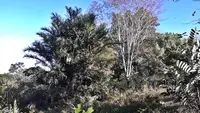
Nepenthes gracilis is naturally restricted to warm, humid lowland habitats in Southeast Asia, where it often grows in open, nutrient-poor, sandy or peaty substrates along forest margins and disturbed sites.

The raindrop-triggered trapping mechanism of this species is one of the best-studied examples of a purely mechanical, energy-free motion in carnivorous plants, making it a model organism in research on plant biomechanics and passive movement.
This species usually performs better in warm, humid outdoor or greenhouse conditions, but can adapt indoors if humidity, bright filtered light, and stable warmth are maintained. Successful slender pitcher plant indoor care depends on consistent moisture and high humidity.
Keep your plants happy and healthy with plant identification, disease detection, and easy care guidance.