


Support epiphytic growth
Mount the plant on rough bark, tree fern fiber, or porous lava rock, then secure lightly with nylon fishing line or soft ties so roots and stolons can anchor firmly without being crushed.

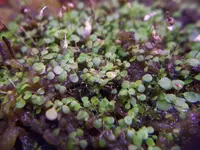
Striped bladderwort, Utricularia striatula, is a small carnivorous plant that usually grows as a mat on rocks, moss, or tree trunks in humid habitats. It uses tiny underwater or moisture-filled bladders to trap microscopic prey, which helps it survive in nutrient-poor conditions.
In nature it occurs across parts of Africa and Asia, often in high-humidity cloud forests and other consistently damp sites. The plant has fine foliage and small, delicate flowers that can form attractive carpets in terrariums or specialized setups.
Growth is easiest in stable, humid environments, so care for striped bladderwort is more suitable for growers who can provide reliably moist conditions and low-mineral water.

Care Difficulty
Hard Care

Light Preference
Partial Shade

Water Requirements
Keep Soil Moist

Temperature Preference
Tropical / Frost Sensitive

Hardiness Zone
10–12

Soil Texture
Peaty, Organic-rich, Sandy

Soil pH
Strongly acidic (4.5–5.5), Acidic (5.5–6.5)

Soil Drainage
Waterlogged tolerant

Fertilization
Minimal (feed rarely)
Scan your plant to receive care tips personalized for your specific plant
Available on iOS and Android
This small epiphytic carnivorous plant prefers bright, soft light rather than intense direct sun.
Utricularia striatula needs constantly moist to wet conditions, not fluctuating between dry and saturated.
This species prefers mild, stable temperatures similar to cool tropical or upland environments.
This small carnivorous species prefers consistently high humidity to grow and trap prey effectively.
This plant needs a nutrient-poor, open, and constantly moist medium rather than conventional potting soil.
This species is well suited to container cultivation, especially in shallow pots or trays.
This carnivorous species gains most nutrients from trapped prey, so striped bladderwort needs very little conventional fertilization.
Utricularia striatula needs only light grooming to stay tidy and flowering well.
This species is usually grown in shallow containers or mounted, and benefits from occasional renewal of its growing environment rather than frequent repotting.
This plant is most often propagated vegetatively, using small pieces of its creeping stems and mats.
In mild, frost-free climates this species can grow year-round with minimal winter adjustment, but it is not freeze tolerant.

Plant Health Check
Not sure what's wrong with your plant? Check your plant's health inside the app.
This species often grows as an epiphyte on mossy rocks, tree trunks, and even artificial walls, capturing tiny invertebrates with its microscopic bladder traps instead of rooting in soil.
Its small white to pale lilac flowers show fine purple or reddish veins and a yellow spot on the lower lip, a pattern that likely helps guide pollinators despite the flower’s very small size.
The plant produces tiny, underwater bladder traps on threadlike stolons; these bladders actively suck in prey when trigger hairs are stimulated, functioning as one of the smallest known active suction traps in flowering plants.

This species is one of the most widespread tropical Utricularia, occurring from parts of Africa across Southeast Asia to the Pacific, and often colonizes man‑made structures such as damp concrete walls and water tanks, showing a remarkable tolerance for human‑modified habitats.
Flowering declines when light is too low, temperatures are cool, or the plant is recently divided. Nutrient-rich substrates can also reduce blooms, since this carnivorous species relies on capturing tiny prey rather than fertilization.
Keep your plants happy and healthy with plant identification, disease detection, and easy care guidance.

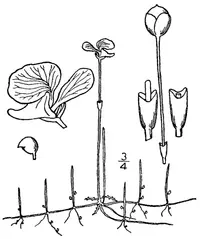
lavender bladderwort
Utricularia resupinata
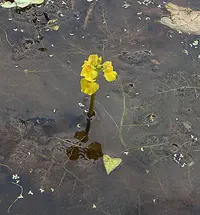
leafy bladderwort
Utricularia foliosa
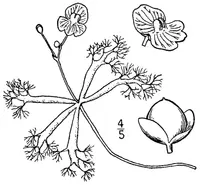
little floating bladderwort
Utricularia radiata
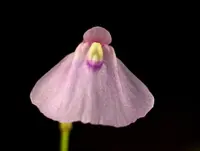
fairy aprons
Utricularia dichotoma
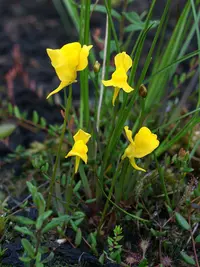
horned bladderwort
Utricularia cornuta
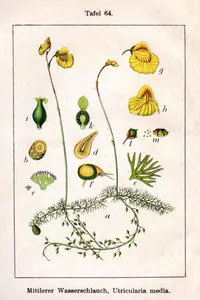
flatleaf bladderwort
Utricularia intermedia
Florida yellow bladderwort
Utricularia floridana
 POPULAR
Monstera
Monstera deliciosa