


Use Rainwater Reservoirs
Set up a dedicated container of collected rainwater or reverse-osmosis water and use it exclusively for topping up the pond or tray, since dissolved minerals from tap water quickly stress this plant’s fine roots and traps.

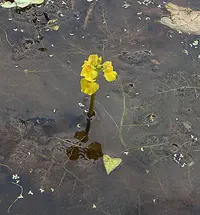
Leafy bladderwort (Utricularia foliosa) is a free-floating or weakly rooted aquatic carnivorous plant. It forms fine, feathery underwater foliage with tiny bladder traps that capture small aquatic organisms.
This species naturally occurs in still or slow-moving freshwater in the Americas, often forming loose mats near the water surface. Its lack of true roots and need for clean, nutrient-poor water make it quite specialized.
Compared with many houseplants, it is more challenging, so it suits growers who already understand basic carnivorous plant care. Learning how to care for leafy bladderwort starts with providing stable water conditions, bright light, and no regular potting soil.

Care Difficulty
Hard Care

Light Preference
Full Sun

Water Requirements
Aquatic

Temperature Preference
Tropical / Frost Sensitive

Hardiness Zone
9–11

Soil Texture
Sandy, Peaty, Organic-rich

Soil pH
Acidic (5.5–6.5)

Soil Drainage
Waterlogged tolerant

Fertilization
Minimal (feed rarely)
Scan your plant to receive care tips personalized for your specific plant
Available on iOS and Android
This aquatic carnivorous plant thrives in bright conditions but is sensitive to harsh, drying sun.
Utricularia foliosa is an aquatic species that must stay continuously submerged in clean, low-mineral water.
This species prefers warm, frost-free conditions typical of mild to hot climates.
This semi-aquatic carnivorous species depends on consistently high humidity to thrive.
This species grows best in nutrient-poor, saturated media rather than conventional potting soil.
This aquatic species is suitable for container culture when grown in tanks, tubs, or bowls that hold standing water.
Utricularia foliosa is adapted to nutrient-poor water and usually should not receive conventional fertilizer.
Pruning Utricularia foliosa is mainly used to manage spread and maintain healthy, vigorous growth in aquatic setups.
Transplanting leafy bladderwort focuses on moving plant mats between aquatic containers or ponds with minimal disturbance.
Propagation of Utricularia foliosa relies on vegetative spread rather than seed in most home and pond settings.
Winter care depends on climate, as this aquatic species is not reliably frost-hardy in colder regions.

Plant Health Check
Not sure what's wrong with your plant? Check your plant's health inside the app.
This species lives completely free‑floating in still or slow freshwater, forming tangled, buoyant mats instead of anchoring roots in soil or sediment.
Its tiny bladder-like leaves create a vacuum that snaps open to suck in small aquatic prey such as microcrustaceans and insect larvae, making it an active rather than passive carnivorous plant.
In suitable conditions it sends up delicate, above-water flower stalks from the submerged mass, so the yellow snapdragon-like flowers are held in air while the rest of the plant remains fully aquatic.

In some nutrient-poor lakes and ponds, dense populations of this species can significantly influence plankton communities, because its thousands of miniature underwater traps remove large numbers of tiny animals from the water column.
Lack of flowers usually comes from insufficient light, water that is too clean or nutrient-poor prey availability, or cool temperatures. Provide bright conditions, stable warmth, and access to tiny aquatic invertebrates so this carnivorous species can build enough energy to flower.
Keep your plants happy and healthy with plant identification, disease detection, and easy care guidance.


Florida yellow bladderwort
Utricularia floridana
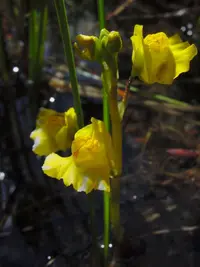
Common bladderwort
Utricularia macrorhiza
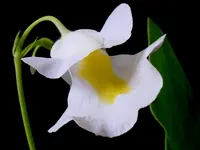
Utricularia alpina
Utricularia alpina
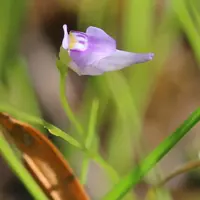
bladderwort
Utricularia caerulea

prickly seaweed
Acanthophora spicifera
Small Sundew
Drosera trinervia
Utricularia jamesoniana
Utricularia jamesoniana
Utricularia uniflora
Utricularia uniflora