Small Sundew Care (Drosera trinervia)

Small Sundew

About Small Sundew

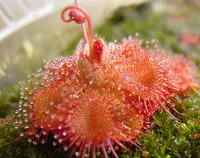
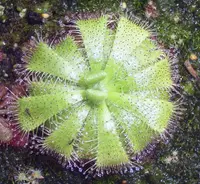
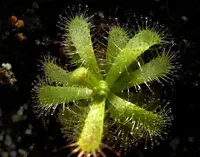
Drosera trinervia, commonly called small sundew, is a compact carnivorous plant that forms low rosettes of sticky, dew-like leaves. Each leaf is covered with red tentacles that trap and digest small insects for nutrients.

This species is native to nutrient-poor, seasonally moist habitats in South Africa, where it grows in open, sunny sites. Its reliance on bright light and consistently damp conditions makes it rewarding but a bit demanding for beginners.

Understanding how to care for Small Sundew starts with providing strong light, pure water, and low-mineral, airy substrate. When these needs are met, it grows steadily and remains relatively pest-free.

Main Plant Requirements

Care Difficulty

Hard Care

Light Preference

Full Sun

Water Requirements

Aquatic

Temperature Preference

Tropical / Frost Sensitive

Hardiness Zone

10–11

Soil Texture

Sandy, Peaty, Organic-rich

Soil pH

Strongly acidic (4.5–5.5)

Soil Drainage

Waterlogged tolerant

Fertilization

Minimal (feed rarely)

Get Personalized Care Plan

Scan your plant to receive care tips personalized for your specific plant

Available on iOS and Android

How to Care for the Small Sundew

Drosera trinervia needs bright light to maintain strong growth and good dew production.

  • Provide 4–6 hours of direct morning sun plus bright, filtered light for the rest of the day, especially in mild coastal or temperate climates.
  • Accepts light partial shade during the hottest midday hours; in strong summer sun, use 30–50% shade cloth to prevent leaf scorch and dry, brown tentacles.
  • If growth elongates, leaves turn pale, or dew production drops, increase light exposure gradually over 7–10 days to avoid shock; Small Sundew responds well to spring and autumn sun.

This species prefers constantly moist, low-mineral conditions, similar to a shallow bog.

  • Use rainwater, distilled, or reverse-osmosis water; minerals from tap water can accumulate and damage Drosera trinervia roots and leaves over time.
  • Keep the substrate consistently damp to wet, never fully dry; surface may lighten slightly in color but should still feel moist just below the top 0.5–1 cm.
  • Reduce water slightly in cooler seasons to avoid stagnation and sour smell, watching for yellowing, limp leaves as a sign of waterlogging and curled, crispy leaves as a sign of drying.

This sundew prefers mild, frost-free conditions with moderate seasonal variation.

  • Aim for 60–77°F (16–25°C) for steady growth, with best vigor often seen around 68–73°F (20–23°C) under bright light and high humidity.
  • Short dips to 45–50°F (7–10°C) are usually tolerated if the substrate is not waterlogged, but repeated or hard frosts can kill leaves and crowns.
  • In heat above 86°F (30°C), increase air movement and shade slightly to prevent stress; leaf reddening with stalled growth often signals chronic heat or light excess.

This species prefers consistently humid air to keep mucilage droplets active on its leaf tentacles.

  • Aim for 50–80% humidity; below 40% for long periods can reduce dew production and trap efficiency in Small Sundew.
  • Crisping leaf edges and dull, dry tentacles indicate humidity stress rather than light burn.
  • Increase humidity with a nearby open tray of water or grouped plants, but avoid enclosing the plant without airflow to prevent fungal issues.

This carnivorous species needs a nutrient-poor, open, and consistently moist substrate rather than conventional potting soil.

  • Use a mix of roughly 1:1 sphagnum peat moss and silica sand or perlite to create a light, airy, and low-nutrient medium for Drosera trinervia.
  • Ensure the mix drains freely yet stays evenly damp; water should move through, not sit stagnant around roots for long periods.
  • Keep pH slightly acidic, around 4.5–5.5, which peat-based mixes naturally provide, avoiding any lime or pH-raising amendments.
  • Avoid compost, manure, standard potting mix, or fertilizers, which can burn roots and encourage algae or moss overgrowth on the surface.

This species is very suitable for container growing when moisture and depth are managed carefully.

  • Choose a relatively deep pot so the lower substrate stays cool and evenly moist during warm weather.
  • Use plastic or glazed ceramic pots rather than unglazed clay to reduce evaporation and keep the peat-based mix from drying too fast at the sides.
  • Stand the container in a shallow tray with a small amount of distilled or rainwater to maintain steady moisture without flooding the entire pot height.

This carnivorous species gains most nutrients from captured insects, so fertilizer use for Small Sundew must be very limited and cautious.

  • Skip soil fertilizers; standard houseplant feeds, compost, or slow‑release products can burn roots in nutrient-poor carnivorous mixes.
  • If growth is weak, use a very dilute (1/8–1/4 strength) balanced NPK orchid or carnivorous-plant-safe fertilizer only as foliar spray.
  • Apply at most once every 4–6 weeks during active spring–summer growth, then stop in winter dormancy or slow-growth periods.
  • Rinse foliage with pure water if any fertilizer residue appears heavy or if leaf tips brown after treatment.

Pruning needs for Drosera trinervia are light and focus on cleanliness rather than shaping.

  • Best timing is during active growth in spring–summer, when recovery is fastest.
  • Remove dead, blackened, or moldy leaves by pinching them off at the base with clean fingers or fine scissors.
  • Trim damaged or overcrowded rosettes only when necessary to maintain airflow and reduce fungal issues.
  • Avoid heavy cutting, since foliage loss reduces photosynthesis and insect-catching surface.

This small rosetted sundew benefits from careful repotting to refresh its nutrient-poor, acidic substrate.

  • Plan to repot every 1–2 years in late winter or early spring, before strong new growth starts.
  • Repot when growth slows despite good care, roots circle the pot, or peat-sand mix becomes compacted and waterlogged.
  • Use fresh carnivorous mix such as 1:1 sphagnum peat and silica sand or perlite, moistened with distilled or rainwater.
  • Handle roots gently, keep the root ball slightly shaded and evenly moist after repotting, and avoid fertilizing for several weeks to reduce stress.

This species is commonly propagated to expand collections or replace older plants.

  • Use leaf cuttings in late winter–spring; lay healthy leaves on moist peat-sand mix under bright, indirect light and high humidity.
  • Divide mature clumps by gently separating rosettes, keeping roots intact, and replanting into fresh carnivorous mix.
  • Sow fresh seeds on the surface of sterile, wet peat-sand; do not cover, and provide strong light with stable warmth around 68–75°F.
  • Maintain consistently damp substrate with low-mineral water and avoid disturbance until new plantlets develop strong roots.

Winter care for this sundew mainly involves temperature management and stable moisture.

  • Drosera trinervia is sensitive to hard frost; aim to keep temperatures above 35–40°F.
  • Move container plants indoors or into a cool greenhouse before freezing nights arrive.
  • Provide bright light and keep the tray or potting mix consistently damp with distilled or rainwater, never frozen.
  • Reduce feeding and avoid fertilization during winter, allowing a natural slowdown in growth without drying the roots.

Care Tips

Tray depth control

Use a shallow water tray only 0.5–1 cm deep and let it almost dry before refilling to encourage stronger root systems and reduce the risk of algae and mold buildup on the medium surface.

Seasonal light adjustment

As days shorten in winter, move pots slightly closer to the light source or increase artificial light duration by 1–2 hours to maintain compact rosettes and prevent weak, elongated growth.

Algae and moss management

If green algae or moss starts covering the substrate, gently scrape off the top 2–3 mm of medium and top-dress with a thin layer of fresh, rinsed peat or long-fiber sphagnum to keep roots oxygenated.

Safe water storage

Store collected rainwater or distilled water in opaque, tightly closed containers and use it within 1–2 weeks to limit contaminants that can accumulate in the soil of sensitive carnivorous species.

Propagation rotation

Take occasional leaf pullings or stem cuttings from the healthiest plants and root them in a separate tray so you keep a backup population in case older rosettes decline, which is a practical strategy for Drosera trinervia plant care.

Common Pests and Diseases

Aphids

These insects suck sap from tender leaves and flower stalks, often clustering near the growth point and along young stems. Symptoms include distorted new growth, sticky honeydew, and reduced dew production on the traps.

Solution

Rinse plants under a gentle stream of distilled or rainwater to dislodge colonies, repeating every few days until clear. For heavier infestations, use a dilute insecticidal soap sprayed carefully on non-glandular areas, then rinse after a few hours; avoid systemic insecticides that can harm carnivorous leaves.

Fungus gnats

These insects lay eggs in wet peat, and their larvae can damage fine roots and young growth, especially in very waterlogged conditions. Symptoms include slow growth, weakened seedlings, and small black adults hovering around pots.

Solution

Allow the tray water level to drop slightly between refills while keeping the substrate evenly damp, not flooded, to interrupt the larval cycle. Use yellow sticky traps to catch adults and consider a Bacillus thuringiensis israelensis (BTI) biological treatment in the water to target larvae safely for Drosera trinervia plant care.

Botrytis (grey mold)

This disease appears in cool, humid, stagnant air as grey, fuzzy mold on old leaves, dead insects, or overcrowded rosettes. Symptoms include browning tissue that quickly collapses, often starting on spent leaves or flowers and spreading to healthy parts.

Solution

Promptly remove and discard all affected leaves and any dead material on the soil surface, then increase airflow and reduce overhead splashing. In persistent cases, space plants farther apart and apply a light spray of a sulfur-based fungicide or another carnivorous-safe fungicide, avoiding heavy residues on active traps.

Powdery mildew

This disease shows as a fine white or grayish powder on leaves and stems, more likely when air is humid but light and airflow are low. Symptoms include dull, less sticky traps and gradual loss of vigor if not corrected.

Solution

Improve light levels and ventilation while avoiding direct hot drafts, and remove the worst-affected leaves. If needed, apply a mild potassium bicarbonate or sulfur-based fungicide in a very light spray, testing on a small area first to ensure the sensitive leaves are not damaged.

Spider mites

These pests are tiny and often appear during warm, dry indoor conditions, causing fine stippling and a dull, dusty look on leaves, sometimes with very fine webbing. Symptoms include loss of dew, bronzing, and slow decline in vigor.

Solution

Increase humidity and gently rinse both sides of the leaves with distilled or rainwater to physically remove mites, repeating several times over 1–2 weeks. For ongoing problems, use a targeted miticide labeled safe for ornamental use and apply lightly, as heavy chemical residues can interfere with the plant’s sticky traps.

Interesting Facts

Fynbos rock specialist

This species is native to the winter-rainfall fynbos of the Western Cape in South Africa, where it grows in shallow, sandy soils over rock sheets that stay seasonally moist but can dry hard in summer.

Seasonal rosette strategy

It forms a compact ground-hugging rosette that is most active and brightly colored during the cool, wet winter, then can slow or partially retreat during the hot, dry summer in its natural range.

Three-veined leaf trait

The name trinervia refers to the three prominent veins in each leaf blade, a diagnostic feature that helps distinguish it from many other small sundew species with finer or less distinct venation.

Botan icon

Did you know?

Drosera trinervia is considered a local endemic of the southwestern Cape region of South Africa, meaning it occurs naturally only in a relatively small geographic area within this global biodiversity hotspot.

FAQs about Small Sundew

This species usually needs a cool winter rest and strong light to form flower stalks. If conditions stay warm year-round or light is weak, it often focuses on leaf growth instead of producing flowers.

Grow Healthy Plants with Botan Care

Keep your plants happy and healthy with plant identification, disease detection, and easy care guidance.

Botan plant care app — identify plants on mobile

Explore More Plants