Cool-site placement
Choose a planting site that stays cool and sheltered in late afternoon, such as the east or north side of a building, to extend the flowering period and reduce heat stress when growing Alpine forget-me-not.

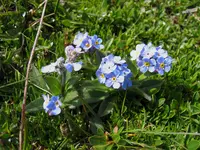
Alpine forget-me-not (Myosotis alpestris) is a compact, short-lived perennial known for its small, sky-blue flowers with yellow centers. It typically forms low, leafy clumps topped by delicate flower clusters.
This species naturally occurs in mountain meadows and rocky slopes in cooler regions, where conditions are bright, cool, and evenly moist. It tends to be easy to grow in temperate climates if given consistent moisture and good drainage.
Gardeners who care for Alpine forget-me-not usually value it for edging, rock gardens, and naturalistic plantings where it can gently self-seed and return for several seasons.

Care Difficulty
Moderate Care

Light Preference
Partial Sun

Water Requirements
Regular Water

Temperature Preference
Cold Hardy

Hardiness Zone
3–8

Soil Texture
Loamy, Silty, Organic-rich

Soil pH
Acidic (5.5–6.5), Slightly acidic (6.5–7.0)

Soil Drainage
Moist but well-drained

Fertilization
Minimal (feed rarely)
Scan your plant to receive care tips personalized for your specific plant
Available on iOS and Android
This alpine species prefers cool, bright conditions with gentle sun exposure.
This plant prefers consistently moist, cool soil without prolonged drying or soggy conditions.
This species thrives in cool to mild temperatures and tolerates significant cold once established.
This species grows well in typical outdoor humidity and only occasionally reacts to very dry air.
Myosotis alpestris prefers cool, moist but well-drained mineral-rich soil.
This species is well suited to cool outdoor container culture.
This alpine species needs only light feeding in reasonably fertile soil.
Pruning Myosotis alpestris is mainly about tidiness and encouraging continued flowering.
This short-lived perennial is more often transplanted in the garden than kept long term in containers.
Myosotis alpestris is most commonly renewed from seed rather than from cuttings.
This species is generally cold hardy in temperate climates and often needs minimal winter care.

Plant Health Check
Not sure what's wrong with your plant? Check your plant's health inside the app.
This species naturally occurs in high mountain regions of central and northern Europe, typically on rocky slopes, scree, and subalpine meadows rather than lowland habitats.
In many of its native alpine sites, it behaves as a short-lived perennial or biennial, forming low rosettes that flower, set seed, then often die back after only a few seasons.
The flowers typically show a clear sky-blue corolla with a distinct yellow to white eye-ring, a color pattern that helps guide pollinating insects such as small bees and flies to the nectar.
This species is highly attractive to bees, hoverflies, and small native pollinators, which visit for nectar and pollen. It supports early-season pollinators in cool climates and works well in wildlife-friendly borders, rock gardens, and naturalistic plantings.
Keep your plants happy and healthy with plant identification, disease detection, and easy care guidance.