Spring cutback timing
In late winter or very early spring, cut back old stems to just above the basal buds so new shoots emerge cleanly without being shaded or crowded by last year’s growth.

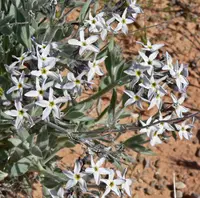
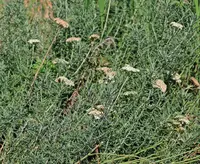
Woolly bluestar, Amsonia tomentosa, is a compact, clump-forming perennial native to dry, open habitats of the southwestern United States and northern Mexico. It belongs to the dogbane family but is grown mainly as an ornamental.
The plant carries narrow, silvery-green leaves covered in fine hairs and produces clusters of soft, pale blue star-shaped flowers in late spring. It typically has an upright yet bushy habit, giving a fine-textured look in mixed borders.
This species suits gardeners who prefer low-maintenance plants once established, as it tolerates heat and drought and dislikes heavy, wet soils. Sunny, well-drained sites make it easier to care for woolly bluestar in most garden settings.

Care Difficulty
Easy Care

Light Preference
Full Sun

Water Requirements
Low Water

Temperature Preference
Cold Hardy

Hardiness Zone
5–9

Soil Texture
Sandy, Loamy, Rocky

Soil pH
Slightly acidic (6.5–7.0), Neutral (7.0)

Soil Drainage
Well-drained

Fertilization
Minimal (feed rarely)
Scan your plant to receive care tips personalized for your specific plant
Available on iOS and Android
This sun-loving perennial thrives in bright, open conditions typical of dry prairies and rocky slopes.
This drought-tolerant perennial prefers infrequent, deep watering once established.
This hardy perennial is adapted to continental climates with hot summers and cold winters.
This species is adapted to arid to semi-arid climates and usually does not need special humidity management.
Amsonia tomentosa prefers mineral, freely draining soil that mimics dry, open habitats.
This species can be grown in containers if provided with a deep, very free-draining setup that prevents chronic moisture around the crown.
This drought-tolerant native needs minimal feeding, but light nutrition supports steady growth in poor soils.
Pruning Amsonia tomentosa is simple and mainly helps maintain a tidy clump and support strong stems.
This species is usually grown in the ground and prefers to stay undisturbed once established.
Amsonia tomentosa is most often propagated by seed or careful division of mature clumps.
This plant is quite cold hardy and usually needs little special winter care in the ground.

Plant Health Check
Not sure what's wrong with your plant? Check your plant's health inside the app.
This species is naturally restricted to arid regions of the southwestern United States and northern Mexico, where it grows on very dry, rocky or sandy sites that many other perennials cannot tolerate.
Its narrow leaves and stems are covered in short, dense hairs that give the plant a gray‑green, velvety appearance and help reduce water loss in hot, dry habitats.
Like other dogbane relatives, this plant produces a white, milky latex sap that deters many herbivores and can be mildly toxic if ingested.

In parts of the southwestern United States, woolly bluestar has been observed providing early‑season nectar and pollen for native solitary bees and small butterflies, helping support pollinators at a time when few other herbaceous plants are in bloom in its desert habitats.
This species is very attractive to bees, small native wasps, and some butterflies, mainly when in bloom. Its star-shaped flowers provide nectar in late spring, supporting pollinators when many other perennials are not yet flowering.
Keep your plants happy and healthy with plant identification, disease detection, and easy care guidance.