Wind‑hardening young plants
In exposed sites, stake young shrubs loosely and gradually reduce support over 1–2 seasons so stems adapt to wind without snapping, which is especially helpful when growing Webb's rose in open, upland gardens.

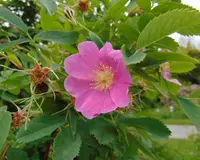
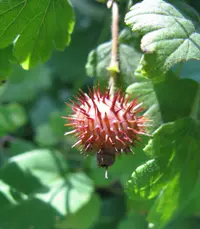
Webb's rose, Rosa webbiana, is a hardy wild rose species grown mainly as an ornamental shrub. It forms a dense, thorny bush with delicate pink, single flowers and small red hips. Plants often reach a medium height and develop an upright, slightly arching habit suited to hedges and naturalistic plantings.
This species is native to Central and South Asia, where it grows in dry, often rocky habitats and cooler mountain foothills. Its tolerance of poor soils, cold, and drought makes it relatively easy to establish in suitable climates, though it still benefits from sun and free-draining soil. Those learning how to care for Webb's rose usually focus on giving it enough light and avoiding waterlogged ground.

Care Difficulty
Moderate Care

Light Preference
Full Sun

Water Requirements
Moderate Water

Temperature Preference
Cold Hardy

Hardiness Zone
5–9

Soil Texture
Loamy, Sandy, Clay

Soil pH
Slightly acidic (6.5–7.0), Neutral (7.0)

Soil Drainage
Well-drained

Fertilization
Minimal (feed rarely)
Scan your plant to receive care tips personalized for your specific plant
Available on iOS and Android
This species prefers bright, open conditions similar to its native upland habitats.
Rosa webbiana prefers evenly moist but not saturated soil, especially during active growth.
This rose is adapted to colder continental climates and handles a wide temperature range when established.
This rose tolerates a wide humidity range and usually does not need special humidity management outdoors.
Rosa webbiana prefers moderately fertile, well-structured soil that drains freely yet holds some moisture.
This species can grow successfully in containers if the pot supports its deep, woody root system.
This wild rose species grows on lean soils and needs only light, targeted feeding in cultivation.
Thoughtful pruning keeps Rosa webbiana healthy, flowering well, and within bounds.
This species rose is usually grown in the ground and needs transplanting only when space or site is unsuitable.
Rosa webbiana is commonly propagated by hardwood cuttings, layering, or seed where genetic variation is desired.
This rose is quite cold hardy but benefits from basic winter care in colder regions.

Plant Health Check
Not sure what's wrong with your plant? Check your plant's health inside the app.
This wild rose is native to arid and semi-arid mountain slopes of Central and South Asia, where it can form thickets at elevations above 2,000 m, tolerating cold winters and high UV exposure that would damage many cultivated roses.
Its small, dry rose hips are an important food source for mountain birds, which eat the fruits and disperse the seeds across rocky slopes, helping the species colonize harsh habitats.
The dense, spiny branching and suckering growth habit allow this species to form almost impenetrable living barriers in its native range, providing shelter for small mammals and birds while stabilizing soil on steep hillsides.

Genetic and morphological studies have shown that this species is closely allied to several other wild roses in Central Asia, and it is sometimes treated as part of a species complex, highlighting how difficult it can be for botanists to draw clear boundaries between closely related wild roses.
Lack of blooms usually comes from too little light, excessive nitrogen fertilizer, or pruning at the wrong time, which removes flowering wood. Older, congested bushes may also need thinning to improve airflow and direct energy to flower production.
Keep your plants happy and healthy with plant identification, disease detection, and easy care guidance.