Glandular dog-rose Care (Rosa squarrosa)

Glandular dog-rose

About Glandular dog-rose

Rosa squarrosa, commonly called glandular dog-rose, is a deciduous wild rose shrub with arching, prickly stems and simple, typically pink flowers. It often forms dense, thicket-like growth and produces small, rounded hips after flowering.

This species is native to parts of East Asia, where it grows in scrub, woodland edges, and rocky slopes. It tends to be hardy and tolerant of cold, but the thorns and suckering habit can make maintenance slightly demanding.

In cultivation, it prefers sun to light shade, moderately moist but well-drained soil, and some seasonal pruning. Understanding how to care for Glandular dog-rose starts with giving it enough light and room to spread naturally.

Main Plant Requirements

Care Difficulty

Moderate Care

Light Preference

Full Sun

Water Requirements

Moderate Water

Temperature Preference

Cold Hardy

Hardiness Zone

5–8

Soil Texture

Loamy, Sandy, Clay

Soil pH

Acidic (5.5–6.5), Slightly acidic (6.5–7.0)

Soil Drainage

Moist but well-drained

Fertilization

Minimal (feed rarely)

Get Personalized Care Plan

Scan your plant to receive care tips personalized for your specific plant

Available on iOS and Android

How to Care for the Glandular dog-rose

Rosa squarrosa grows best with ample direct light but benefits from some protection from intense afternoon sun.

  • Provide 6–8 hours of direct sun daily, ideally with morning sun and light afternoon shade, especially in hotter climates.
  • Tolerates partial shade (about 4 hours of sun), but flowering on Glandular dog-rose decreases and stems stretch in shadier sites.
  • In summer, protect from reflected heat and strong western sun; in winter, choose the sunniest available spot to support healthy bud formation.

Rosa squarrosa prefers evenly moist, well-drained soil rather than constant wetness.

  • Water when the top 3–5 cm of soil feels dry, applying a slow, deep soak so moisture reaches the full root zone.
  • Increase watering during hot, dry periods and reduce in cool or rainy weather; avoid letting soil stay soggy for more than 1–2 days.
  • Watch leaves: yellowing, soft foliage can indicate overwatering and poor drainage, while crisp edges and drooping tips suggest underwatering.

This rose is hardy in temperate climates and withstands winter cold better than extreme heat.

  • Active growth and flowering are strongest at 60–75°F (16–24°C), with good performance during mild spring and fall conditions.
  • Mature plants often tolerate down to about 0°F (-18°C) with proper mulching, but young shrubs should be protected from hard freezes.
  • Heat above 90°F (32°C) can stress Rosa squarrosa, so use mulch and afternoon shade and avoid pruning or transplanting during hot spells.

Rosa squarrosa handles a fairly wide humidity range but thrives in moderately moist air outdoors.

  • Aim for 40–60% humidity; typical outdoor conditions in most temperate regions are suitable for Glandular dog-rose.
  • Leaves that brown at the tips or crisp along edges in hot, windy weather indicate low-humidity stress combined with dry soil.
  • Increase local humidity by mulching the root zone and grouping shrubs near other plants rather than misting foliage.

Rosa squarrosa grows best in deep, well-structured mineral soil that drains freely yet holds steady moisture.

  • Use a loamy mix with roughly equal parts garden loam, coarse sand, and well-rotted compost to support root development and water balance.
  • Target a slightly acidic to neutral pH of 6.0–7.0; avoid very alkaline or salty soils that reduce nutrient uptake.
  • Improve drainage and aeration by incorporating coarse sand or fine grit into heavy clay before planting Rosa squarrosa outdoors.
  • Avoid compacted, waterlogged, or extremely shallow soils, which promote root rot and weak, disease-prone growth.

This rose can be grown in containers if the pot is large and stable enough for its shrub habit.

  • Choose a container at least 40–50 cm deep to allow a broad, fibrous root system to anchor and support flowering shoots.
  • Select a heavy, thick-walled pot (ceramic or clay) to reduce tipping and limit rapid moisture swings in windy or hot sites.
  • Elevate the container on feet or blocks so drainage holes stay clear and excess water escapes quickly after rain or irrigation.

Rosa squarrosa generally needs modest feeding, especially when grown on poor soils or in containers.

  • Use a balanced granular or slow-release NPK fertilizer or well-rotted compost at the start of spring growth.
  • Feed outdoor plants once in early spring and again in mid-summer during the main growing season.
  • Apply at 1/2–3/4 label strength for container-grown Glandular dog-rose to avoid salt buildup.
  • Stop feeding 6–8 weeks before expected frost so shoots harden and enter dormancy properly.

Pruning Rosa squarrosa maintains a healthy framework and supports good flowering.

  • Carry out main pruning in late winter to very early spring, before buds break.
  • Remove dead, diseased, damaged, and crossing stems with clean, sharp bypass pruners or loppers.
  • Thin out crowded interior shoots to improve air flow and light penetration, reducing disease risk.
  • Shorten overly long or weak stems to shape the shrub and encourage strong new flowering growth.

This species is most often grown in the ground, so focus on thoughtful transplanting rather than frequent repotting.

  • Plan transplanting for late fall or very early spring when the plant is dormant and soil is workable.
  • Move shrubs only every several years, mainly when growth declines, roots circle the planting hole, or space is inadequate.
  • Dig a wide root ball, keep roots shaded and moist, and replant at the same depth in well-drained soil.
  • Water thoroughly after transplanting, then keep soil evenly moist and apply mulch to limit stress while roots re-establish.

Rosa squarrosa is usually propagated vegetatively to maintain desired characteristics.

  • Take semi-ripe cuttings in late summer, 10–15 cm long, and root them in a moist, free-draining mix under bright, indirect light.
  • Use hardwood cuttings in late fall or winter, inserted into outdoor nursery beds or deep pots kept cool but frost-free.
  • Sow seeds in fall after cold stratification, using a gritty seed mix and even moisture for several months.
  • Layer low, flexible stems in spring by pegging them into shallow trenches until roots form, then sever and transplant.

Rosa squarrosa is generally cold hardy but benefits from simple winter preparation in colder regions.

  • Tolerates typical winter frosts once established, especially in well-drained sites.
  • Apply 5–8 cm of organic mulch over the root zone in late fall, keeping it slightly away from stems.
  • In very cold or exposed locations, mound soil or compost around the base to shield graft unions or young shoots.
  • Move container-grown plants to a sheltered, unheated spot to reduce root freeze–thaw stress.

Care Tips

Renewal through coppicing

Every 5–7 years, cut 1–2 of the oldest, thickest canes back close to the base in late winter to stimulate vigorous new shoots and maintain a dense, flowering framework.

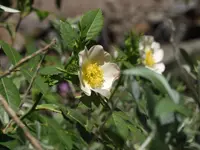
Airy shrub training

When shaping young plants, retain several outward-facing canes and remove congested interior shoots so light and air reach the center, which helps reduce fungal disease and encourages even flowering.

Targeted suckering control

Inspect the base and surrounding soil during the growing season and promptly remove unwanted suckers by pulling or cutting them from below the soil surface to prevent the plant from spreading into nearby beds.

Mulch ring management

Maintain a 5–8 cm deep, weed-free mulch ring that stops 3–5 cm short of the stems to protect shallow roots, stabilize soil moisture, and reduce competition without inviting stem rot.

Seasonal pest scouting

From spring to midsummer, check undersides of leaves and tender tips weekly for aphids, sawfly larvae, and spider mites, and remove localized infestations early by pinching, pruning, or hosing off as part of caring for Glandular dog-rose.

Common Pests and Diseases

Rose aphids

This pest clusters on young shoots and flower buds, sucking sap and causing curling or distortion of new growth and sticky honeydew deposits that can lead to sooty mold.

Solution

Prune off heavily infested shoot tips, then hose down remaining stems with a strong stream of water to dislodge insects; if needed, apply insecticidal soap or a light horticultural oil, making sure to cover the undersides of leaves and tender stems, and encourage natural predators such as lady beetles by avoiding broad-spectrum insecticides.

Rose sawfly larvae

These insects skeletonize leaves from the underside, leaving a translucent or lacy appearance that can defoliate plants when populations are high.

Solution

Inspect foliage frequently in spring and early summer, crush or hand-pick larvae from the leaf undersides, and, for heavier infestations, use a targeted contact spray such as insecticidal soap or spinosad, applied thoroughly to both upper and lower leaf surfaces.

Powdery mildew

This disease produces white, powdery patches on young leaves, stems, and flower buds, often causing curling or distortion and reduced flowering in dry days with cool nights.

Solution

Remove and discard affected leaves and shoots, improve air circulation by careful thinning of crowded stems, avoid wetting foliage in the evening, and when needed use a labeled fungicide such as sulfur or a myclobutanil-based product, applied preventively during susceptible weather conditions as part of general Rosa squarrosa care.

Black spot

This disease causes round black spots with fringed edges on leaves, followed by yellowing and premature leaf drop, particularly during warm, wet conditions.

Solution

Promptly remove and dispose of fallen leaves and heavily spotted foliage, water at soil level rather than overhead, space plants for good airflow, and apply a suitable rose fungicide on a regular schedule during wet periods to protect new growth.

Rose rust

This disease forms orange to rust-colored pustules on the undersides of leaves and stems, leading to yellowing, leaf drop, and weakened plants, especially in cool, moist weather.

Solution

Prune out and discard affected leaves and shoots, keep the center of the shrub open for better airflow, avoid overhead irrigation, and use a systemic or protectant fungicide labeled for rust on roses if symptoms recur, rotating products to reduce resistance risk.

Interesting Facts

Endemic Chinese shrub

This species is naturally restricted to parts of central China, where it occurs as a small, deciduous shrub in temperate shrublands and open forest margins rather than being widespread across Eurasia like many other wild roses.

Distinctive square hips

The species name squarrosa refers to the distinctive, somewhat angular rose hips, whose calyx lobes often stand out at sharp angles, giving the fruit a squarish, bristly appearance compared with the smoother, rounded hips of many related roses.

Taxonomically debated status

Botanists have debated its rank and relationships, and it has sometimes been treated as a form within broader wild rose complexes, so modern Rosa squarrosa care instructions may reference older synonyms in regional floras and herbaria.

FAQs about Glandular dog-rose

This shrub forms a dense, suckering thicket over time but is not usually invasive in managed gardens. It can spread beyond its original spot if suckers are not controlled by regular pruning and root barrier use.

Grow Healthy Plants with Botan Care

Keep your plants happy and healthy with plant identification, disease detection, and easy care guidance.

Botan plant care app — identify plants on mobile

Explore More Plants