Three-nerved Pearly Everlasting Care (Anaphalis triplinervis)

Three-nerved Pearly Everlasting

About Three-nerved Pearly Everlasting

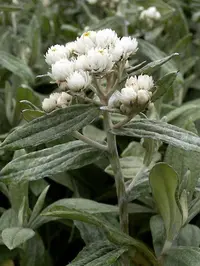
Three-nerved pearly everlasting, Anaphalis triplinervis, is a compact, clump-forming perennial grown mainly for its silvery foliage and long-lasting white flower clusters. It typically forms low mounds with softly textured, grey-green leaves that show three distinct veins, topped by firm, papery flower heads.

This species is native to the Himalayas and surrounding regions, where it grows in open, often rocky mountain habitats. Its drought tolerance, cold hardiness, and generally pest-resistant nature make it straightforward to grow in many temperate gardens.

Gardeners who care for Three-nerved Pearly Everlasting usually succeed when providing full sun, well-drained soil, and only moderate moisture. It is often used in borders, rock gardens, and for dried flower arrangements.

Main Plant Requirements

Care Difficulty

Easy Care

Light Preference

Full Sun

Water Requirements

Low Water

Temperature Preference

Cold Hardy

Hardiness Zone

4–9

Soil Texture

Sandy, Loamy, Rocky

Soil pH

Acidic (5.5–6.5), Slightly acidic (6.5–7.0)

Soil Drainage

Well-drained

Fertilization

Minimal (feed rarely)

Get Personalized Care Plan

Scan your plant to receive care tips personalized for your specific plant

Available on iOS and Android

How to Care for the Three-nerved Pearly Everlasting

This sun-loving perennial needs bright conditions to flower and stay compact.

  • Provide 6–8 hours of direct sun daily; in hotter regions, aim for morning sun and light afternoon shade to prevent leaf scorch.
  • Three-nerved Pearly Everlasting tolerates light partial shade (3–4 hours sun), but stems may elongate and flowering can decrease.
  • In summer, avoid reflected heat from south-facing walls; in early spring and fall, choose the sunniest, most open spot to maximize light intensity.

This plant prefers slightly dry conditions and dislikes sitting in wet soil.

  • Allow the top 3–5 cm of soil to dry before watering, then water thoroughly so it drains out, especially in the first growing season.
  • Use sharply drained, sandy or gritty soil to reduce the risk of root rot; Anaphalis triplinervis copes better with brief drought than prolonged moisture.
  • In cool seasons, watering may be needed only after extended dry spells; watch for limp, curling leaves as a sign of underwatering and yellowing, mushy stems as a sign of excess water.

This hardy perennial tolerates a wide temperature range once established outdoors.

  • Active growth is best at 60–75°F (16–24°C), with good air movement and low to moderate humidity.
  • Mature plants typically survive winter cold down to about -20°F (-29°C) when planted in well-drained soil and given a light mulch layer.
  • During heat above 90°F (32°C), flowering may slow; maintain soil drainage and consider light afternoon shade to limit stress and leaf scorch.

This species is adapted to dry, upland conditions and usually does not need special humidity control indoors or outdoors.

Anaphalis triplinervis prefers lean, well-drained soil that mimics dry, rocky slopes.

  • Use a sandy or gritty loam with low to moderate organic matter to prevent excess moisture retention.
  • Ensure very sharp drainage; raised beds or sloped sites help excess water move away from the root zone.
  • Aim for slightly acidic to neutral pH, around 6.0–7.0, avoiding strongly acidic or alkaline conditions.
  • Improve aeration and drainage by blending mineral grit, coarse sand, or fine gravel into heavier native soil.

This species can be grown in containers if the potting setup keeps the root zone dry and well aerated.

  • Choose a wide, shallow container to accommodate its spreading, fibrous roots without holding a deep water column.
  • Select a heavy, stable pot material like terracotta or stone to prevent toppling in windy, exposed placements.
  • Use an extra-gritty potting mix and slightly elevate the container feet to speed runoff and avoid water pooling under the base.

This plant is adapted to lean soils and usually needs only modest feeding for good growth.

  • Use a light application of balanced slow-release fertilizer (around 10-10-10) or a thin layer of compost in early spring as new growth starts.
  • Apply once per growing season; in very poor soil, a second light feeding in midsummer can support flowering for Three-nerved Pearly Everlasting.
  • Dilute liquid feeds to 1/2 strength if used, and apply to moist soil to avoid root burn.
  • Do not fertilize in late fall or winter, when growth is dormant, to prevent soft, frost-prone growth.

Pruning Anaphalis triplinervis is simple and helps maintain a tidy, floriferous clump.

  • Cut back spent flower stems in late fall or very early spring to keep the plant compact and encourage fresh shoots.
  • Remove dead, damaged, or diseased stems at the base using clean, sharp hand pruners to reduce pest and disease buildup.
  • Thin out overcrowded stems in the center of the clump to improve air flow and maintain a balanced mound shape.
  • Avoid heavy midseason cutting of healthy green growth, which can temporarily reduce flowering.

This species is usually grown in the ground, with transplanting more relevant than frequent repotting.

  • Transplant clumps in early spring or early fall, when temperatures are mild and soil moisture is stable.
  • Move plants when growth declines, flowering weakens, or the clump becomes congested, typically every 3–5 years.
  • Lift the clump with a spade, keeping as much root ball and surrounding soil intact as possible to reduce stress.
  • Water well after transplanting, then keep soil evenly moist (not waterlogged) for several weeks while roots re-establish.

Propagation of Anaphalis triplinervis is straightforward by division and seeds under suitable conditions.

  • Divide mature clumps in early spring, cutting the root mass into sections with several shoots and healthy roots each.
  • Replant divisions immediately at the same depth, in well-drained soil, and water thoroughly to settle soil around roots.
  • Sow seeds in late winter to early spring on the surface of a gritty, well-draining mix, as light aids germination.
  • Maintain cool to moderate temperatures (60–68°F) and gently moist conditions until seedlings are established.

This perennial is generally cold hardy in temperate climates and needs minimal winter care outdoors.

  • Tolerates typical frosts once established, especially in well-drained soil that prevents winter wet damage.
  • After the first hard frost, allow stems to die back naturally, then cut them close to ground level in late winter.
  • Apply a 3–5 cm layer of mulch around, but not against, the crowns in colder regions to buffer freeze–thaw cycles.
  • For container plants in very cold areas, move pots to a sheltered, unheated space to protect roots from extreme freezing.

Care Tips

Encourage Bushy Clumps

Shear back the top 5–8 cm of stems just after the first flush of flowers fades to promote tighter, bushier growth and a heavier second flush of blooms.

Deadhead For Longevity

Remove spent flower heads before they set seed if you want to extend the flowering season and prevent the plant from self-seeding into surrounding beds.

Plan For Spreading

Install a shallow root barrier or lift and edge the clump every 2–3 years, since the slowly creeping rhizomes can expand into neighboring planting areas in light soils.

Prepare For Winter Wet

In climates with wet winters, mound the planting area slightly or use raised beds so the crown stays above the coldest, wettest part of the soil and is less prone to rot.

Harvest For Drying

Cut stems for dried arrangements when most flower heads are open but still firm and hang them in small bundles upside down in a dry, airy, shaded place; this also lightly tidies the plant while growing Three-nerved Pearly Everlasting.

Common Pests and Diseases

Powdery mildew

This disease appears as a white, powdery coating on leaves and stems, often in warm, dry conditions with poor air movement. Symptoms include distorted new growth and a dull, grayish look to foliage.

Solution

Remove and discard heavily infected leaves, then thin surrounding vegetation to improve airflow around clumps. Avoid overhead watering, water at soil level in the morning, and if needed apply a sulfur or potassium bicarbonate-based fungicide labeled for ornamentals, following label directions closely.

Leaf spot

This disease causes small brown or tan spots on leaves that may merge into larger patches, especially in humid, rainy weather. Symptoms include premature yellowing and drop of lower leaves, reducing the plant’s vigor.

Solution

Prune and remove affected foliage from the plant and soil surface to reduce inoculum. Water at the base, keep the top growth dry as much as possible, and in persistent cases use a copper or chlorothalonil-based fungicide suitable for ornamentals, rotating products to limit resistance.

Aphids

These insects cluster on tender stems and the undersides of leaves, sucking sap and causing curled, yellowed, or sticky foliage due to honeydew. This pest can also attract sooty mold on the sugary deposits.

Solution

Spray colonies off with a strong stream of water, then treat remaining insects with insecticidal soap or horticultural oil, ensuring thorough coverage of leaf undersides. Encourage natural predators such as lady beetles by avoiding broad-spectrum insecticides nearby.

Spider mites

These pests are tiny sap-sucking arachnids that thrive in hot, dry conditions, leading to fine stippling on leaves and a dull, grayish cast. Symptoms include very fine webbing between stems and leaves and gradual leaf drop if populations are high.

Solution

Rinse foliage with water, focusing on the undersides of leaves, and increase humidity around plants by mulching soil to reduce heat stress. For ongoing infestations, apply horticultural oil or insecticidal soap at 5–7 day intervals until new growth appears clean, monitoring regularly during hot spells.

Rust

This disease shows as small orange, yellow, or brown pustules on the undersides of leaves, with pale or yellow spots on the upper surfaces. Symptoms include gradual weakening of the plant and early leaf drop in severe cases.

Solution

Remove and destroy affected leaves as soon as symptoms appear, and clean up plant debris in autumn to reduce overwintering spores. Improve air circulation by spacing plants correctly and, if needed, use a labeled systemic or contact fungicide for rust on ornamentals, applying at the first sign of infection.

Interesting Facts

Naturally woolly foliage

The leaves are densely covered with fine hairs that give the plant a soft, grey-white, woolly look and help reduce water loss and sun scorch in exposed mountain conditions.

True everlasting bracts

The papery white structures that look like petals are actually long-lasting bracts that keep their shape and color when dried, which is why this species is widely used in dried flower arrangements.

Himalayan origin habitat

This species is native to cool, rocky slopes of the Himalayas and surrounding mountain regions, where it grows in well-drained, often gravelly soils in full sun and relatively low humidity.

FAQs about Three-nerved Pearly Everlasting

This species forms slowly expanding clumps through short rhizomes, but it is not usually aggressive. It may self-seed modestly. In most gardens it behaves as a well-mannered perennial, especially in lean, well-drained soils.

Grow Healthy Plants with Botan Care

Keep your plants happy and healthy with plant identification, disease detection, and easy care guidance.

Botan plant care app — identify plants on mobile

Explore More Plants