Structured stem training
Select 3–5 strong shoots early in the season and loosely tie them to a small stake or trellis to build a stable framework that supports heavy flowering later and reduces breakage in wind or under their own weight.

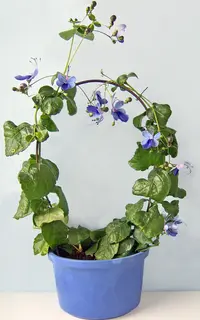
Rough-leaved cats-whiskers (Rotheca myricoides) is a small, shrubby ornamental plant valued for its unusual blue and white flowers. The blooms have long, whisker-like stamens that give the plant its common name.
It typically forms a loose, branching shrub with slightly rough-textured leaves and a somewhat open, airy habit. In mild climates it can flower over a long season, attracting butterflies and other pollinators.
This species comes from tropical Africa, so it prefers warmth, bright light, and protection from frost. With suitable light and regular moisture, it is moderately easy to care for Rough-leaved Cats-whiskers in gardens or containers.

Care Difficulty
Moderate Care

Light Preference
Partial Sun

Water Requirements
Moderate Water

Temperature Preference
Tropical / Frost Sensitive

Hardiness Zone
10–11

Soil Texture
Sandy, Loamy, Organic-rich

Soil pH
Acidic (5.5–6.5), Slightly acidic (6.5–7.0)

Soil Drainage
Moist but well-drained

Fertilization
Light (every 4–6 weeks)
Scan your plant to receive care tips personalized for your specific plant
Available on iOS and Android
This shrub thrives in bright light but needs some protection from harsh sun, especially in hot summers.
This plant prefers evenly moist, well-drained soil that never stays soggy for long periods.
This species grows best in warm, frost-free conditions with moderate seasonal variation.
This shrub prefers moderate air moisture and tolerates typical indoor humidity if not extremely dry.
Rotheca myricoides grows best in loose, well-drained, moderately fertile soil.
This species adapts well to container growing for patios, balconies, or small gardens.
This shrub responds well to moderate feeding during its active growing season.
Thoughtful pruning keeps Rotheca myricoides compact and encourages abundant flowers.
Container-grown plants benefit from periodic repotting to maintain root health and steady growth.
New plants are most reliably produced from semi-ripe stem cuttings.
This species is frost-tender and needs protection in regions with cold winters.

Plant Health Check
Not sure what's wrong with your plant? Check your plant's health inside the app.
The flowers have distinctly asymmetric petals that spread like butterfly wings, which is why the plant is often called butterfly bush or blue butterfly bush in cultivation, even though it is not closely related to Buddleja species that share that common name.
This species is native to parts of tropical eastern Africa, where it grows as a woody shrub in warm, frost-free regions, often forming part of mixed shrubland or garden plantings in settled areas.
The combination of blue to violet petals with white highlights and long, curved stamens provides both visual and structural cues that help guide insect pollinators to the nectar source.
Poor flowering usually comes from insufficient light, heavy pruning at the wrong time, or low nutrients. Allow strong light, avoid cutting new growth tips before buds form, and provide balanced fertilization to support repeat blooming.
Keep your plants happy and healthy with plant identification, disease detection, and easy care guidance.