Crown winter protection
In cold regions, fold large leaves over the crown after the first frost, then cover with a dry mulch layer (such as straw or bracken) to protect growth buds from freeze–thaw damage.

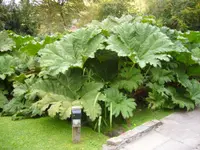
Giant rhubarb, Gunnera manicata, is a dramatic, fast-growing perennial known for its enormous, rough-textured leaves on thick, bristly stalks. It forms bold clumps that create a striking architectural feature in large gardens.
This species is native to damp valleys and stream edges in South America, especially Brazil. It prefers consistently moist soil, cool roots, and shelter from harsh drying winds.
The plant is not suitable for small spaces and can be challenging in hot, dry, or very cold climates. Understanding how to care for Giant rhubarb starts with providing ample moisture, rich soil, and partial shade in many regions.

Care Difficulty
Moderate Care

Light Preference
Partial Shade

Water Requirements
Keep Soil Moist

Temperature Preference
Cool Climate

Hardiness Zone
7–10

Soil Texture
Loamy, Silty, Organic-rich

Soil pH
Acidic (5.5–6.5), Slightly acidic (6.5–7.0)

Soil Drainage
Waterlogged tolerant

Fertilization
Moderate (every 2–4 weeks)
Scan your plant to receive care tips personalized for your specific plant
Available on iOS and Android
This plant prefers bright, cool conditions with protection from intense midday sun.
This moisture-loving plant needs consistently damp soil without prolonged waterlogging.
This species grows best in cool, mild climates with protection from temperature extremes.
This species needs consistently moist, high-humidity conditions to prevent leaf scorch.
Gunnera manicata thrives in deep, water-retentive but not stagnant soil.
This species is generally unsuitable for long-term container growing due to its enormous size and water demand.
Gunnera manicata is a heavy feeder that benefits from rich soil and consistent nutrition during the growing season.
Pruning Gunnera manicata is mainly about hygiene and winter preparation rather than shaping.
This plant is usually grown in the ground; transplanting established clumps of Gunnera manicata needs planning and care.
Gunnera manicata is most reliably propagated by division of established clumps rather than by seed.
In many climates Gunnera manicata needs deliberate winter protection, especially where temperatures fall below freezing.

Plant Health Check
Not sure what's wrong with your plant? Check your plant's health inside the app.
This species produces some of the largest herbaceous leaves in the world, with individual blades often exceeding 1.5–2 m across in suitable conditions, allowing very high light capture in open, wet habitats.
The thick, spongy petioles and leaf bases can store significant water, which helps the plant tolerate brief fluctuations in soil moisture despite its preference for constantly damp ground.
The huge, deeply lobed and sharply toothed leaves form an umbrella-like canopy that shades the plant’s own crown and the soil beneath, reducing evaporation and creating a cool, humid microhabitat for mosses, seedlings, and small animals.

Gunnera manicata hosts specialized cyanobacteria (Nostoc species) inside tiny glands near the leaf bases, forming a rare symbiosis in which the microbes convert atmospheric nitrogen into forms the plant can use, giving it a nutritional advantage in nutrient-poor, waterlogged soils.
Yellowing leaves usually result from waterlogging, nutrient-poor soil, or natural aging of older foliage. Check drainage, avoid standing water, and provide a balanced slow-release fertilizer in spring. Remove the oldest yellow leaves to reduce rot and improve airflow.
Keep your plants happy and healthy with plant identification, disease detection, and easy care guidance.