Stabilize Floating Tubs
Use wide, shallow ponds or stock tanks with vertical sides and minimal water movement so the large pads can expand without tearing on edges or being pushed into walls by currents.

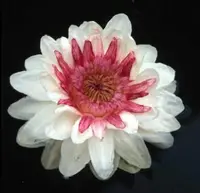
The Santa Cruz water-lily, Victoria cruziana, is a large aquatic plant known for its huge round floating leaves and showy night-blooming flowers. It forms an impressive rosette on the water surface, with thick, raised rims and strong spines on the underside of leaves and stems.
This species is native to slow, warm waters of South America, especially in Paraguay, Argentina, and surrounding regions. It prefers full sun, consistently warm temperatures, and calm, nutrient-rich water.
Its size, heat requirement, and need for stable water conditions make it challenging for beginners. Gardeners who care for Santa Cruz water-lily usually rely on ponds or large heated tubs rather than small containers.

Care Difficulty
Hard Care

Light Preference
Full Sun

Water Requirements
Aquatic

Temperature Preference
Tropical / Frost Sensitive

Hardiness Zone
10–12

Soil Texture
Loamy, Silty, Organic-rich

Soil pH
Slightly acidic (6.5–7.0), Neutral (7.0)

Soil Drainage
Waterlogged tolerant

Fertilization
Heavy (weekly, diluted)
Scan your plant to receive care tips personalized for your specific plant
Available on iOS and Android
This tropical aquatic species needs strong, consistent light to fuel rapid leaf and flower growth.
This large waterlily requires stable, deep, warm water rather than typical pot watering schedules.
This species grows best in consistently warm water and air, with no exposure to frost.
This species needs very high humidity because its leaves sit close to warm water surfaces.
This aquatic species grows best rooted in heavy, stable, organic-rich sediment rather than typical potting mixes.
This species can be grown in very large containers if the vessel is treated as a mini-pond.
Nutrient-rich water supports strong growth and flowering in Victoria cruziana during the warm season.
Pruning Victoria cruziana focuses on removing spent or unhealthy growth to keep the plant vigorous and the water clean.
Transplanting Victoria cruziana involves moving young plants into wide, shallow containers or baskets that sit below the water surface.
Propagation of Victoria cruziana is usually done from seed rather than division in home ponds.
Winter care for Victoria cruziana is critical because this species is highly frost sensitive and behaves as an annual in cool climates.

Plant Health Check
Not sure what's wrong with your plant? Check your plant's health inside the app.
Its flowers open at dusk and can slightly raise their own temperature through thermogenesis, which helps volatilize floral scents and attract nocturnal beetle pollinators.
The enormous floating leaves have a strong network of ribs and air-filled spaces that provide buoyancy and mechanical support, allowing them to spread widely on the water surface without tearing.
Seeds germinate with juvenile leaves that can grow submerged and then transition to true floating pads, an adaptation to fluctuating water levels in its native South American wetlands.

The species was historically confused with Victoria amazonica until detailed morphological and anatomical studies in the 19th and 20th centuries clarified that it is a distinct species with different flower structure, leaf rim height, and cooler-climate tolerance, which is why many temperate botanic gardens now favor Victoria cruziana for display ponds.
Lack of flowers usually comes from water that is too cool, not enough full sun, or insufficient nutrients. It also needs still, relatively deep water and enough surface space so leaves are not shaded or crowded.
Keep your plants happy and healthy with plant identification, disease detection, and easy care guidance.