Anchor To Surfaces
Tie or sandwich the moss gently onto rock, wood, or mesh using fine fishing line or cotton thread so the rhizoids can attach firmly and form a dense, even mat instead of drifting or clumping.

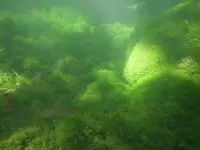
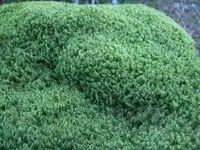
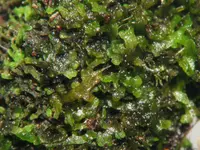
Fissidens moss (Fissidens fontanus) is a small aquatic moss often used in freshwater aquariums and paludariums. It forms soft, featherlike fronds that attach to rocks, wood, or other hard surfaces.
In nature it occurs in streams and rivers, especially in slowly moving or sheltered water. The growth habit is compact and creeping, so it creates dense, natural-looking cushions over time.
This moss is generally considered moderate in difficulty because it prefers stable, clean water and does not tolerate heavy disturbance well. Consistent moisture, gentle water flow, and low to moderate light usually support healthy growth for those learning how to care for fissidens moss.

Care Difficulty
Moderate Care

Light Preference
Partial Shade

Water Requirements
Aquatic

Temperature Preference
Cool Climate

Hardiness Zone
Unknown

Soil Texture
Organic-rich, Peaty

Soil pH
Acidic (5.5–6.5), Slightly acidic (6.5–7.0)

Soil Drainage
Waterlogged tolerant

Fertilization
Minimal (feed rarely)
Scan your plant to receive care tips personalized for your specific plant
Available on iOS and Android
This moss thrives in low to moderate light and is easily damaged by strong direct sun.
This species prefers consistently moist to submerged conditions and does not tolerate drying out.
Temperature stability supports dense, healthy growth in this moss.
This moss prefers constantly high humidity to maintain dense, healthy cushions.
This aquatic moss does not root in soil but anchors to hard surfaces and relies on water chemistry rather than substrate.
This species is very suitable for container culture in aquariums, nano tanks, and small aquatic displays.
This aquatic moss has low nutrient demands and reacts poorly to heavy fertilization.
Pruning focuses on gentle trimming to maintain healthy, compact underwater cushions of Fissidens fontanus.
Instead of classic repotting, this moss is repositioned or reattached when mats overgrow hardscape or lose attachment.
Propagation of this moss relies on division and reattachment rather than sexual reproduction from spores for home aquariums.
Aquarium-grown Fissidens fontanus needs minimal winter care if tank temperature and water quality remain stable.

Plant Health Check
Not sure what's wrong with your plant? Check your plant's health inside the app.
In flowing streams this moss forms loose, arching plumes that resemble a small submerged fountain, which is why it is commonly called fountain moss.
It clings to rocks and wood using dense rhizoids, root-like anchoring filaments, allowing the plant to withstand steady current without being washed away.
Wild populations are typically found in cool, clean, well-oxygenated waters in Europe and North America, where stable low temperatures and gentle flow support its slow growth.

Unlike many aquatic mosses that mainly creep along surfaces, this species often grows in three-dimensional cushions and tufts that project into the water column, creating miniature shelter zones for small invertebrates and fry in streams and aquaria.
This species does not produce showy flowers. It reproduces by spores, not blossoms, so there is no visible blooming phase to expect. Healthy growth is seen as dense, fine fronds rather than any type of flower.
Keep your plants happy and healthy with plant identification, disease detection, and easy care guidance.