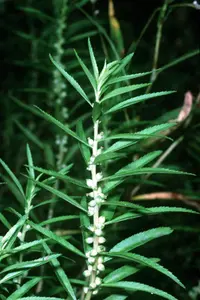
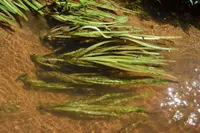
Mermaid's wine glass Care (Acetabularia acetabulum)

Mermaid's wine glass

About Mermaid's wine glass

Mermaid's wine glass, Acetabularia acetabulum, is a single-celled marine green alga often grown as a decorative curiosity in aquariums and marine displays. It forms slender stalks topped with round, umbrella-like caps that resemble tiny wine glasses.

This alga naturally occurs in shallow, warm coastal waters of the Mediterranean and nearby regions, usually attached to rocks or shells. It is moderately challenging to grow because it needs stable marine water conditions, good light, and clean, gentle water movement.

Hobbyists who care for Mermaid's wine glass typically focus on providing consistent salinity, strong but not harsh lighting, and low competition from faster-growing algae.

Main Plant Requirements

Care Difficulty

Hard Care

Light Preference

Partial Shade

Water Requirements

Aquatic

Temperature Preference

Tropical / Frost Sensitive

Hardiness Zone

Unknown

Soil Texture

Sandy, Silty, Organic-rich

Soil pH

Slightly acidic (6.5–7.0), Neutral (7.0)

Soil Drainage

Waterlogged tolerant

Fertilization

Light (every 4–6 weeks)

Get Personalized Care Plan

Scan your plant to receive care tips personalized for your specific plant

Available on iOS and Android

How to Care for the Mermaid's wine glass

This marine alga prefers bright, filtered light that mimics shallow coastal waters for steady growth.

  • Provide 6–8 hours of bright, indirect light or light shade; brief morning sun is acceptable, but avoid harsh midday and afternoon sun that can bleach the caps.
  • In outdoor shallow tanks or tide-pool setups, use shade cloth or position where rocks or structures break direct sun during the strongest hours.
  • In lower light or overcast seasons, move Mermaid's wine glass to a slightly brighter position to prevent pale, elongated stalks indicating insufficient light.

This species is fully aquatic and depends on stable, clean seawater rather than soil moisture for hydration.

  • Grow in marine water with stable salinity and gentle circulation; do not allow the thalli to sit in stagnant, fouled water, which encourages decay.
  • Change or refresh part of the seawater when it becomes cloudy or develops a sulfur smell; decaying tissue, slimy surfaces, or collapsing stalks signal over-fouled conditions.
  • Acetabularia acetabulum responds poorly to rapid changes; adjust salinity and water temperature gradually to avoid stress that appears as translucent or disintegrating caps.

This warm-water alga grows best in stable, mild conditions typical of temperate to subtropical shallow seas.

  • Aim for 72–79°F (22–26°C) for steady growth; this range supports active cell processes and healthy cap formation.
  • Avoid letting water drop below 64°F (18°C), as growth slows sharply and tissue may weaken; the alga does not tolerate frost or near-freezing conditions.
  • It copes with short periods up to about 82–84°F (28–29°C) if well-oxygenated, but prolonged hotter water can cause stress, tissue breakdown, and greater risk of algal overgrowth on the stalks.

This marine alga needs consistently high humidity and should never be kept in dry air.

  • Maintain near-100% humidity by fully submerging the plant in clean, aerated seawater.
  • Dry household air quickly dehydrates tissues, causing fading color and collapsing stalks.
  • Increase effective humidity by using a lidded marine tank, minimizing surface agitation that causes excessive evaporation, and topping off evaporated water with dechlorinated, salinity-adjusted water.

Acetabularia acetabulum does not use terrestrial soil and instead anchors in marine substrate.

  • Provide a shallow layer of clean, fine sand or crushed coral to stabilize the holdfast without burying the lower stalk.
  • Use inert, calcium-rich marine substrate that does not release pollutants and supports stable marine pH around 8.0–8.4.
  • Avoid nutrient-rich potting mixes, organic composts, or silty substrates that trap debris and promote algae film overgrowth.
  • Rinse substrate before use and keep water movement gentle so particles do not smother the plant base.

This species is well suited to container growing in small marine aquaria or clear vessels.

  • Choose a low, wide container so the tall, umbrella-like stalks stay stable and do not topple in water flow.
  • Use heavy substrate or base stones to anchor decorations and prevent the plant from being dislodged by filtration currents.
  • Select inert glass or acrylic containers that do not leach substances and allow easy side viewing of Mermaid's wine glass.

This small marine alga grows slowly and needs only light, controlled nutrition in aquaria.

  • Use a dilute balanced liquid fertilizer (around 10-10-10) formulated for marine or macroalgae, never terrestrial plant food.
  • Dose at 1/4 strength every 2–4 weeks during active growth, guided by water-test readings for nitrate and phosphate.
  • Skip feeding in winter or low-light periods to reduce algae overgrowth and maintain stable water chemistry for Mermaid's wine glass.
  • Perform small, regular water changes instead of heavy dosing to avoid nutrient spikes and salt imbalance.

Pruning Acetabularia acetabulum is minimal and mainly for aesthetics and health in a marine tank.

  • Trim yellowing or decaying stalks at the base using fine aquascaping scissors to maintain water quality.
  • Remove crowded or shaded individuals to improve light penetration and water flow around remaining fronds.
  • Cut away any damaged tissue promptly to limit biofilm buildup and reduce risk of localized decay.
  • Work gently to avoid disturbing the substrate, which can destabilize roots and release trapped debris.

This macroalga is not repotted like houseplants but can be repositioned or transplanted within marine aquaria.

  • Transplant when growth slows, fronds lean or detach, or when clumps are shaded by rockwork or corals.
  • Best timing is during stable, warm conditions when salinity, temperature, and light have been consistent for several weeks.
  • Typical frequency is low; reposition or re-anchor only when crowding, shading, or substrate disturbance clearly affects growth.
  • Lift plants gently, keep holdfasts and surrounding sand intact, then re-anchor in a similar-depth, undisturbed substrate to limit shock.

Propagation in aquaria relies mainly on natural reproduction and careful handling of new individuals.

  • Allow mature caps to release gametes; new plantlets often appear nearby when water quality, light, and nutrients are stable.
  • Collect and gently move small, self-established juveniles to new spots rather than cutting the parent stalk.
  • Provide strong but not harsh light, steady temperature, and low to moderate nutrients to support early growth.
  • Avoid frequent disturbance of the substrate so young holdfasts can anchor securely and develop a stable base.

As a tropical marine alga kept indoors, this species needs stable warm-water conditions rather than classic winter care.

  • Maintain water temperature in its preferred warm range, avoiding drops below the species’ tolerance stated by the supplier.
  • Use a reliable heater and thermometer to keep temperature fluctuations within 1–2°F across day and night.
  • In cooler months, check salinity more often because evaporation increases, then top up with fresh water to keep levels stable.
  • For unheated rooms, consider insulating the tank sides and lid to reduce nightly heat loss and stress.

Care Tips

Stable water chemistry

Use dechlorinated, low-nutrient saltwater with stable salinity and pH, and test it regularly so that small, frequent adjustments replace large, stressful changes for the alga.

Gentle water movement

Provide mild, laminar water flow using a small powerhead or air-lift so the thalli sway gently, which improves gas exchange and nutrient distribution without bending or breaking the stalks.

Targeted nutrient dosing

Add a balanced marine microalgae fertilizer at low, measured doses and monitor for algae film on container walls, reducing dosage immediately if murkiness or slimy buildup appears.

Controlled light photoperiod

Set a timer to provide a consistent daily light cycle (for example 10–12 hours) and keep the photoperiod stable from day to day, which supports regular cell division and cup formation when growing Mermaid's wine glass.

Careful handling technique

Handle specimens only by the lower stalk or holdfast using soft aquascaping tweezers when relocating or cleaning, and avoid touching the cup surface so the delicate photosynthetic tissue is not damaged.

Common Pests and Diseases

Epiphytic algae overgrowth

This disease appears as dense green film or fuzzy growth covering the stalks and cup-like caps, blocking light and slowing growth. Symptoms include reduced translucency of the discs and overall dull, uneven color.

Solution

Limit excess nutrients by reducing fertilization, increase water changes, and gently brush or rinse affected thalli under clean, aerated seawater to expose the tissue to light again. Improve water circulation and maintain stable salinity and moderate light levels to prevent regrowth while growing Mermaid's wine glass.

Filamentous green algae

This pest forms long, hair-like strands that tangle around the stems and discs, competing for light and nutrients. This growth can weigh down the delicate structures and cause deformation or breakage.

Solution

Manually remove filaments by gently twirling them around a soft brush or forceps, taking care not to tear the plant. Reduce dissolved nutrients through partial water changes, avoid overfeeding in mixed tanks, and maintain moderate, not excessive, light intensity to discourage filament growth.

Cyanobacterial slime

This disease presents as reddish, brown, or dark green slimy mats that coat the substrate and lower parts of the plant, sometimes trapping gas bubbles. The slime can suffocate tissue and lead to localized decay.

Solution

Siphon off cyanobacterial mats during water changes and increase water movement around the plant to reduce stagnant zones. Lower dissolved organic load by adjusting feeding, improving filtration, and maintaining a consistent photoperiod rather than leaving lights on for extended hours.

Micrograzing invertebrates

These insects or tiny crustaceans rasp or nibble at the soft caps, creating small holes, irregular edges, or missing segments on the discs. Damage is usually patchy and may be more noticeable on younger, thinner tissue.

Solution

Inspect the plant and surrounding substrate for small snails or amphipods and manually remove individuals when numbers are low. If damage persists, adjust tank stocking, provide alternative food sources, and use fine mechanical filtration or traps to reduce populations without exposing the alga to harsh chemical treatments.

Interesting Facts

Single giant cell

Each visible Mermaid's wine glass individual is one enormous unicellular alga, sometimes several cm tall, making it a classic model for studying how a single cell organizes complex structures.

Famous nuclear experiments

In the 20th century, landmark experiments on this alga showed that developmental patterns in the cap are controlled by the nucleus in the rhizoid at the base, helping establish how genetic information directs cell differentiation.

Mediterranean specialist

This species is naturally found in clear, shallow, sunlit coastal waters of the Mediterranean and nearby Atlantic, where it anchors to hard substrates like rocks and shells on the sea floor.

Botan icon

Did you know?

This alga played a key role in early molecular biology history when Joachim Hämmerling used it in the 1930s–1940s to demonstrate that hereditary information is stored in the nucleus, influencing how scientists later approached the discovery of DNA as the genetic material.

FAQs about Mermaid's wine glass

Growth is relatively slow. A single-celled stalk typically needs several months to develop the characteristic umbrella cap from a young stage, even in ideal conditions with stable warmth, bright light, and clean, nutrient-balanced water.

Grow Healthy Plants with Botan Care

Keep your plants happy and healthy with plant identification, disease detection, and easy care guidance.

Botan plant care app — identify plants on mobile

Explore More Plants