Container depth choice
Use a wide, heavy aquatic basket at least 30–40 cm deep so the rhizomes can spread horizontally without deforming and the plant remains stable in moving or windy conditions.

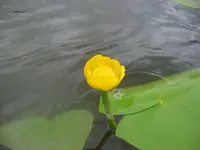
Yellow water-lily, Nuphar lutea, is an aquatic perennial that anchors in pond or lake bottoms and sends up floating, heart-shaped leaves. It forms dense clumps that spread slowly across still or gently moving water.
The plant is known for its rounded yellow flowers, which sit just above the water surface and attract insects. It naturally occurs in temperate regions across Europe and parts of western Asia, often in nutrient-rich, calm waters.
Its growth habit makes it suitable only for ponds, large containers, or naturalized water gardens, not for traditional in-ground beds. For those who care for Yellow Water-lily, success depends on stable water depth, full sun, and consistently wet, muddy substrate.

Care Difficulty
Moderate Care

Light Preference
Full Sun

Water Requirements
Aquatic

Temperature Preference
Cold Hardy

Hardiness Zone
3–7

Soil Texture
Loamy, Silty, Organic-rich

Soil pH
Slightly acidic (6.5–7.0), Neutral (7.0)

Soil Drainage
Waterlogged tolerant

Fertilization
Minimal (feed rarely)
Scan your plant to receive care tips personalized for your specific plant
Available on iOS and Android
This aquatic plant prefers stable, bright conditions over shallow, sunlit water surfaces.
This species is a true aquatic and must grow with its roots and rhizomes fully submerged.
This hardy aquatic species tolerates a wide temperature range but grows best in moderate warmth.
This aquatic species does not have specific air humidity needs because its leaves and roots are adapted to water immersion.
Nuphar lutea needs permanently submerged, heavy, organic-rich substrate rather than standard potting soil.
This species can be grown in large, water-filled containers such as half-barrels or troughs outdoors.
This aquatic native generally needs little feeding when grown in a natural pond with nutrient-rich mud.
Pruning Nuphar lutea focuses on hygiene and managing spread rather than shaping the plant.
Transplanting is mainly needed when plants outgrow baskets or spread beyond the desired area in a pond.
Propagation of this species is most reliable by division of the rhizomes in suitable water conditions.
In most temperate climates this hardy aquatic plant overwinters in place with minimal intervention.

Plant Health Check
Not sure what's wrong with your plant? Check your plant's health inside the app.
This species grows from thick, creeping rhizomes anchored in pond and slow-river sediments, forming dense stands that stabilize the substrate and trap suspended particles.
Its yellow, cup-shaped flowers produce a strong, somewhat alcoholic scent that attracts specific beetles and flies, which often shelter inside the flower and assist with pollination.
In addition to floating leaves, it can produce submerged, more flexible leaves with thinner tissues that help the plant tolerate changing water levels and currents.

The seeds of this species are naturally buoyant and can remain viable while drifting in water, which allows the plant to colonize new water bodies over considerable distances along connected river and canal systems.
Poor flowering often comes from water that is too deep, too much shade, or nutrient-poor, compacted sediment. Provide still or slow-moving water, moderate depth, and balanced aquatic fertilizer to support regular buds and blooms.
Keep your plants happy and healthy with plant identification, disease detection, and easy care guidance.