Site Airflow Planning
When planting, choose an open, breezy location away from solid fences or dense hedges so foliage dries quickly after rain and snow, which helps limit fungal cankers and spider mite build-up when growing Utah Juniper.

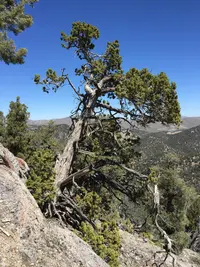
Utah juniper, Juniperus osteosperma, is a hardy evergreen tree or large shrub native to dry plateaus and deserts of the American Southwest. It often grows with a single twisted trunk and dense, gray-green foliage.
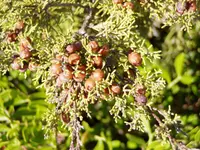
This species forms small, berry-like seed cones that feed wildlife and give the plant its characteristic juniper scent. Its slow growth, strong drought tolerance, and ability to handle poor, rocky soils make it suitable for low-maintenance, arid landscapes.
Gardeners who care for Utah Juniper should note that it prefers full sun, sharply drained soil, and minimal supplemental watering once established.

Care Difficulty
Easy Care

Light Preference
Full Sun

Water Requirements
Low Water

Temperature Preference
Cold Hardy

Hardiness Zone
6–8

Soil Texture
Sandy, Loamy, Rocky

Soil pH
Neutral (7.0), Alkaline (7.5–8.5)

Soil Drainage
Well-drained

Fertilization
Minimal (feed rarely)
Scan your plant to receive care tips personalized for your specific plant
Available on iOS and Android
This desert-adapted conifer thrives in strong, direct sun and needs high light to stay dense and healthy.
This species is highly drought-tolerant and prefers infrequent, deep watering over frequent light applications.
This juniper is adapted to wide temperature swings and performs best in climates with hot summers and cold winters.
This species tolerates very low humidity and generally does not need humidity adjustment indoors or outdoors.
Juniperus osteosperma prefers mineral, fast-draining soils that mimic its native dry slopes.
This species can be grown in containers, but only with careful attention to stability and drainage.
This drought-adapted species usually needs little feeding, especially in native or lean soils.
Juniperus osteosperma benefits from light, strategic pruning to maintain structure and health.
This species is rarely grown long-term in containers; most care focuses on careful transplanting of young plants.
Juniperus osteosperma is typically propagated by semi-hardwood cuttings or seeds, but both methods are slow and require patience.
This cold-hardy desert conifer generally needs minimal winter care in most US climates within its range.

Plant Health Check
Not sure what's wrong with your plant? Check your plant's health inside the app.
This species grows an unusually deep and wide root system that allows it to tap scarce groundwater and also slow runoff, helping stabilize dry, rocky slopes across the Great Basin and Colorado Plateau.
What look like blue berries are actually fleshy seed cones that take about 2 years to mature and provide an important winter food source for birds and mammals such as Townsend’s solitaire and mule deer.
This tree commonly colonizes alkaline, shallow, and very nutrient-poor soils where few other woody plants survive, forming open woodlands that define extensive pinyon–juniper ecosystems.

Tree-ring studies show that some individuals of this species can live well over 1,000 years, which makes them valuable natural archives for reconstructing past droughts and climate patterns in the interior western United States.
Container culture is possible if the pot is large, heavy, and very well-drained. Growth will be slower and size restricted. Use a gritty mix, full sun outdoors, and avoid frequent repotting to reduce stress.
Keep your plants happy and healthy with plant identification, disease detection, and easy care guidance.