Thorn-safe positioning
Site the plant at least 1–1.5 m from paths, play areas, and driveways, and orient main branches away from traffic zones to reduce injury risk from the strong paired thorns.


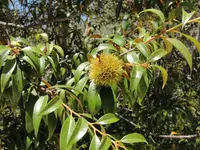
Buffalo thorn (Ziziphus mucronata) is a drought-tolerant deciduous tree or large shrub, usually with a rounded crown and a strong, often twisted trunk. It bears zigzag branches with paired straight and hooked thorns, small glossy leaves, and clusters of greenish-yellow flowers followed by edible reddish fruits.
This species is native to savannas and dry woodlands across southern and eastern Africa, where it copes well with heat, poor soils, and irregular rainfall. Its toughness and slow to moderate growth make it suitable for low-maintenance, defensive hedging in warm, frost-free climates.
Gardeners who want to care for Buffalo thorn should know it prefers full sun, well-drained soil, and occasional deep watering once established.

Care Difficulty
Easy Care

Light Preference
Full Sun

Water Requirements
Low Water

Temperature Preference
Warm Climate

Hardiness Zone
9–11

Soil Texture
Sandy, Loamy, Rocky

Soil pH
Slightly acidic (6.5–7.0), Slightly alkaline (7.0–7.5)

Soil Drainage
Well-drained

Fertilization
Minimal (feed rarely)
Scan your plant to receive care tips personalized for your specific plant
Available on iOS and Android
This sun-loving African shrub or small tree needs strong light to grow dense, thorny branches and flower well.
This drought-tolerant tree prefers deep, infrequent watering once established rather than constant moisture.
This species thrives in warm climates and tolerates heat but is sensitive to hard frost, especially when young.
This species tolerates a wide humidity range and rarely needs special humidity control.
This drought-tolerant tree prefers lean, well-drained soil that does not stay wet.
This thorny, deep-rooted species can be grown in containers short term if the pot is chosen carefully.
This drought-adapted tree needs light feeding only when actively growing in poor soils.
Pruning Ziziphus mucronata focuses on safety, structure, and removing weak growth rather than frequent shaping.
This species is usually grown in the ground, so management focuses on careful transplanting rather than frequent repotting.
Propagation of Ziziphus mucronata is usually done from seed with some use of semi-hardwood cuttings.
This tree is fairly tolerant of mild frost but may need some help in colder regions or when grown in containers.

Plant Health Check
Not sure what's wrong with your plant? Check your plant's health inside the app.
This species produces distinctive pairs of thorns on its branches, with one usually hooked and the other straight, forming an effective defense against large browsing animals in African savannas.
Its leaves decompose relatively quickly and contribute organic matter and nutrients to the often-poor savanna soils, creating small fertility “islands” under the canopy where grasses and other plants grow more vigorously.
The small, sweet fruits are eaten by many birds and mammals, which disperse the seeds through their droppings and help maintain natural populations across wide areas of southern and eastern Africa.

Archaeological and ethnobotanical studies show that this species has been used for centuries across southern Africa for durable tools, fencing, and traditional woodcraft, because its hard, tough timber resists cracking and insect damage even in hot, dry climates.
Growth is moderate rather than rapid. In favorable outdoor conditions, it usually extends 30–60 cm per year. Seedlings and young plants grow faster, then slow as the woody framework forms and roots deepen in drier soils.
Keep your plants happy and healthy with plant identification, disease detection, and easy care guidance.