Harvesting Strategy
Cut outer, older shoots 3–5 cm above soil level rather than pulling whole clumps, which encourages continuous regrowth and keeps the plant productive for longer harvesting periods.


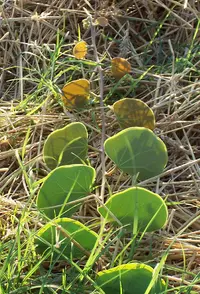
Indian knotgrass, Polygonum cognatum, is a low-growing perennial herb often used as a groundcover or in edible gardens. It forms dense mats of slender, branching stems with small, rounded leaves and tiny, inconspicuous flowers.
This species occurs naturally in mountainous regions of Anatolia, where it is adapted to cool summers, full sun, and well-drained, often rocky soils. Its tolerance of poor soil and moderate drought makes it relatively easy to grow once established, though it dislikes waterlogged conditions. Gardeners who want to learn how to care for Indian Knotgrass should note its spreading habit, which can fill open spaces but may require edging or containment in small beds.

Care Difficulty
Easy Care

Light Preference
Full Sun

Water Requirements
Moderate Water

Temperature Preference
Cold Hardy

Hardiness Zone
4–9

Soil Texture
Loamy, Silty, Organic-rich

Soil pH
Slightly acidic (6.5–7.0), Neutral (7.0)

Soil Drainage
Moist but well-drained

Fertilization
Minimal (feed rarely)
Scan your plant to receive care tips personalized for your specific plant
Available on iOS and Android
Polygonum cognatum thrives in open, bright sites but benefits from some protection from intense midday sun.
Polygonum cognatum prefers consistently moist but not waterlogged soil, especially during active growth.
This hardy perennial tolerates a fairly wide temperature range but grows best in mild conditions.
This species handles a wide humidity range and usually does not need special adjustment indoors or outdoors.
Polygonum cognatum prefers loose, mineral-rich, well-drained soil that never stays waterlogged.
This spreading perennial suits container growing when provided with stable, free-draining conditions.
Polygonum cognatum is a modest feeder, so light, consistent nutrition is sufficient for healthy growth.
Pruning Polygonum cognatum focuses on keeping the clump dense, low, and healthy.
This groundcover is more often transplanted in the garden than grown long term in containers.
Polygonum cognatum is commonly propagated by division and stem cuttings for faster establishment of new patches.
This hardy perennial usually needs minimal winter attention in most temperate climates.

Plant Health Check
Not sure what's wrong with your plant? Check your plant's health inside the app.
Polygonum cognatum is naturally found in montane steppe and rocky slopes of central Anatolia, often above 1,000 m, where it tolerates intense sun, poor soils, and wide temperature fluctuations.
In Turkey, especially around the city of Sivas, its young shoots and leaves are harvested from the wild and cooked as a leafy vegetable known locally as madimak, forming part of regional cuisine.
This species forms low, spreading mats that root at stem nodes, allowing it to stabilize thin, stony soils and resist grazing and trampling in open rangelands.

Polygonum cognatum has experienced strong collection pressure in parts of its native range because of its popularity as a wild edible, which has prompted local discussions about sustainable harvesting and cultivation to protect natural populations.
Young shoots and leaves are edible and traditionally used as a cooked green. Harvest only from clean, uncontaminated sites and cook thoroughly. People with existing kidney issues should be cautious, as related knotweed species may concentrate oxalates.
Keep your plants happy and healthy with plant identification, disease detection, and easy care guidance.