Shade Net Management
Use 40–60% shade cloth over outdoor beds and adjust its height seasonally to keep foliage shaded while allowing enough airflow to reduce fungal pressure.

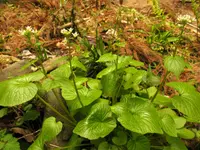
Wasabi, Eutrema japonicum, is a rhizomatous perennial from cool, shaded mountain streams and riverbanks in Japan. It is in the cabbage family and related to mustard and horseradish.
The plant forms low clumps of broad, heart-shaped leaves on long stalks, with a thickened rhizome that is grated for culinary use. In spring it produces small white flowers on upright stems.
Wasabi is challenging outside its natural habitat because it needs cool temperatures, constant moisture, and moving, very clean water or evenly moist, airy soil. Shade, high humidity, and stable conditions are key when learning how to care for Wasabi.

Care Difficulty
Hard Care

Light Preference
Partial Shade

Water Requirements
Keep Soil Moist

Temperature Preference
Cool Climate

Hardiness Zone
8–10

Soil Texture
Loamy, Silty, Organic-rich

Soil pH
Acidic (5.5–6.5), Slightly acidic (6.5–7.0)

Soil Drainage
Moist but well-drained

Fertilization
Light (every 4–6 weeks)
Scan your plant to receive care tips personalized for your specific plant
Available on iOS and Android
This shade-loving crop needs bright, cool conditions with protection from strong direct sun.
This plant requires constant, cool moisture without becoming stagnant or waterlogged.
This cool-climate species performs best in stable, mild temperatures.
This plant needs consistently high humidity similar to cool stream edges.
This species prefers cool, continuously moist, oxygenated soil that mimics a mountain stream bank.
This plant can be grown in containers if moisture and cool roots are tightly controlled.
Eutrema japonicum prefers steady, mild nutrition rather than heavy feeding.
Eutrema japonicum needs only light, functional pruning to stay healthy.
This plant is more often transplanted in beds than grown long term in small pots.
Eutrema japonicum is commonly multiplied by division and sometimes from seed in controlled conditions.
This cool-climate plant tolerates moderate frost but benefits from some winter protection in colder areas.

Plant Health Check
Not sure what's wrong with your plant? Check your plant's health inside the app.
This species naturally grows along cold, fast-flowing mountain streams in Japan, anchoring its thick rhizomes in gravelly, constantly moist soils with very high humidity and low light.
The pungent part grated for sushi is a rhizome, a horizontal stem that stores nutrients, not a true root; its flavor comes from sulfur-containing compounds that form only when the cells are crushed.
Commercial cultivation typically takes about 18–24 months before rhizomes reach harvestable size, which makes growing Wasabi labor-intensive and contributes to its high market value.

Traditional Japanese chefs grate the rhizome on a fine sharkskin board called an oroshi in circular motions, because this method creates a smooth paste and releases the most balanced aroma and spiciness, which then fades noticeably within about 15–20 minutes.
Yellowing leaves usually result from excess moisture around the roots, poor drainage, or prolonged heat stress. Check for soggy soil, compacted substrate, or temperatures above this species’ comfort range, and correct conditions before removing the most affected foliage.
Keep your plants happy and healthy with plant identification, disease detection, and easy care guidance.