Strong trellis setup
Install a sturdy 1.8–2.4 m trellis or wire fence before planting so the vine can twine from the start, which keeps stems off the ground and makes harvesting tubers and pods easier.

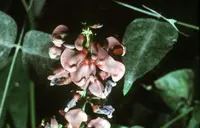
American groundnut (Apios americana) is a perennial, twining vine grown for its edible tubers and attractive foliage. It belongs to the legume family and fixes nitrogen in the soil, which can improve soil fertility over time.
The plant typically climbs over nearby shrubs or supports, with compound leaves and clusters of pea-like, reddish-brown flowers. It is native to moist habitats in eastern North America, often found along stream banks and woodland edges.
This species is generally hardy and adaptable but prefers evenly moist, well-drained soil and at least moderate light. Understanding how to care for American groundnut helps ensure good tuber production and healthy vine growth.

Care Difficulty
Moderate Care

Light Preference
Full Sun

Water Requirements
Regular Water

Temperature Preference
Cold Hardy

Hardiness Zone
3–9

Soil Texture
Loamy, Sandy, Organic-rich

Soil pH
Acidic (5.5–6.5), Slightly acidic (6.5–7.0)

Soil Drainage
Moist but well-drained

Fertilization
Minimal (feed rarely)
Scan your plant to receive care tips personalized for your specific plant
Available on iOS and Android
This North American vine prefers consistent sun exposure but also tolerates some shade.
This species prefers evenly moist, not saturated, soil throughout the growing season.
This hardy perennial tolerates a wide range of outdoor temperatures when established.
This species is tolerant of a wide humidity range and usually does not need special humidity management outdoors.
Apios americana prefers deep, loose, consistently moist soil that drains well but does not dry out quickly.
This species can be grown in containers if the pot is deep and stable enough for its twining vines and tubers.
Moderate feeding supports steady growth and tuber production in American groundnut without overwhelming its roots.
Pruning Apios americana is mainly about keeping the vigorous vines tidy and healthy rather than shaping a formal plant.
This vining legume is more often transplanted outdoors than repotted, since its tubers spread and prefer open soil.
Apios americana plant care often includes propagation to expand patches or renew older plantings from healthy tubers.
This species is cold hardy in much of its native range, with underground tubers that usually overwinter well with minimal input.

Plant Health Check
Not sure what's wrong with your plant? Check your plant's health inside the app.
This species forms nodules on its roots with nitrogen-fixing bacteria, allowing it to enrich poor soils with biologically available nitrogen and improve soil fertility over time.
The plant produces strings of multiple starchy tubers along its underground rhizomes, which were traditionally harvested by several Indigenous peoples in North America as an important wild food source.
It bears dense clusters of maroon to pink pea-type flowers with a strong, sweet fragrance that attract bees and other pollinators in mid to late summer.

Historical accounts from the 17th–19th centuries describe colonists in eastern North America relying on American groundnut tubers as a backup or substitute crop when European-introduced staples such as potatoes or grains failed, highlighting its value as a resilient native food plant.
Yes. The tubers are edible and have been traditionally used as a high‑protein food, eaten boiled, roasted, or added to stews. Mature tubers taste somewhat like a nutty potato. Only harvest from clean, uncontaminated soils.
Keep your plants happy and healthy with plant identification, disease detection, and easy care guidance.