Early formative pruning
During the first 5–7 years, remove or shorten competing leaders and very narrow branch crotches in late winter to build a single strong framework and reduce future storm damage.

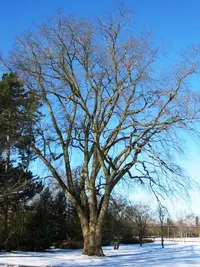
Wych elm, Ulmus glabra, is a hardy deciduous tree native to much of Europe and parts of western Asia. It is commonly found in cool, moist woodlands and along stream banks.
This species develops a broad, rounded crown with strong, arching branches and rough, serrated leaves that turn yellow in autumn. Mature trees can become large landscape specimens when given enough space.
It is generally tough and wind resistant but can be affected by Dutch elm disease, which is the main factor that limits its use. In gardens, light shade to full sun, moist but well-drained soil, and good air circulation support healthy growth and make it easier to care for Wych Elm.

Care Difficulty
Moderate Care

Light Preference
Full Sun

Water Requirements
Regular Water

Temperature Preference
Cold Hardy

Hardiness Zone
4–7

Soil Texture
Loamy, Clay, Organic-rich

Soil pH
Acidic (5.5–6.5), Slightly acidic (6.5–7.0)

Soil Drainage
Moist but well-drained

Fertilization
Minimal (feed rarely)
Scan your plant to receive care tips personalized for your specific plant
Available on iOS and Android
Ulmus glabra grows best in bright outdoor conditions with a balance of sun and shade.
Ulmus glabra prefers steadily moist, well-drained soil rather than extremes of drought or saturation.
This hardy elm tolerates a wide temperature range but has distinct needs in each season.
Humidity is rarely a limiting factor for Ulmus glabra in typical outdoor conditions.
Ulmus glabra prefers deep, moist, well-structured mineral soils that hold water yet drain freely.
This species is generally unsuitable for long‑term container growing because of its large, vigorous root system.
Ulmus glabra usually grows well in average soil but responds to modest, well-timed feeding in managed landscapes.
Ulmus glabra benefits from structured pruning to maintain a stable crown and safe, healthy growth.
This species is mainly grown as a landscape tree, so focus on careful transplanting rather than frequent repotting.
Ulmus glabra can be propagated, but methods are usually applied in professional or conservation settings rather than by casual growers.
Mature Ulmus glabra is cold hardy and usually needs little specific winter care in most temperate climates.

Plant Health Check
Not sure what's wrong with your plant? Check your plant's health inside the app.
In its natural range, this species most often grows along cool, fast-flowing streams and ravines in upland and montane forests, where it tolerates thin, rocky, base-rich soils better than many other European elms.
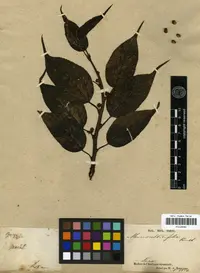
This elm has some of the largest leaves of any European elm, typically broad, rough to the touch, and strongly asymmetrical at the base, an adaptation that may improve light capture in shaded woodland conditions.
Ulmus glabra is highly susceptible to Dutch elm disease fungi and is often used in scientific trials and breeding programs to test and develop disease-resistant elm hybrids for European landscapes.

In parts of northern and western Europe, ancient pollarded wych elms can survive for several centuries as living boundary markers, with their hollow, slowly regenerating trunks providing long-term habitat for specialized saproxylic insects, cavity-nesting birds, and rare woodland lichens.
This species grows at a moderate to fast rate, typically adding 30–60 cm in height each year under good conditions. Growth slows with age, site restrictions, drought stress, or poor soil quality.
Keep your plants happy and healthy with plant identification, disease detection, and easy care guidance.