Offset management
Remove and pot up offsets once they reach about 1/3–1/2 the height of the mother rosette, using a clean, sharp knife and allowing cut surfaces to dry for 1–2 days before planting to reduce rot risk.

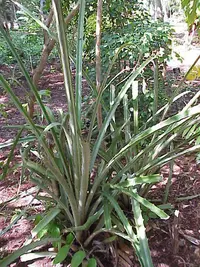
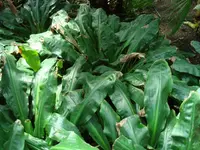
Bromelia karatas is a terrestrial bromeliad native to tropical regions of Mexico, Central America, and northern South America. It typically forms dense clumps of spiny, arching leaves that create a tough, shrubby appearance.
The plant produces striking central flower spikes surrounded by colorful bracts, followed by clusters of fleshy, edible fruits in suitable climates. Its rugged foliage and strong spines mean it is better suited to outdoor landscapes or spacious, low-traffic areas rather than tight indoor spaces.
This species is generally resilient, tolerating poor soils and dry periods once established, but it grows best with bright light and moderate moisture. For gardeners learning how to care for Bromelia karatas, the main challenges are managing its sharp leaf edges and providing enough warmth and sun.

Care Difficulty
Moderate Care

Light Preference
Partial Sun

Water Requirements
Moderate Water

Temperature Preference
Tropical / Frost Sensitive

Hardiness Zone
10–12

Soil Texture
Sandy, Loamy, Organic-rich

Soil pH
Acidic (5.5–6.5), Slightly acidic (6.5–7.0)

Soil Drainage
Well-drained

Fertilization
Minimal (feed rarely)
Scan your plant to receive care tips personalized for your specific plant
Available on iOS and Android
This bromeliad prefers bright, warm conditions that mimic open tropical habitats.
Watering should balance a moist root zone with very good drainage to prevent rot.
Steady warmth supports strong growth and flowering for this species.
This species prefers warm, moderately humid air but tolerates brief drier periods.
For Bromelia karatas, use a loose, sharply draining mix that mimics epiphytic or rocky habitats.
This bromeliad is well suited to container growing due to its compact root system and rosette habit.
This bromeliad usually grows well with modest feeding, especially in containers or poor soils.
Pruning needs are low and focus on hygiene rather than reshaping the plant.
This species is often grown in the ground, but container plants may need occasional transplanting as they form clumps.
Propagation is commonly done from offsets, with seeds used mainly for larger-scale or experimental growing.
Cold tolerance is limited, so winter management matters in climates with frost or extended cool periods.

Plant Health Check
Not sure what's wrong with your plant? Check your plant's health inside the app.
In much of its native range from Mexico to northern South America, Bromelia karatas is primarily pollinated by hummingbirds attracted to its tubular, bright pink to red bracts and flowers, which are adapted to bird vision and long bills.
Unlike many bromeliads that live on tree branches (epiphytes), this species normally grows in the ground and forms a tight rosette that collects water and organic debris, creating a small aquatic microhabitat for insects and other small organisms.
Its long, swordlike leaves have strong, backward-pointing marginal spines that deter large herbivores and also help trap leaf litter around the plant, slowly enriching the surrounding soil as the material decomposes.

Bromelia karatas often dominates sunny, disturbed sites such as pastures and open scrub in its native range, forming dense, almost impenetrable thickets that can significantly influence local plant succession and provide protective cover for small animals.
This species usually flowers only once when mature, then focuses energy on producing offsets or pups. Lack of bloom is often due to immaturity, insufficient light, or recent stress such as repotting or temperature extremes.
Keep your plants happy and healthy with plant identification, disease detection, and easy care guidance.