Riber Ebony Care (Diospyros malabarica)

Riber Ebony

About Riber Ebony

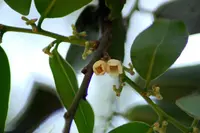
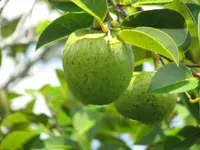
Riber ebony, Diospyros malabarica, is a tropical evergreen tree known for its dense crown, glossy foliage, and small rounded fruits. It is primarily grown as an ornamental and shade tree in warm, humid climates.

In nature it occurs in lowland forests and riverbanks across South and Southeast Asia, where soils stay moist but not waterlogged. The tree is generally sturdy but needs warmth and space, so it is not practical as a small indoor plant.

Those who care for Riber Ebony should provide bright light, consistent moisture, and a well-drained, slightly fertile soil to support steady growth and healthy foliage.


Main Plant Requirements

Care Difficulty

Moderate Care

Light Preference

Full Sun

Water Requirements

Regular Water

Temperature Preference

Tropical / Frost Sensitive

Hardiness Zone

10–12

Soil Texture

Sandy, Loamy, Clay

Soil pH

Slightly acidic (6.5–7.0), Neutral (7.0)

Soil Drainage

Moist but well-drained

Fertilization

Minimal (feed rarely)

Get Personalized Care Plan

Scan your plant to receive care tips personalized for your specific plant

Available on iOS and Android

How to Care for the Riber Ebony

This tropical tree prefers bright, warm conditions with moderated direct sun exposure.

  • Provide 4–6 hours of direct morning sun with light afternoon shade; in hotter regions, give Riber Ebony filtered light after 11 a.m. to prevent leaf scorch.
  • Young trees tolerate partial shade (around 40–60% shade cloth), but dense shade slows growth, reduces flowering, and may cause sparse, leggy branching.
  • In summer, monitor for leaf curl, yellowing, or crisp edges from intense sun, while pale, stretched new growth indicates insufficient light, especially in cooler seasons.

This species prefers consistently moist, not saturated, soil with good drainage.

  • Water when the top 3–5 cm of soil feels dry, supplying a deep soak that penetrates the root zone rather than frequent shallow splashes.
  • Use a well-drained loam; puddling on the surface, sour smell, or blackened feeder roots indicate overwatering, while dull, drooping leaves and dry, cracked soil signal underwatering.
  • In hot months, check moisture more often, but in cooler or rainy seasons reduce frequency so Diospyros malabarica is never left standing in waterlogged ground.

This tropical tree needs warm, frost‑free conditions for reliable growth and fruiting.

  • Aim for 70–90°F (21–32°C) during active growth; short peaks up to 95°F (35°C) are tolerated if soil moisture is stable and roots are mulched.
  • Avoid temperatures below 55°F (13°C); growth slows in cooler weather and damage can occur near 40°F (4°C), especially on young shoots.
  • Protect from frost entirely; repeated exposure to 32°F (0°C) or lower can kill young trees, so use wraps, covers, or site selection to avoid cold pockets.

This species prefers moderately humid air but usually adapts to typical indoor levels.

  • Aim for 40–60% humidity, as Riber Ebony foliage stays cleaner and less stressed in this range.
  • Dry air can cause leaf-edge browning and slower growth; prolonged very low humidity may increase pest issues.
  • Raise humidity with a nearby humidifier or grouped plants rather than misting, which offers only brief effects.

This tree prefers deep, loose, evenly moist soil that drains well without drying out too fast.

  • Use a loamy mix with roughly 2 parts compost, 1 part coarse sand, and 1 part pine bark or perlite for structure and aeration.
  • Keep pH slightly acidic to neutral, around 6.0–7.0, as this supports nutrient availability for Diospyros malabarica.
  • Ensure strong drainage so water leaves the root zone within minutes; avoid heavy clay or compacted ground that stays waterlogged.
  • Improve existing dense soil by incorporating coarse sand, fine gravel, or bark chips throughout the top 20–30 cm, not just in the planting hole.

This species can be grown in large containers when space or climate restricts in-ground planting.

  • Choose a tall, heavy container so the deep taproot has vertical room and the tree remains stable in wind.
  • Select thick-walled clay or concrete pots in hot climates to buffer root temperature and slow rapid moisture loss.
  • Place the container on risers so drainage holes stay clear and runoff moves away quickly after heavy watering.

This tropical fruit tree responds to moderate feeding but can adapt to lean soils once established, so caring for Riber Ebony focuses on balanced, not heavy, nutrition.

  • Use a balanced slow-release fertilizer (e.g., 10-10-10) or well-rotted compost at the start of the growing season.
  • Feed container or young trees every 6–8 weeks during active growth, using half-strength rates to avoid salt buildup.
  • Reduce or stop fertilizing in winter or any dormant period, especially in cooler regions or when growth pauses.
  • After application, water thoroughly to move nutrients into the root zone and limit root burn.

Diospyros malabarica benefits from light, methodical pruning to maintain structure and remove weak growth.

  • Prune in late winter or very early spring, before strong new growth begins.
  • Remove dead, diseased, crossing, or storm-damaged branches using clean, sharp bypass pruners or a pruning saw.
  • Thin crowded interior branches to improve light penetration and airflow, encouraging healthier foliage and fruiting wood.
  • Limit cuts to smaller branches to preserve the natural form and reduce stress on mature trees.

This tree is usually grown in the ground, so management focuses more on careful transplanting of young Diospyros malabarica rather than frequent repotting.

  • Transplant in late winter or early spring when growth is slow and temperatures are mild.
  • Look for signs such as roots circling the pot, water running off quickly, or slowed top growth before upsizing containers.
  • Move up only 1–2 pot sizes, loosening circling roots gently and trimming broken ones to reduce stress.
  • Water deeply after transplanting, shade the tree from intense sun for 7–10 days, and keep soil evenly moist while new roots establish.

New Diospyros malabarica plants are most often raised from seed, with vegetative methods used mainly by specialists.

  • Collect fully ripe fruits, clean seeds, and sow them fresh for better germination.
  • Sow seeds in a deep container with well-drained, slightly acidic mix, keeping it evenly moist but not waterlogged.
  • Provide warm conditions around 75–85°F and bright, indirect light; germination may take several weeks or longer.
  • Semi-hardwood cuttings are possible but slow and uncertain, requiring rooting hormone, bottom heat, and high humidity.

This tropical species has low frost tolerance and needs thoughtful winter care in cooler climates.

  • In regions with frost, grow in containers and move indoors or into a greenhouse before temperatures drop below 40°F.
  • For in-ground trees in marginal zones, apply 5–10 cm of organic mulch around the root zone, keeping it away from the trunk.
  • Wrap young trunks with breathable tree wrap or burlap to reduce bark damage in brief cold snaps.

Care Tips

Structured formative pruning

In the first 3–5 years, prune lightly after fruiting to select 3–5 well-spaced scaffold branches and remove steep, crossing, or inward-growing shoots so the tree develops a strong open framework that can carry future crop weight without splitting.

Fruit thinning practice

Once pea-sized fruits begin to set, thin clusters so that only 1–2 fruits remain per spur or short shoot, which reduces limb stress, improves individual fruit size, and helps maintain more regular year-to-year cropping.

Wind and stake management

In windy sites, install a single sturdy stake on the windward side and secure the young trunk with a flexible tie in a loose figure-8, then remove the stake after 2–3 years so the tree can strengthen its own root system and trunk.

Mulch ring strategy

Maintain a 5–10 cm deep organic mulch ring that extends at least 60–90 cm from the trunk, keeping a mulch-free gap of 10–15 cm around the bark to prevent rot and to stabilize soil moisture and temperature.

Trunk and root protection

In hot or exposed locations, use a breathable trunk guard or white tree paint on the young stem and avoid deep cultivation under the canopy, which protects the bark from sunscald and prevents root damage while growing Riber Ebony.

Common Pests and Diseases

Leaf spot

This disease causes small brown to dark-purple spots on leaves that may merge into larger lesions and lead to early leaf drop, especially in humid, warm conditions.

Solution

Remove and discard heavily spotted leaves, keep the canopy thinned for better airflow, avoid overhead watering, and apply a copper-based or chlorothalonil fungicide according to label directions if spotting continues to spread during wet periods.

Sooty mold

This disease appears as a black, powdery coating on leaves and young twigs, developing on the sugary honeydew excreted by sap-sucking insects like aphids and scale.

Solution

Control the honeydew-producing insects first with a strong water spray, horticultural soap, or horticultural oil, then gently wipe or rinse affected leaves to restore light penetration and repeat treatments as needed until new growth stays clean.

Scale insects

These insects attach to twigs, branches, and leaf undersides as small, dome-shaped or flattened bumps that suck sap and cause yellowing, leaf drop, and reduced fruiting.

Solution

Prune and destroy badly infested twigs, then treat remaining plants with horticultural oil or insecticidal soap, making sure to coat stems and leaf undersides thoroughly and repeating at 7–14 day intervals until crawlers are controlled.

Fruit borer

This pest is the larval stage of certain moths that tunnel into developing fruits, leading to premature fruit drop, internal decay, and entry points for secondary infections.

Solution

Collect and destroy infested or fallen fruits, use fine mesh bagging on young fruits where practical, encourage natural predators by maintaining plant diversity nearby, and in orchard settings consider targeted pheromone or timing-based biological controls aligned with local extension recommendations.

Mealybugs

These insects form white, cottony clusters in leaf axils, on young shoots, and around roots, feeding on sap and causing distorted new growth and sticky honeydew that can support sooty mold.

Solution

Physically remove visible clusters with a cotton swab dipped in alcohol, follow with thorough sprays of insecticidal soap or horticultural oil on all plant surfaces, and repeat treatments regularly until no new mealybugs appear, paying special attention to hidden crevices in Diospyros malabarica plant care.

Interesting Facts

Fruit as natural mordant

The unripe fruit yields tannin-rich juice that has been traditionally used in South and Southeast Asia as a natural mordant to fix dyes on cotton and silk fabrics, improving color fastness.

Floodplain habitat specialist

This species commonly grows along riverbanks and in seasonally flooded alluvial plains, tolerating brief inundation and helping stabilize soil and reduce erosion in riparian zones.

Hard, fine-textured timber

Its wood is dense, fine-grained, and durable, and in its native range it has been used for items requiring strength and wear resistance, such as tool handles and agricultural implements.

Botan icon

Did you know?

In parts of its native range, the extremely astringent unripe fruits have been used in traditional paper sizing and ink preparation, where their tannin content helps harden paper surfaces and improve ink adherence.

FAQs about Riber Ebony

This tree grows slowly to moderately, usually adding 20–40 cm per year in suitable tropical or subtropical climates. Growth is faster in deep, consistently moist, well-drained soil and warm temperatures, and slower in containers or poorer conditions.

Grow Healthy Plants with Botan Care

Keep your plants happy and healthy with plant identification, disease detection, and easy care guidance.

Botan plant care app — identify plants on mobile

Explore More Plants