Californian cypress Care (Hesperocyparis goveniana)

Also known as: Gowen cypress
Californian cypress

About Californian cypress

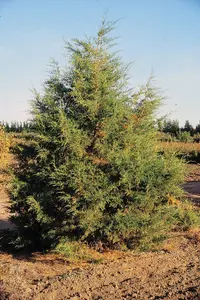
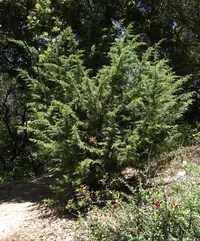
Californian cypress, Hesperocyparis goveniana, is a small to medium evergreen conifer native to the central coast of California. It usually forms a dense, conical crown with fine, scale-like foliage.

In habitat it grows on coastal slopes and sandy or rocky soils, often in areas with fog and dry summers. The foliage is aromatic when crushed, and trees produce small rounded cones.

It is relatively slow growing and prefers full sun, good air movement, and well-drained soil, which makes care for Californian cypress easier in open, bright sites. Sensitivity to poor drainage and very humid, stagnant air can make it challenging in unsuitable locations.

Main Plant Requirements

Care Difficulty

Moderate Care

Light Preference

Full Sun

Water Requirements

Low Water

Temperature Preference

Cold Hardy

Hardiness Zone

7–9

Soil Texture

Sandy, Loamy, Rocky

Soil pH

Acidic (5.5–6.5), Slightly acidic (6.5–7.0)

Soil Drainage

Well-drained

Fertilization

Minimal (feed rarely)

Get Personalized Care Plan

Scan your plant to receive care tips personalized for your specific plant

Available on iOS and Android

How to Care for the Californian cypress

This coastal conifer prefers bright, open conditions with several hours of direct sun.

  • Provide 6–8 hours of direct sun daily; full sun is ideal for compact growth and dense foliage in Californian cypress.
  • Tolerates light partial shade, especially in hot inland areas, but too much shade causes sparse branching and dull, thin foliage over time.
  • In hot summers, favor morning sun with some protection from intense late-afternoon sun to reduce scorching on exposed, wind-dried sites.

This species prefers well-drained soil and benefits from deep but infrequent watering once established.

  • For young Hesperocyparis goveniana, water when the top 5–7 cm of soil is dry, soaking the root zone rather than giving light surface sprays.
  • Reduce watering frequency in cool or rainy seasons, and pause irrigation after substantial rain so the soil can partly dry between soakings.
  • Watch for overwatering signs such as yellowing, limp foliage and persistent soggy soil; crisp, browning tips and very dry soil indicate underwatering.

This coastal conifer is adapted to mild, Mediterranean-type climates with cool, wet winters and warm, dry summers.

  • Optimal growth occurs around 55–75°F (13–24°C), with steady cool to warm conditions supporting dense, healthy foliage.
  • Mature trees typically tolerate short dips to about 15–20°F (-9 to -6°C), but young plants benefit from frost protection during the first 2–3 winters.
  • In hot regions, plants handle 85–95°F (29–35°C) if soil is moist but well drained; combined extreme heat, drought, and hot wind can cause tip burn.

This species tolerates a wide humidity range and rarely needs special humidity management indoors.

  • Target 30–50% humidity; avoid prolonged levels above 70% combined with poor air circulation, which encourages fungal issues.
  • Dry indoor air is usually tolerated; brown needle tips and increased shedding on inner twigs can signal chronic low humidity or heat stress.
  • If air is extremely dry near heating vents, move the plant away and place a wide water tray or several water-filled pebble trays nearby to slightly raise local humidity.

Hesperocyparis goveniana prefers fast-draining, slightly acidic mineral soils that prevent waterlogging around the roots.

  • Use a sandy or sandy-loam mix, for example 50–60% pine bark fines, 20–30% coarse sand, and 10–20% perlite for structure and drainage.
  • Aim for a pH of 6.0–7.0; avoid strongly alkaline mixes that can reduce nutrient availability and cause dull, chlorotic foliage.
  • Ensure the mix is loose and airy; coarse particles such as bark chips and pumice increase pore space and oxygen around the root system.
  • Avoid heavy, compacted, or peat-heavy mixes that stay wet for more than 2–3 days, since this species is sensitive to root rot in stagnant conditions.

This species can be grown in containers for several years if the pot supports its deep, gradually expanding root system.

  • Choose a tall, heavy container that resists tipping and allows the main roots to extend downward rather than circle tightly near the surface.
  • Use a mineral-leaning, fast-draining mix and raise the container slightly on pot feet so excess water can exit quickly and not pool under the base.
  • Position the container in a spot sheltered from strong, gusty winds, since the foliage mass can act like a sail and stress both roots and pot stability.

This coastal conifer grows steadily with modest nutrition, so fertilization supports but does not drive its health.

  • Apply a balanced slow-release fertilizer (for example 10-10-10) in early spring at label rates around the drip line.
  • Use a light top-dressing of compost once a year to improve soil structure and microbial activity.
  • During active growth, 1 feeding per year is usually enough; avoid summer overfeeding in hot, dry sites.
  • Skip or sharply reduce feeding in winter and never exceed half-strength products on young container plants.

Hesperocyparis goveniana benefits from light, targeted pruning to maintain structure and remove problem wood.

  • Carry out main pruning in late winter or very early spring before strong new growth starts.
  • Remove dead, diseased, or storm-damaged branches first, cutting back to healthy wood.
  • Thin crowded interior twigs slightly to improve airflow while keeping the natural conical outline.
  • Use clean, sharp bypass pruners or loppers and avoid cutting back into bare, leafless old wood.

This species is usually grown in the ground, so care focuses on thoughtful transplanting of young trees.

  • Transplant in late winter or early spring while the tree is still relatively dormant for lower stress.
  • Look for signs like roots circling the pot, water running off quickly, or slowed growth to time planting out.
  • Choose a site with well-drained soil, plant at the same depth as in the container, and water deeply after planting.
  • Reduce root stress by handling the root ball gently, loosening only the outer circling roots, and mulching a 5–8 cm ring.

New plants are produced mainly from seed, but semi-hardwood cuttings are also used for selected forms of Hesperocyparis goveniana.

  • Collect ripe cones, extract seeds, and sow in late winter in a fast-draining, slightly acidic mix.
  • Provide cool stratification if recommended by the seed source, then bright light and even moisture for germination.
  • Take semi-hardwood cuttings in late summer, use rooting hormone, and place in a warm, humid, well-lit propagator.
  • Keep both seeds and cuttings just moist, never waterlogged, and maintain good airflow to limit fungal problems.

Mature trees are generally cold hardy in mild coastal climates and need little active winter care.

  • In regions colder than the natural range, apply a 5–8 cm mulch layer over the root zone, keeping it off the trunk.
  • Shelter young plants from drying winter winds with temporary windbreak fabric or fencing.
  • Move container-grown specimens to a sheltered, unheated but frost-free spot during hard freezes.

Care Tips

Shelter From Wind

Plant in a position with some protection from strong prevailing winds or use a temporary windbreak during the first 2–3 years to reduce moisture loss and prevent young roots from rocking loose in the soil.

Establish Deep Roots

During the first growing season, water less frequently but more deeply and extend the interval slightly each month so the root system is trained to grow downwards rather than staying near the surface.

Mulch The Dripline

Apply a 5–8 cm ring of coarse organic mulch around, but not touching, the trunk to keep roots cool, suppress weeds, and maintain more even soil moisture at the active root zone.

Manage Competing Vegetation

Keep a 45–60 cm weed-free zone around the base using hand weeding or a breathable mulch fabric so grasses and weeds do not outcompete the tree for water and nutrients.

Monitor For Canker

Inspect branches a few times per year for sunken, resinous, or discolored patches and prune out affected twigs back to healthy wood with sterilized tools to limit the spread of fungal cankers when growing Californian cypress.

Common Pests and Diseases

Cypress aphids

These insects feed on young twigs and foliage, causing yellowing, needle drop, and overall thinning of the canopy. Symptoms include sticky honeydew on branches and sooty mold growth on affected areas.

Solution

Prune out heavily infested shoots and dispose of them, then hose down the foliage with a firm stream of water to remove remaining aphids. For persistent infestations, apply a targeted insecticidal soap or horticultural oil spray, ensuring thorough coverage of inner branches while monitoring beneficial insects such as lady beetles.

Cypress tip moth

This pest is the larval stage of a small moth that bores into shoot tips, causing browning and dieback of new growth. Damage often appears as scattered dead tips, which can distort the plant’s natural form.

Solution

Clip and discard affected shoot tips as soon as browning is noticed to remove larvae before they spread further. Maintain good plant vigor with adequate water and avoid high-nitrogen fertilizer, and if damage is recurrent, consider a targeted biological or insect growth regulator product timed to local moth emergence cycles.

Cypress bark beetles

These insects tunnel under the bark, interrupting water movement and leading to branch dieback or sudden decline, especially in drought-stressed trees. Symptoms include reddish boring dust at the base or in bark crevices and small exit holes in the trunk or branches.

Solution

Reduce stress by deep, infrequent watering during dry periods and avoiding trunk injuries, since healthy trees are more resistant. Remove and destroy severely infested branches or trees to limit beetle populations, and where regional pressure is high, consult a certified arborist about preventive trunk sprays or pheromone-based management.

Coryneum canker

This disease is caused by a fungus that infects stems and branches, producing sunken, discolored cankers that can girdle and kill affected sections. Symptoms include resin exudation, dieback beyond the canker, and sometimes tufted regrowth below the damaged area.

Solution

Prune out infected branches several inches below visible cankers during dry weather, disinfecting tools between cuts, and dispose of all infected material. Improve air circulation by avoiding overcrowding, reduce overhead watering, and in regions where this fungus is common, consider preventive fungicide sprays during wet seasons according to local extension recommendations.

Seiridium canker

This disease produces elongated, dark cankers on stems and branches, often accompanied by resin bleeding and progressive dieback, especially on stressed trees. Symptoms include scattered dead branches, sparse foliage, and a generally thin crown.

Solution

Remove and destroy affected branches promptly, cutting well below visible symptoms and sterilizing pruning tools between cuts. Support tree health with consistent watering during dry periods, avoid soil compaction around roots, and in high-pressure areas, coordinate with a local arborist for integrated Seiridium canker management as part of broader Hesperocyparis goveniana care instructions.

Interesting Facts

Serpentine soil specialist

This species is naturally restricted to nutrient-poor, heavy-metal-rich serpentine soils along the central California coast, where few other tree species can compete, which helps define its very limited native range.

Fire-adapted cones

Its woody seed cones are serotinous, meaning they often remain closed for years and open widely after exposure to the heat of wildfire, releasing seeds into freshly cleared, ash-enriched soil.

Isolated coastal groves

In the wild it occurs in a handful of small, scattered stands near Monterey Bay and on nearby ridges, creating highly localized populations that are vulnerable to habitat change.

Botan icon

Did you know?

Genetic and morphological studies have shown that this tree, once treated as part of Cupressus, is distinct enough to be placed in the separate genus Hesperocyparis, reflecting its unique evolutionary history among New World cypresses.

FAQs about Californian cypress

Brown foliage usually comes from drought stress, salt or fertilizer burn, compacted or waterlogged soil, or root damage. Check soil moisture, improve drainage, avoid heavy fertilizing, and prune only truly dead tips to limit further dieback.

Grow Healthy Plants with Botan Care

Keep your plants happy and healthy with plant identification, disease detection, and easy care guidance.

Botan plant care app — identify plants on mobile

Explore More Plants