Establish strong leader
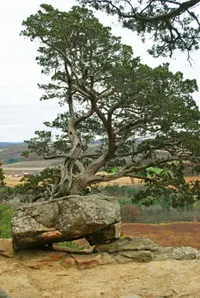
Select and lightly stake a single central leader in young trees during the first 3–5 years to encourage a stable structure and reduce future branch failures in storms.

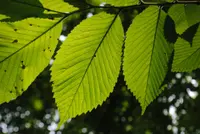
Slippery elm, Ulmus rubra, is a medium to large deciduous tree native to eastern and central North America. It is commonly found in moist woods, lowlands, and along streams.
The tree has a broad, rounded crown, rough furrowed bark, and large, rough leaves with a slightly sandpapery feel. Its inner bark contains soothing mucilage, which gives the species its common name.
Growth is generally fast and the species is hardy, but it needs space, full sun to light shade, and consistent moisture to develop well. For anyone learning how to care for slippery elm, its main requirements are room to grow, well-drained soil, and protection from severe urban stress.

Care Difficulty
Easy Care

Light Preference
Full Sun

Water Requirements
Moderate Water

Temperature Preference
Cold Hardy

Hardiness Zone
3–9

Soil Texture
Sandy, Loamy, Clay

Soil pH
Acidic (5.5–6.5), Slightly acidic (6.5–7.0)

Soil Drainage
Moist but well-drained

Fertilization
Minimal (feed rarely)
Scan your plant to receive care tips personalized for your specific plant
Available on iOS and Android
This North American elm species prefers full sun but can handle some shade, especially when young.
This elm prefers consistently moist, well-drained soil, especially during establishment.
This hardy elm is adapted to cold winters and warm summers in temperate climates.
Ulmus rubra handles a wide humidity range but grows best with moderate ambient moisture.
Ulmus rubra prefers deep, moderately moist, well-structured soil that allows steady root penetration.
This species can be grown in containers only as a temporary measure, since it becomes a large tree with extensive roots.
This native tree usually grows well in average soil and needs only light supplementation in managed landscapes.
Pruning Ulmus rubra focuses on safety, structure, and removal of unhealthy wood.
This species is rarely kept long term in containers, so care centers on moving young trees from pots to the ground.
Propagation of Ulmus rubra is practical mainly for restoration or landscape planting rather than indoor culture.
Mature Ulmus rubra is cold hardy across much of its native range and usually needs minimal winter attention.

Plant Health Check
Not sure what's wrong with your plant? Check your plant's health inside the app.
The inner bark of slippery elm contains a high amount of mucilage, a gel-like polysaccharide that swells in water and has been well documented in pharmacopoeias for over a century.
Slippery elm most often occurs in rich, moist hardwood forests, floodplains, and ravines, where it associates with species like sugar maple, basswood, and American elm but tolerates slightly drier conditions than American elm.
Compared with American elm, slippery elm is generally considered more tolerant of Dutch elm disease, though it is not fully resistant and still experiences significant mortality in infected areas.

The common name slippery elm comes from the distinctly slimy texture produced when the inner bark is moistened, a diagnostic trait botanists use in the field to distinguish Ulmus rubra from other native North American elms.
This tree usually grows 30–60 cm per year under average garden conditions, sometimes faster in deep, moist, fertile soil. Growth slows on dry, compacted, or nutrient-poor sites and in locations with heavy root competition from other trees.
Keep your plants happy and healthy with plant identification, disease detection, and easy care guidance.