BotaN logo

Spanish bayonet Care (Yucca aloifolia)

Also known as: Spanish bayonet, Dagger Plant, Yucca
Spanish bayonet

About Spanish bayonet

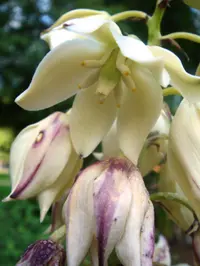
Spanish bayonet (Yucca aloifolia) is an evergreen shrub or small tree from the coastal Southeast US, Mexico, and the Caribbean. It forms dense clumps with stiff, narrow leaves ending in very sharp tips. The plant typically grows with a single or few upright trunks and can slowly branch with age, giving a strong architectural look in the landscape. It is highly drought tolerant and copes well with sandy, poor soils, which makes it relatively easy outdoors in warm, dry regions. Full sun, good drainage, and minimal watering are the main factors to understand when learning how to care for Spanish bayonet.

Main Plant Requirements

Care Difficulty

Easy Care

Light Preference

Full Sun

Water Requirements

Low Water

Temperature Preference

Warm Climate

Hardiness Zone

7–11

Soil Texture

Sandy, Loamy, Rocky

Soil pH

Slightly acidic (6.5–7.0), Slightly alkaline (7.0–7.5)

Soil Drainage

Well-drained

Fertilization

Minimal (feed rarely)

Get Personalized Care Plan

Scan your plant to receive care tips personalized for your specific plant

Available on iOS and Android

How to Care for the Spanish bayonet

Yucca aloifolia prefers strong light and thrives in open, sunny positions.

  • Provide 6–8 hours of direct sun daily; full sun is ideal in most outdoor climates for Spanish bayonet.
  • Accepts light partial shade, especially with morning sun and light afternoon shade in very hot regions to reduce leaf scorch.
  • In winter, ensure the site is as bright as possible; plants in too much shade develop weak, leaning growth and sparse foliage.

Yucca aloifolia is highly drought-tolerant and prefers infrequent, deep watering.

  • Allow the top 5–8 cm of soil to dry completely before watering; in sandy ground this may mean long gaps between waterings.
  • Use sharply draining soil or a raised bed; standing water, heavy clay, or frequent shallow watering increases root rot risk.
  • Overwatering shows as yellowing, mushy lower leaves, while severe underwatering leads to dry, browning leaf tips and margins.

This species tolerates a wide temperature range but performs best in warm, dry conditions.

  • Optimal growth occurs around 70–90°F (21–32°C), with good airflow and low to moderate humidity.
  • Mature plants generally survive brief drops to about 10–15°F (-12–-9°C), but foliage damage increases as temperatures near these lows.
  • In regions above 95°F (35°C), provide some afternoon shade and avoid heat-reflecting walls to limit leaf scorch.

Yucca aloifolia handles typical indoor humidity and dry air well, so humidity management is rarely critical.

Yucca aloifolia grows best in very well-drained, lean, mineral-based soil that dries quickly between waterings.

  • Use a gritty mix such as 50–70% coarse sand or fine gravel blended with the remainder cactus potting mix.
  • Aim for slightly acidic to slightly alkaline pH, roughly 6.0–7.5, as the plant is not highly pH-sensitive.
  • Improve drainage and aeration by adding perlite or pumice rather than peat-heavy components that hold water for long periods.
  • Avoid compacted, clay-heavy, or constantly wet substrates, which encourage root and stem rot and weaken the plant over time.

This species is suitable for container growing, especially in regions with cold winters.

  • Choose a heavy, wide-based pot to counter the tall, top-heavy growth and reduce tipping in wind or on balconies.
  • Select a container only slightly wider than the root mass so the coarse, fast-draining mix does not stay wet for long periods.
  • Prefer unglazed clay or terracotta pots when possible, as they allow faster evaporation and help keep the root zone drier.

Yucca aloifolia grows well in lean soils and needs only light feeding when grown in containers or poor ground.

  • Use a balanced slow-release fertilizer (around 10-10-10) or a thin layer of compost in spring for Spanish bayonet.
  • Feed container plants every 6–8 weeks during the growing season at half the label rate.
  • Avoid high-nitrogen products that push soft, weak growth and reduce drought tolerance.
  • Stop feeding in late summer so new growth hardens before cold weather.

Yucca aloifolia benefits from modest structural pruning to maintain safety, shape, and access.

  • Best time is late winter or early spring before active growth resumes.
  • Remove dead, damaged, crossing, or hazardous leaves and stems using sharp bypass pruners or a clean saw.
  • Cut spent flower stalks back to the base to keep the plant tidy without reducing vigor.
  • Shorten or remove selected stems at their base to control height and encourage new side shoots.

Spanish bayonet is usually grown in the ground, where it dislikes disturbance, so transplant only when necessary.

  • Transplant in late spring when soil is warming and the plant can re-root quickly.
  • Look for signs like slow growth, roots circling a container, or plants crowding nearby structures or paths.
  • If grown in pots, plan on moving to a slightly larger container every 3–5 years using a very well-drained gritty mix.
  • Reduce root stress by watering well 1–2 days before moving, keeping the root ball intact, then shading and watering lightly afterward.

Yucca aloifolia is commonly propagated vegetatively for consistent characteristics and faster establishment than seed.

  • Best seasons for cuttings and division are late spring to midsummer, when temperatures and light are high.
  • Take stem or trunk sections, let cut ends callus for several days, then plant in a sharply drained sandy mix.
  • Separate offsets (pups) with a clean saw or knife, keeping as many roots attached as possible.
  • Keep new plants in bright light, slightly moist but never wet, and warm (70–80°F) until strong new roots develop.

Mature Yucca aloifolia is fairly cold tolerant in mild climates but young or container plants benefit from basic winter care.

  • In the ground, plants usually handle brief drops near 10–15°F if soil drains well.
  • Apply 5–8 cm of dry mulch around, not against, the base in colder zones to insulate roots.
  • For containers, move pots into a bright, cool, frost-free spot or against a sheltered south-facing wall.
  • Brush off heavy snow and avoid ice buildup on leaves to reduce breakage and rot.

Care Tips

Root-zone containment

In the ground, install a vertical root barrier 30–45 cm deep around the planting area to reduce aggressive suckering and keep the clump size manageable over time.

Safe structural support

For tall, top-heavy plants in windy sites, drive a sturdy stake outside the root zone and secure the stem loosely with a soft tie in a figure-eight loop to prevent rocking and root damage.

Strategic pup removal

Remove basal offsets with a clean, sharp spade when they are 15–30 cm tall, then heel them in a sandy, well-drained bed for several weeks before moving them to a permanent site to improve establishment rates.

Armor-aware placement

Locate plants at least 60–90 cm away from walkways, driveways, and play areas, and use long-handled tools and eye protection when working nearby to avoid injury from the rigid, sharp leaves.

Debris and pest hygiene

Regularly clear fallen leaves and old flower stalks from the crown and base to reduce hiding places for scale insects and snails, which simplifies caring for Spanish bayonet in the long term.

Common Pests and Diseases

Yucca weevil

This pest bores into stems and crowns, causing internal tunneling, wilting, and eventual collapse of affected heads. Symptoms include yellowing leaves, loose crowns, and dark, foul-smelling stem tissue.

Solution

Remove and destroy heavily infested or collapsing stems to prevent spread, then inspect remaining crowns for soft or hollow tissue and cut back to firm, clean tissue. Keep the plant in well-drained soil, avoid mechanical injury to the stem, and use a targeted systemic insecticide labeled for weevils on yucca where infestations are known in the area.

Scale insects

These insects attach to leaves and stems as small, fixed bumps, sucking sap and weakening the plant. Symptoms include sticky honeydew, sooty mold growth, and yellow or thinning leaves along the lower and mid sections of the rosette.

Solution

Wipe or gently scrub affected leaves with a cloth or soft brush dipped in diluted insecticidal soap or horticultural oil, repeating every 7–10 days until new growth is clean. For severe outbreaks, prune the most infested leaves and ensure the plant receives strong light and good air movement to support recovery.

Mealybugs

This pest appears as white, cottony clusters tucked into leaf bases, along the trunk, and in tight rosette centers. Symptoms include distorted new growth, sticky residue, and slow decline if colonies are not removed.

Solution

Direct a strong stream of water into leaf axils and rosette centers to dislodge insects, then treat remaining colonies with cotton swabs dipped in isopropyl alcohol or with insecticidal soap. Inspect hidden leaf bases regularly, especially on container plants, and isolate infested plants from nearby succulents while treatment continues.

Leaf spot

This disease causes small, brown to dark purple spots that can merge into larger lesions on older leaves, often following extended humidity, overhead watering, or physical injury. Symptoms include discolored patches with yellow halos and premature shedding of lower leaves.

Solution

Remove and discard affected leaves, cutting back to healthy tissue and keeping tools clean between cuts. Improve airflow, keep leaves as dry as possible, avoid overhead watering, and if spotting continues, use a copper-based or other fungicide labeled for ornamental leaf spots according to label directions as part of broader Yucca aloifolia care.

Crown rot

This disease affects the central growing point where water and debris collect, leading to soft, dark, foul-smelling tissue at the crown and sudden collapse of the rosette. Symptoms include leaves pulling away easily at the base and wet, mushy tissue inside the stem or crown area.

Solution

Cut out all soft, discolored tissue back to firm, white or light-green tissue, and discard rotting sections; in advanced cases the entire top may need removal and re-rooting from healthy cuttings. Maintain very sharp drainage, avoid allowing water to sit in the rosette or around the stem base, and use coarse, gritty soil or raised planting to keep the crown dry.

Interesting Facts

Coastal dune stabilizer

In its native coastal range, this species often grows directly in shifting sand dunes, where its dense, fibrous root system helps bind loose sand and reduce erosion along shorelines.

Clonal colony formation

The plant frequently spreads by underground rhizomes and stem offsets, forming clonal thickets that can dominate a patch of habitat and provide shelter for small animals.

Armored leaf edges

Its stiff leaves have finely serrated margins and a rigid spine at the tip, a structural defense that deters large herbivores and has inspired the common name Spanish bayonet.

Botan icon

Did you know?

In parts of the southeastern United States, this species has naturalized so successfully on dunes, maritime forests, and disturbed coastal sites that it is often used as a reference plant for studying how tough, woody monocots adapt to salt spray, high light, and nutrient-poor sandy soils over long periods.

FAQs about Spanish bayonet

Lack of flowering usually comes from insufficient light, a plant that is still immature, or stress from recent transplanting or pruning. Mature rosettes typically bloom once, then decline while younger offsets later replace them.

Grow Healthy Plants with Botan Care

Keep your plants happy and healthy with plant identification, disease detection, and easy care guidance.

Botan plant care app — identify plants on mobile

Explore More Plants