Snow load management
In regions with heavy, wet snowfall, gently shake or brush snow off young branches after storms to prevent bending or breakage, especially on the outer lower limbs that catch the most weight.


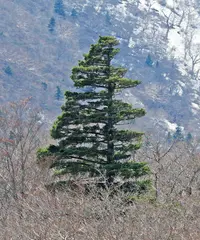
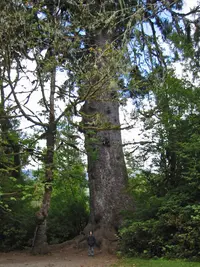
Schrenk's spruce, Picea schrenkiana, is a long-lived coniferous tree known for its dense, pyramidal crown and gracefully drooping branch tips. It keeps its dark green needles year-round, giving a strong evergreen presence in landscapes.
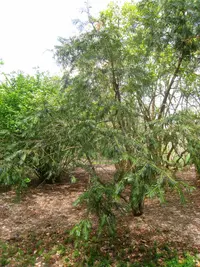
This species is native to the high mountains of Central Asia, where it grows in cool, moist forests on well-drained soils. In cultivation it can become a large tree, so it suits spacious gardens, parks, or larger properties rather than small yards.
Its tolerance of cold, wind, and urban air makes it relatively resilient once established, but it dislikes waterlogged or very hot, dry sites. Gardeners who understand how to care for Schrenk's Spruce usually find it a durable, low-maintenance conifer in suitable climates.

Care Difficulty
Moderate Care

Light Preference
Full Sun

Water Requirements
Moderate Water

Temperature Preference
Cold Hardy

Hardiness Zone
3–7

Soil Texture
Sandy, Loamy, Rocky

Soil pH
Strongly acidic (4.5–5.5), Acidic (5.5–6.5)

Soil Drainage
Well-drained

Fertilization
Minimal (feed rarely)
Scan your plant to receive care tips personalized for your specific plant
Available on iOS and Android
This high-mountain conifer prefers bright, cool conditions with consistent sun exposure outdoors.
This species prefers evenly moist, cool soil that never stays waterlogged.
This cold-adapted conifer thrives in cool to cold climates with pronounced seasonal change.
This species prefers cool, moderately moist air rather than high indoor humidity.
Soil should mimic a cool, mountain conifer habitat with stable structure and reliable drainage.
This species can be grown in large containers only as a temporary or space-limited solution.
This high-mountain conifer usually needs minimal feeding when grown in suitable soil.
Pruning Picea schrenkiana is light and mainly corrective, aimed at maintaining structure and health rather than reshaping the tree.
This species is rarely kept long term in containers, so management focuses on careful outdoor transplanting of young trees.
Propagation of Picea schrenkiana is specialized and usually carried out by nurseries rather than home growers.
This spruce is strongly cold hardy and generally needs little winter care once established in the landscape.

Plant Health Check
Not sure what's wrong with your plant? Check your plant's health inside the app.
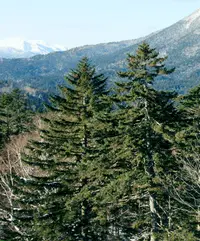
This spruce is native to the Tianshan (Tien Shan) mountain range of Central Asia, where it forms extensive subalpine forests on steep, rocky slopes at high elevations.
Its dense root system and evergreen canopy help stabilize mountain soils and regulate snowmelt, making these forests important for protecting regional water supplies and reducing erosion.
Compared with many other spruces, it has notably dark blue‑green needles and a narrow, spire‑like crown, features that help it tolerate high light, cold winds, and heavy snow loads in its native habitat.

This species can live for several centuries in undisturbed mountain forests and often forms nearly pure stands that define the upper forest belt in parts of the Tianshan, making it a structurally dominant and ecologically defining tree across large areas of that range.
This species grows slowly to moderately, usually about 20–30 cm per year in good conditions. Growth is faster in deep, cool, moist but well-drained soil and colder climates similar to its native mountain range.
Keep your plants happy and healthy with plant identification, disease detection, and easy care guidance.