Formative tip pruning
In the first 2–3 years, pinch or lightly tip-prune new shoots after each flush to encourage dense branching and a strong framework that can later support heavy flowering and fruiting.

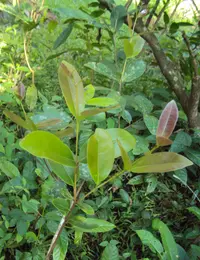
Syzygium caryophyllatum is an evergreen shrub or small tree from the myrtle family, valued for its glossy foliage and colorful, berry-like fruits. It naturally occurs in Sri Lanka and parts of southern India, where it grows in warm, humid forests and edges. In cultivation it forms a dense crown, making it suitable for hedging, specimen planting, or larger containers in mild climates. The plant prefers consistently moist, well-drained soil and benefits from regular light and protection from frost. With adequate warmth and moisture, it is moderate in difficulty; learning how to care for Syzygium caryophyllatum mainly involves managing watering and avoiding cold stress.

Care Difficulty
Moderate Care

Light Preference
Partial Sun

Water Requirements
Moderate Water

Temperature Preference
Tropical / Frost Sensitive

Hardiness Zone
10–11

Soil Texture
Loamy, Sandy, Organic-rich

Soil pH
Acidic (5.5–6.5), Slightly acidic (6.5–7.0)

Soil Drainage
Moist but well-drained

Fertilization
Minimal (feed rarely)
Scan your plant to receive care tips personalized for your specific plant
Available on iOS and Android
This species prefers bright, gentle light and benefits from some protection from intense midday sun.
This shrub prefers evenly moist, well-drained soil rather than constant saturation or long dry spells.
This plant thrives in warm, frost-free conditions and reacts poorly to cold snaps.
This species benefits from moderately humid air but adapts if managed carefully.
This shrub prefers a moist, aerated, slightly acidic to neutral substrate with reliable drainage.
This species is suitable for container growing when the pot is chosen to support its woody root system.
This species benefits from light, consistent feeding rather than heavy fertilization.
Thoughtful pruning keeps this shrub dense, healthy, and well-shaped.
This plant is usually grown in the ground but can adapt to containers when transplanted carefully.
New plants are most often raised from seed or semi-hardwood cuttings.
This species is frost-sensitive and needs protection in regions with cold winters.

Plant Health Check
Not sure what's wrong with your plant? Check your plant's health inside the app.
This species is naturally restricted to the wet-zone lowland and submontane forests of Sri Lanka, where it typically grows as an understory or mid-canopy tree along forest edges and stream banks.
It produces small, glossy purple to black berries that are eaten locally and also provide an important food source for birds and other wildlife, which helps disperse its seeds.
Young leaves and shoots often emerge with a distinct pink to violet flush before turning green, a trait that makes the plant ornamental as well as useful for those interested in growing Syzygium caryophyllatum.

The species is considered globally threatened and is listed as Vulnerable on the IUCN Red List due to habitat loss and fragmentation in its limited natural range in Sri Lanka.
It can be grown indoors in bright, warm rooms, but long-term performance is usually better outdoors in mild, frost-free climates. Good airflow, high humidity, and ample light are essential for successful Syzygium caryophyllatum indoor care.
Keep your plants happy and healthy with plant identification, disease detection, and easy care guidance.