Wind-hardening young trees
During the first 1–2 seasons, gradually expose young plants to stronger wind by staking loosely and lowering support ties over time, which encourages thicker trunks and better anchorage before they carry heavy fruit loads.

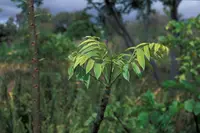
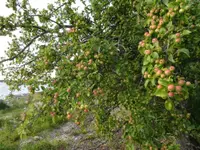
Jewish plum (Spondias dulcis) is a fast-growing tropical fruit tree, valued for its crisp, tangy, plum-like fruits and dense, light green foliage. It forms a rounded crown and can become a medium to large tree in warm climates. Native to the Pacific Islands and Southeast Asia, it is now grown in many tropical and subtropical regions. This species prefers warm temperatures, bright light, and evenly moist but well-drained soil. Its toughness, quick growth, and tolerance of pruning make it relatively straightforward to care for Jewish plum in suitable climates, though it is not ideal for cool or frost-prone areas.

Care Difficulty
Moderate Care

Light Preference
Full Sun

Water Requirements
Regular Water

Temperature Preference
Tropical / Frost Sensitive

Hardiness Zone
10–12

Soil Texture
Sandy, Loamy, Organic-rich

Soil pH
Acidic (5.5–6.5), Slightly acidic (6.5–7.0)

Soil Drainage
Moist but well-drained

Fertilization
Minimal (feed rarely)
Scan your plant to receive care tips personalized for your specific plant
Available on iOS and Android
This tropical fruit tree thrives with strong, consistent light in warm climates.
This species prefers evenly moist, well-drained soil once established in the landscape.
This tropical tree grows best in consistently warm, frost-free conditions.
Spondias dulcis handles a range of humidity but grows best with moderately moist air.
Spondias dulcis prefers loose, well-aerated soil that drains freely yet retains some moisture.
This species can be grown in large containers where climates are marginal or space is limited.
Spondias dulcis benefits from moderate feeding to support steady vegetative growth and fruiting.
Pruning Spondias dulcis helps manage size, improve structure, and maintain fruiting wood.
Jewish plum is usually grown in the ground, so focus on careful transplanting and early container up-potting.
Spondias dulcis is commonly propagated from seeds and woody cuttings in warm conditions.
Spondias dulcis is tropical to subtropical and does not tolerate hard frost, so winter protection is important in cool climates.

Plant Health Check
Not sure what's wrong with your plant? Check your plant's health inside the app.
The unripe fruit is unusually crisp and starchy, with a texture closer to green apple or jicama than to most plums, and is often eaten with salt, chili, or pickled in many tropical cuisines.
Unlike many tropical fruit trees, this species commonly sheds most of its leaves in a short dry season, then produces new foliage and flowers on the bare branches.
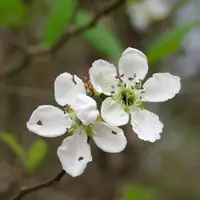
The small white flowers produce a noticeable sweet scent that attracts a range of insect pollinators, and in still tropical air this fragrance can travel a surprising distance around the tree.

This species has naturalized so successfully across tropical regions that its exact native range in the Pacific is difficult to reconstruct, and its current distribution reflects centuries of human transport for food rather than purely natural spread.
Growth is relatively fast in warm climates. Young trees can add 60–120 cm per year under good moisture and fertility, then slow slightly as they mature. Container plants grow more slowly due to restricted root space.
Keep your plants happy and healthy with plant identification, disease detection, and easy care guidance.