Early structural training
During the first 3–5 years, select a single straight leader and 3–5 well-spaced main branches, removing competing shoots in late winter to build a strong framework that resists breakage under fruit and snow loads.

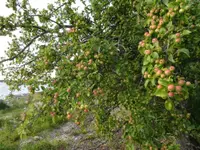
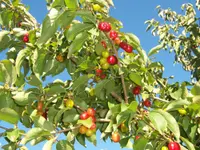
Crab apple (Malus sylvestris) is a small deciduous tree or large shrub, valued for its spring flowers and small colorful fruits. It typically forms a rounded crown with dense branching and simple, oval green leaves. In spring, it produces white to pale pink blossoms, followed by clusters of small, tart apples that attract birds and wildlife. Malus sylvestris is native to Europe and parts of western Asia, often found in wood edges, hedgerows, and open countryside. It is generally hardy and adaptable, which makes it relatively straightforward to care for crab apple in temperate gardens. The tree prefers full sun, moderately moist conditions, and well-drained soil.

Care Difficulty
Moderate Care

Light Preference
Full Sun

Water Requirements
Moderate Water

Temperature Preference
Cold Hardy

Hardiness Zone
4–8

Soil Texture
Loamy, Sandy, Clay

Soil pH
Acidic (5.5–6.5), Slightly acidic (6.5–7.0)

Soil Drainage
Moist but well-drained

Fertilization
Minimal (feed rarely)
Scan your plant to receive care tips personalized for your specific plant
Available on iOS and Android
Malus sylvestris thrives in bright outdoor conditions with a clear daily light pattern.
This species prefers evenly moist, well-drained soil rather than frequent, shallow watering.
This hardy tree tolerates a wide temperature range when established outdoors.
Malus sylvestris tolerates a broad humidity range and usually does not need humidity adjustment outdoors.
Malus sylvestris prefers deep, well-structured mineral soil with steady moisture and free drainage.
This species can be grown in containers for some years, but long-term culture is challenging due to its eventual size.
Malus sylvestris benefits from modest feeding when grown in gardens or containers.
Pruning Malus sylvestris supports a healthy framework and better light penetration.
Malus sylvestris is usually grown in the ground, so focus on careful transplanting of young trees.
Malus sylvestris is commonly propagated, but methods vary in reliability and time.
Malus sylvestris is generally cold hardy and needs minimal winter care in most temperate climates.

Plant Health Check
Not sure what's wrong with your plant? Check your plant's health inside the app.
The European crab apple is one of the main wild ancestors of the cultivated apple, and genetic studies show that its DNA is still detectable in many modern Malus domestica varieties.
This species supports a rich community of specialized insects, including several moth species whose caterpillars feed almost exclusively on its leaves or fruit, making it important for woodland biodiversity.
Its fruit is usually under 3 cm in diameter and has very high acidity, which makes it unpalatable to eat raw but valuable for wildlife and for adding tartness to traditional ciders and preserves.

Ancient pollen records and charcoal remains show that European crab apple has been present in European woodlands since at least the early Holocene, so it has shared habitats with humans since the very beginning of European agriculture.
Lack of flowers often comes from too much shade, heavy pruning at the wrong time, or stress from drought or nutrient-poor soil. Late frosts can also damage buds. Improve conditions gradually; flowering usually returns the following season.
Keep your plants happy and healthy with plant identification, disease detection, and easy care guidance.