Early root training
Plant seedlings in deep containers or beds from the start so the strong taproot can grow straight down, which reduces transplant shock and supports long-term stability when you later move the tree to its final position.

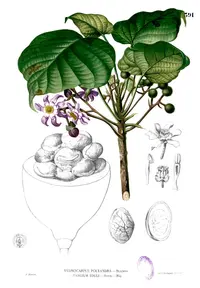
Pangium, commonly called the pangi or football fruit tree, is a tropical evergreen tree known for its large, glossy leaves and heavy, woody fruits. Pangium edule naturally occurs in lowland swamp forests and riverbanks of Southeast Asia, where it can reach impressive size in warm, humid conditions.
The tree prefers consistently moist, well-drained, slightly acidic soils and high rainfall. It is slow to start but becomes robust once established, which can make cultivation challenging for beginners.
Handling and cultivation require care, since raw seeds and other parts are highly poisonous and only become safe after complex traditional processing. Anyone planning to care for Pangium should understand these risks before growing it.

Care Difficulty
Hard Care

Light Preference
Partial Shade

Water Requirements
Regular Water

Temperature Preference
Tropical / Frost Sensitive

Hardiness Zone
11–12

Soil Texture
Loamy, Silty, Organic-rich

Soil pH
Acidic (5.5–6.5), Slightly acidic (6.5–7.0)

Soil Drainage
Moist but well-drained

Fertilization
Minimal (feed rarely)
Scan your plant to receive care tips personalized for your specific plant
Available on iOS and Android
This species develops best as a young tree in bright, humid, lowland tropical light conditions.
This tree prefers evenly moist, deep tropical soils with no long-standing waterlogging.
This lowland tropical tree needs warm, stable conditions for reliable growth and survival.
This species prefers fairly moist air but usually adapts to typical outdoor tropical or subtropical humidity.
Pangium edule needs deep, moisture-retentive but free-draining soil to establish a long-lived tree.
This species is only moderately suitable for long-term container culture and is better kept in very large, stable tubs when potted.
This tropical tree benefits from light, steady feeding rather than heavy fertilization.
Pangium edule needs only light structural pruning to stay healthy and manageable.
This species is usually grown in-ground, so focus on careful transplanting of young trees.
Propagation of this tree relies mainly on seeds and is relatively slow and specialized.
This is a strictly tropical species that does not tolerate frost or cold winters.

Plant Health Check
Not sure what's wrong with your plant? Check your plant's health inside the app.
The seeds contain cyanogenic glycosides that release hydrogen cyanide, so traditional processing involves prolonged boiling, soaking, and fermentation to make them safe as food.
This tree is naturally found in lowland swamp and riverine forests in Southeast Asia, where it tolerates periodic flooding and very wet, poorly drained soils.
Pangium edule grows into a tall canopy tree in mature rainforest, but it takes many years to reach reproductive age, which makes wild populations sensitive to habitat loss and overharvesting.

In parts of Indonesia, especially in Java, the detoxified and fermented seeds, known as keluak or kluwek, are a key traditional ingredient that gives dishes like rawon their characteristic dark color and earthy flavor, and the preparation knowledge is passed down as specialized culinary know-how.
The seeds are traditionally eaten only after extensive processing to remove potent toxins, including cyanogenic compounds. Raw parts are highly poisonous. Never attempt to prepare or consume this species without expert local guidance and proven traditional methods.
Keep your plants happy and healthy with plant identification, disease detection, and easy care guidance.