Mountain thistle Care (Acanthus montanus)

Also known as: Bear's breech
Mountain thistle

About Mountain thistle

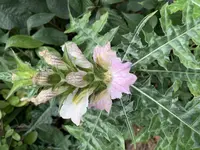
Mountain thistle, Acanthus montanus, is a clump-forming perennial often grown for its bold, deeply lobed leaves and upright flower spikes. It is not a true thistle but belongs to the acanthus group, known for architectural foliage.

In its native West and Central Africa, it grows in warm, humid areas, usually in partial shade along forest edges. In gardens, it typically forms dense mounds that spread slowly by short rhizomes.

This plant is considered moderately easy to grow when given protection from harsh frost, consistent moisture, and well-drained soil. Understanding how to care for Mountain thistle mainly involves providing dappled light, shelter from strong wind, and avoiding waterlogged conditions.

Main Plant Requirements

Care Difficulty

Moderate Care

Light Preference

Partial Shade

Water Requirements

Regular Water

Temperature Preference

Warm Climate

Hardiness Zone

9–11

Soil Texture

Loamy, Sandy, Organic-rich

Soil pH

Acidic (5.5–6.5), Slightly acidic (6.5–7.0)

Soil Drainage

Moist but well-drained

Fertilization

Light (every 4–6 weeks)

Get Personalized Care Plan

Scan your plant to receive care tips personalized for your specific plant

Available on iOS and Android

How to Care for the Mountain thistle

This species prefers bright, gentle light rather than harsh, all-day sun.

  • Provide 4–6 hours of sun daily, with morning sun and light afternoon shade; dappled or filtered light suits Mountain thistle in hotter regions.
  • In cool, mild climates, it tolerates more direct sun, but in hot summers protect leaves from intense midday sun to prevent scorch and bleaching.
  • In deep or dense shade, flowering and vigor decline, so gradually move plants to brighter positions in spring or early summer if growth looks weak.

Acanthus montanus prefers evenly moist, well-drained soil that never stays soggy.

  • Water when the top 3–5 cm of soil feels dry, soaking the root zone deeply, then let excess drain away to avoid standing water.
  • During active growth in spring and summer, expect more frequent watering; reduce in fall and winter as growth slows and soil dries more slowly.
  • Wilting, crisp leaves and very light, shrunken soil indicate underwatering, while yellowing lower leaves, mushy crowns, or a sour smell suggest overwatering and poor drainage.

This plant grows best in warm, frost-free conditions with only moderate temperature swings.

  • Aim for 65–80°F (18–27°C) during active growth, which supports steady foliage and flower development.
  • It can tolerate brief dips to about 40°F (4°C), but repeated exposure near this level or any frost can damage leaves and crowns.
  • In hot spells above 90°F (32°C), provide extra shade and mulch to keep roots cooler, and avoid planting in exposed frost pockets or wind tunnels.

This species handles a wide humidity range but grows best with moderate ambient moisture.

  • Aim for 40–60% humidity, which is typical of most living spaces, to keep foliage growth steady.
  • The plant tolerates short periods of drier air but may show browning leaf edges and tip dieback if humidity stays very low.
  • Increase humidity around Mountain thistle by grouping plants, using a nearby humidifier, or placing the pot on a pebble tray above water.

Acanthus montanus prefers deep, loose, moisture-retentive but free-draining soil to support its strong root system.

  • Use a loamy mix with high organic matter, such as 2 parts compost or leaf mold to 1 part garden soil and 1 part coarse sand or perlite.
  • Aim for slightly acidic to neutral pH around 6.0–7.0, which supports nutrient availability and healthy leaf development.
  • Improve aeration and drainage by incorporating coarse sand, fine gravel, or perlite, especially in heavy or clay-based garden soils.
  • Avoid compacted, waterlogged, or very shallow soils, which increase root rot risk and reduce the plant’s vigor.

This species can be grown in containers if the pot is large and stable enough for its spreading root system.

  • Choose a deep, wide container to allow the fleshy roots to spread horizontally without circling tightly.
  • Select a heavy material such as ceramic or concrete to prevent the tall, leafy clumps from tipping in wind.
  • Ensure several drainage holes and elevate the pot slightly on feet or bricks so excess water exits quickly and does not pool at the base.

Acanthus montanus responds well to moderate feeding during the active growing season for fuller foliage and flowering.

  • Use a balanced, slow-release fertilizer (around 10-10-10 or similar NPK) or well-rotted compost mixed into the topsoil in spring.
  • Feed outdoor clumps 1–2 times per growing season; container plants may need light feeding every 4–6 weeks.
  • Apply fertilizers at half-strength for potted Mountain thistle to avoid root burn and excessive soft growth.
  • Stop or greatly reduce feeding in fall and winter, when growth naturally slows or plants go semi-dormant.

Thoughtful pruning helps Acanthus montanus maintain a tidy clump and encourages healthy new shoots.

  • Use clean, sharp hand pruners to remove dead, damaged, or diseased leaves whenever noticed.
  • In late winter or early spring, cut back old flower stems and ragged foliage close to the base.
  • Thin congested shoots at the center of the clump to improve air flow and reduce fungal issues.
  • Lightly shape the plant by removing the longest, most wayward stems without cutting into healthy crowns.

This species is more often grown in the ground, where careful transplanting preserves its deep, fleshy roots.

  • Plan transplanting or container repotting in early spring or early fall, when temperatures are mild and growth is steady but not extreme.
  • Look for signs such as roots circling the pot, water running straight through, or noticeably slowed growth before repotting.
  • Move to a container 2–3 in wider, using a free-draining mix, and disturb the root ball as little as possible to limit shock.
  • Water thoroughly after transplanting, then keep soil evenly moist and provide light shade for 1–2 weeks to help roots re-establish.

Acanthus montanus is commonly propagated by division, root cuttings, or seeds, depending on the grower’s priorities.

  • Divide established clumps in early spring, lifting carefully and separating sections with several shoots and healthy roots.
  • Take root cuttings in late winter, planting 5–8 cm segments horizontally in a moist, well-drained medium at 65–75°F.
  • Sow fresh seeds in spring in a sterile seed-starting mix, keeping them lightly covered and evenly moist until germination.
  • Provide bright, indirect light, high humidity, and minimal disturbance for young plants until root systems become well developed.

In mild climates this plant usually survives winter with modest protection focused on its root zone.

  • Acanthus montanus is only lightly frost tolerant; foliage may burn below about 30°F but roots often survive short cold spells.
  • Apply a 5–8 cm layer of mulch around the base in late fall, keeping it slightly away from the crowns.
  • In colder regions, grow in containers and move indoors to a cool, bright, frost-free space before hard freezes.

Care Tips

Manage Underground Spread

Install a root barrier 30–40 cm deep around planting beds to prevent rhizomes from creeping into lawns or neighboring plants, and check the barrier line each spring to cut back any shoots that jump the boundary.

Encourage Bushier Clumps

After flowering, cut flowering stems back to just above a strong pair of leaves to redirect energy into side shoots, which creates a denser, more compact clump over the next growing season.

Divide At The Right Time

Lift and divide overcrowded clumps in early spring just as new shoots appear, replanting only the healthiest divisions with several buds each and discarding weak, woody centers to maintain vigorous growth.

Protect Leaves From Wind

Site the plant where tall structures or shrubs break strong winds, or add a low, open wind screen, since its large leaves tear easily and damaged foliage can invite fungal problems.

Monitor For Snail Damage

Place rough copper tape or gritty barriers around young plants and check leaves at dusk during wet periods, removing snails and slugs by hand before they skeletonize the broad foliage when growing Mountain thistle.

Common Pests and Diseases

Snails and slugs

This pest feeds on tender leaves, often leaving irregular holes and ragged edges, especially on young growth. Symptoms include slime trails on or around the plant and heavy damage after wet weather.

Solution

Hand-pick snails and slugs in the evening, use beer traps or iron phosphate bait placed away from children and pets, and keep the area around the plant free of dense mulch or debris that provides hiding places. In very damp sites, raising the planting area and improving drainage helps reduce pressure over time when growing Mountain thistle outdoors.

Powdery mildew

This disease causes a white or gray powdery coating on leaves, leading to yellowing and premature leaf drop in humid, shaded conditions. Symptoms include distorted new growth and a dusty appearance on upper leaf surfaces.

Solution

Remove and discard heavily infected leaves and improve air circulation by thinning surrounding vegetation or spacing plants farther apart. Avoid overhead watering, water at soil level in the morning, and use a sulfur or potassium bicarbonate-based fungicide labeled for ornamental plants if the problem persists.

Leaf spot

This disease produces small brown to dark purple spots that may merge into larger blotches, sometimes with yellow halos. Symptoms include premature yellowing and dropping of lower leaves, especially in warm, wet conditions.

Solution

Prune and dispose of affected leaves, avoid splashing water onto foliage, and water at the base of the plant. Improve airflow, keep fallen debris cleaned up, and use a copper-based fungicide if new spotting continues during wet periods.

Aphids

These insects cluster on soft shoots and undersides of leaves, sucking sap and causing curling, distortion, and sticky honeydew on foliage. This pest can attract sooty mold, giving leaves a blackened, dirty look.

Solution

Spray colonies off with a firm stream of water, then apply insecticidal soap or neem oil to leaf undersides and growing tips, repeating as needed. Encourage natural predators like lady beetles and avoid excess nitrogen fertilizer, which promotes very soft, aphid-prone growth.

Root-knot nematodes

These microscopic worms attack roots, causing swelling or galls and reducing the plant’s vigor. Symptoms include stunted growth, poor flowering, and wilting in hot weather despite adequate watering, especially in sandy soils in warm climates.

Solution

Remove and discard severely affected plants and avoid replanting susceptible species in the same spot. Solarize infested soil where possible, improve soil organic matter, and consider growing Acanthus in large containers with fresh, high-quality potting mix if garden soil is known to be nematode-prone.

Interesting Facts

West African understory native

This species is naturally found in the shaded understory of lowland forests in West and Central Africa, especially Nigeria and Cameroon, where it grows on moist, humus-rich soils along forest edges and clearings.

Bristly yet wildlife-friendly

Although the leaves and flower bracts are spiny and can deter browsing animals, the tubular white and pink flowers provide nectar for pollinating insects, including bees, in its native range and in warm gardens.

Architectural leaf structure

Its glossy, deeply lobed leaves can reach large sizes in the ground, forming a dense clump that helps shade the soil surface, reduce evaporation, and suppress competing undergrowth in its natural habitat.

FAQs about Mountain thistle

Lack of blooms usually comes from insufficient light, heavy shade, or nutrient-poor soil. Immature plants may also take a season or two to flower. Avoid frequent reshuffling, and do not overfertilize with high-nitrogen products, which favor leaves over flowers.

Grow Healthy Plants with Botan Care

Keep your plants happy and healthy with plant identification, disease detection, and easy care guidance.

Botan plant care app — identify plants on mobile

Explore More Plants