Goeppertia picturata Care

Goeppertia picturata

About Goeppertia picturata

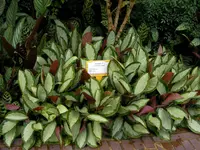
Goeppertia picturata is a compact, evergreen tropical houseplant grown mainly for its patterned foliage. It belongs to the Marantaceae, often called the prayer plant family. Leaves are oval, with silvery or pale green centers and darker green margins, and purple undersides that give strong contrast. Plants grow in low clumps rather than tall stems, so they suit shelves, tabletops, and mixed indoor displays. In nature, G. picturata occurs on the shaded tropical forest floor in South America, where light is filtered and humidity stays high. This background explains why it can be somewhat demanding. Stable warmth, evenly moist but airy soil, and protection from dry air are key points in how to care for Goeppertia picturata.

Main Plant Requirements

Care Difficulty

Moderate Care

Light Preference

Bright Indirect Light

Water Requirements

Keep Soil Moist

Temperature Preference

Tropical / Frost Sensitive

Hardiness Zone

11–12

Soil Texture

Loamy, Peaty, Organic-rich

Soil pH

Acidic (5.5–6.5), Slightly acidic (6.5–7.0)

Soil Drainage

Moist but well-drained

Fertilization

Light (every 4–6 weeks)

Get Personalized Care Plan

Scan your plant to receive care tips personalized for your specific plant

Available on iOS and Android

How to Care for the Goeppertia picturata

This plant prefers bright, gentle light that mimics a forest understory.

  • Provide 6–8 hours of bright, indirect light each day; morning sun through an east window or light filtered by sheer curtains is ideal for Goeppertia picturata.
  • Avoid strong midday or afternoon sun, which can bleach patterns and cause crisp brown patches on leaf edges and tips.
  • In winter, move the plant closer to bright windows or use a grow light, as low light leads to stretched stems and dull leaf color.

Watering should keep the root zone evenly moist but never waterlogged.

  • Let the top 2–3 cm of soil dry before watering, then water thoroughly so excess drains away; use this as a guide instead of a fixed weekly schedule.
  • Reduce watering slightly in winter when growth slows, but do not allow the root ball to dry out completely for long periods.
  • Watch for yellowing, mushy stems or sour smell as signs of overwatering, and curling, crisp edges or very light pot weight as signs of underwatering.

Stable, warm temperatures support healthy foliage and steady growth.

  • Aim for 65–80°F (18–27°C) for best growth; short dips to 60°F (16°C) are usually tolerated if the soil is not wet and drafts are avoided.
  • Protect from cold air near doors, single-glazed windows, or air conditioning, as damage often appears when exposed to 55°F (13°C) or below.
  • In hotter periods above 85°F (29°C), increase humidity and air movement, keeping the plant out of hot sun to prevent leaf scorch and stress.

This species needs consistently high humidity to maintain healthy foliage.

  • Aim for 60–70% humidity; it tolerates brief dips to around 50% but leaves may curl at lower levels.
  • Dry air causes brown, crispy edges, reduced new growth, and faint leaf folding, especially at night and early morning.
  • Increase humidity with a nearby humidifier, grouped plants, and a water-filled pebble tray under the pot, avoiding water contact with the base.

Goeppertia picturata prefers a loose, airy, organic-rich potting medium that drains quickly but does not dry out instantly.

  • Use a peat- or coco coir-based houseplant mix amended with 20–30% perlite and some fine bark for structure and air spaces.
  • Aim for slightly acidic to neutral pH (6.0–7.0), which supports nutrient availability and stable leaf color.
  • Ensure water drains through within seconds, not minutes; heavy, compact, or clay-based mixes increase the risk of root rot.
  • Improve drainage by adding more perlite or bark and avoid mixes containing moisture-retentive crystals or large amounts of garden soil.

This species is well suited to container growing when pot choice supports its shallow, spreading roots and moisture needs.

  • Select a pot that is wider than it is deep to accommodate shallow roots and keep the plant visually balanced as it spreads.
  • Choose plastic or glazed ceramic over unglazed terracotta if household air is dry, since these materials slow moisture loss from the root zone.
  • Use a saucer that allows rapid discarding of runoff so the container never sits in standing water, which quickly stresses this species.

This plant benefits from light, consistent feeding during active growth for steady foliage production.

  • Use a balanced liquid fertilizer (such as 10-10-10 or 20-20-20) diluted to 1/4–1/2 strength for Goeppertia picturata.
  • Feed every 4–6 weeks in spring and summer when growth is noticeable.
  • Do not apply fertilizer to very dry soil; water lightly first to reduce root burn risk.
  • In fall and winter, reduce feeding to 1–2 light applications or pause entirely if growth slows strongly.

Pruning focuses on grooming and sanitation rather than shaping this foliage plant.

  • In any season, remove yellow, brown, or torn leaves at the base with clean, sharp scissors.
  • Cut spent or collapsing outer leaves to maintain a compact, tidy clump.
  • Trim only damaged leaf tips, following the natural shape, if the rest of the blade is healthy.
  • Disinfect tools before and after working on Goeppertia picturata to limit disease spread.

Repotting aims to refresh the root zone and provide modest space without overpotting.

  • Plan to repot every 1–2 years in spring when growth resumes, or when roots circle the pot and slow growth appears.
  • Choose a container 2–3 cm wider with drainage holes and use a peat-free, airy mix formulated for aroids or calatheas.
  • Gently loosen circling roots, keep the root ball mostly intact, and set at the same depth to limit stress.
  • Water thoroughly after repotting Goeppertia picturata, then keep evenly moist and shaded from strong sun for 1–2 weeks.

Division is the standard method for creating new plants from a mature clump.

  • Divide in spring or early summer when repotting and the plant has multiple healthy stems or rhizome sections.
  • Lift the root ball, then separate it into sections, each with several leaves and a good root portion.
  • Plant divisions into small pots with fresh, moist substrate and firm gently to remove air gaps.
  • Maintain high humidity, warm temperatures (68–80°F), and shaded light until new growth confirms successful division of Goeppertia picturata.

This tropical species is frost-sensitive and must be kept above indoor minimums in cold climates.

  • Keep temperatures around 65–80°F and avoid exposure below about 60°F, including drafts from windows or doors.
  • For container plants outdoors in warm months, move them indoors well before first frost.
  • Indoors, maintain stable humidity 50–60% and avoid placing Goeppertia picturata near heating vents or dry air sources.
  • Water slightly less in winter, keeping the root zone lightly moist but never waterlogged in cooler conditions.

Care Tips

Use double potting

Place the nursery pot inside a slightly larger decorative cachepot with a few cm of LECA or gravel at the bottom to buffer excess moisture and raise local humidity around the foliage without leaving roots in standing water.

Rotate for even foliage

Turn the pot 90° every 1–2 weeks so the patterned leaves develop evenly on all sides and the plant does not lean or produce sparse growth on the shaded side.

Gentle leaf cleaning

Wipe both sides of the leaves every 3–4 weeks with a soft cloth lightly dampened in lukewarm water to keep stomata clear, reduce dust that shelters pests, and maintain efficient photosynthesis when caring for Goeppertia picturata.

Monitor root crowding

Check the root ball once or twice a year by gently sliding the plant from its pot; if the roots form a tight spiral at the bottom or sides, move up to the next pot size to avoid stress and stalled growth.

Prevent cold shock

In winter, keep the plant at least 60–90 cm away from exterior doors, single-glazed windows, or drafty vents to avoid rapid temperature drops that cause leaf rolling and brown patches on the foliage.

Common Pests and Diseases

Spider mites

This pest thrives in warm, dry indoor air and feeds on leaf sap, causing fine stippling, dulling of the leaf surface, and eventual leaf edge browning and curling. Symptoms include tiny webbing between stems and the undersides of leaves, which is easier to see than the mites themselves.

Solution

Rinse foliage thoroughly with lukewarm water, including the undersides of leaves, then increase ambient humidity and avoid placing the plant near hot, dry air sources. For persistent infestations, repeat washing every few days and use a horticultural soap or neem oil spray labeled for indoor use, applied carefully to both leaf surfaces.

Fungus gnats

These insects develop in consistently wet potting mix and are attracted to organic-rich substrates used for calatheas, leading to clouds of small flies around the plant and potential damage to fine feeder roots by larvae. Symptoms include slow, weak growth despite apparently adequate water and nutrients.

Solution

Allow the top 2–3 cm of potting mix to dry slightly between waterings, improve drainage, and remove any decaying plant debris from the soil surface. Use yellow sticky traps to catch adults and, if needed, apply a biological control such as Bacillus thuringiensis israelensis (BTI) or beneficial nematodes to target larvae in the potting mix as part of careful Goeppertia picturata care instructions.

Leaf spot (fungal or bacterial)

This disease produces water-soaked, tan, or dark purple-brown spots on leaves, sometimes with a yellow halo and irregular shapes along the veins. Symptoms include spots enlarging over time, coalescing, and causing sections of the leaf to die and turn papery.

Solution

Remove and discard affected leaves promptly, cutting back into healthy tissue, and avoid overhead watering or water sitting on foliage for long periods. Improve air movement around the plant, keep leaves clean, and in severe or recurring cases use a labeled indoor fungicide according to directions, while isolating the plant from others during treatment.

Mealybugs

These insects hide in leaf axils and along midribs, appearing as small white cottony clusters that excrete sticky honeydew. Symptoms include distorted new growth, sticky leaves, and possible sooty mold developing on the honeydew.

Solution

Physically remove visible insects with a cotton swab dipped in isopropyl alcohol, then rinse the plant thoroughly to dislodge remaining pests. Repeat inspections weekly and, if needed, apply horticultural soap or neem oil to leaf undersides, midribs, and crevices, ensuring good coverage without saturating the potting mix.

Edema and tip burn

Symptoms include small corky blisters or rough patches on the leaf underside (edema) and brown, dry tips or margins on otherwise green leaves, often triggered by irregular watering, high salt levels, or low humidity. This disorder is physiological rather than infectious but is very common under indoor conditions for this species.

Solution

Adjust watering to maintain evenly moist, not saturated, soil and avoid letting the root zone swing between very dry and very wet. Use low-salinity, preferably filtered or rainwater, flush the potting mix occasionally to remove built-up salts, and maintain stable humidity around 50–70% through grouping plants, using a humidifier, or placing the pot on a pebble tray above, not in, water.

Interesting Facts

Silver leaf mirror

This species has a sharply defined silver central zone on the upper leaf surface that contrasts with dark green margins, an adaptation thought to improve light capture by reflecting and scattering weak understory light within the leaf blade.

Night leaf posture

Like other marantaceae, this plant performs nyctinasty, a daily movement where leaves raise and partially fold at night due to changes in specialized pulvinus cells at the base of the leaf stalk.

Deep purple underside

The leaf undersides are a rich purple to maroon, which likely helps manage low, filtered light in its native Amazonian understory by absorbing wavelengths reflected from surrounding foliage and soil.

FAQs about Goeppertia picturata

Brown, crispy leaf edges usually result from low humidity, underwatering, or mineral buildup from hard tap water. Increase humidity, keep soil lightly moist, flush the pot occasionally, and avoid direct blasts from heaters or air conditioners.

Grow Healthy Plants with Botan Care

Keep your plants happy and healthy with plant identification, disease detection, and easy care guidance.

Botan plant care app — identify plants on mobile

Explore More Plants