Tillandsia tricolor Care

Tillandsia tricolor

About Tillandsia tricolor

Tillandsia tricolor is an epiphytic air plant from Central America and Mexico that naturally grows attached to trees, rocks, or cliffs. It absorbs water and nutrients through its leaves rather than roots. The plant forms a rosette of narrow, arching leaves that shift from green to reddish tones, especially in brighter light. A colorful flower spike emerges when mature, adding ornamental value despite its compact size. It suits beginners who want to learn how to care for Tillandsia tricolor, as it tolerates some neglect if not overwatered. Bright, filtered light, good air circulation, and regular misting or soaking support steady growth indoors.

Main Plant Requirements

Care Difficulty

Moderate Care

Light Preference

Bright Indirect Light

Water Requirements

Moderate Water

Temperature Preference

Tropical / Frost Sensitive

Hardiness Zone

10–12

Soil Texture

Sandy, Rocky, Organic-rich

Soil pH

Acidic (5.5–6.5)

Soil Drainage

Well-drained

Fertilization

Light (every 4–6 weeks)

Get Personalized Care Plan

Scan your plant to receive care tips personalized for your specific plant

Available on iOS and Android

How to Care for the Tillandsia tricolor

This species prefers bright, indirect light with some gentle direct sun each day.

  • Provide 3–5 hours of soft morning sun or late-afternoon sun, plus bright filtered light the rest of the day; strong midday sun behind glass can scorch Tillandsia tricolor.
  • Outdoors, place where it receives dappled light under open tree canopy or shade cloth giving roughly 40–60% shade, especially in summer.
  • If leaf color turns dull green and growth slows, increase light; if tips bleach or crisp, move to slightly shadier, filtered exposure.

This air plant absorbs moisture through its leaves and needs thorough wetting followed by complete drying.

  • Soak or drench the plant for 5–10 minutes, then shake off excess so no water sits in the leaf base; allow the plant to dry fully within 2–3 hours in good air flow.
  • Water 2–3 times per week in warm, dry conditions and about weekly in cool or very humid weather, adjusting based on how quickly it dries.
  • Leaves curling inwards and feeling very stiff indicate underwatering; persistent soft, limp, or browning leaf bases suggest overwatering or poor drying conditions.

This species prefers warm, frost-free conditions with good air movement.

  • Aim for 65–80°F (18–27°C) for active growth, with slightly cooler nights improving vigor as long as the plant stays dry overnight.
  • Protect from cold below 45°F (7°C); brief dips to 40°F (4°C) are usually survivable if dry, but freezing temperatures cause tissue damage and rot.
  • In hot spells above 90°F (32°C), increase shade and air circulation; avoid placing the plant near hot reflective surfaces that can overheat leaves.

This epiphytic air plant prefers moderate to high humidity and dries quickly after misting.

  • Aim for 50–70% humidity, with strong air movement so leaves dry within 1–2 hours after watering.
  • Tolerates short periods of drier indoor air, but leaf tips may brown and curl when humidity stays low.
  • Increase humidity with frequent light misting, grouping plants, or a shallow pebble tray, avoiding constant leaf wetness.

This species does not grow in soil and instead anchors to a support while absorbing moisture and nutrients through its leaves.

  • Avoid potting mixes, garden soil, or compact substrates, which trap moisture around the base and cause rot.
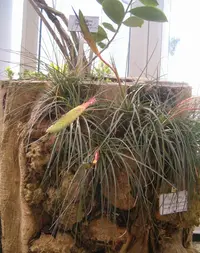
  • Mount the plant on cork bark, driftwood, or other inert, textured material using wire or waterproof glue, leaving the base exposed to air.
  • If placed in a container, use a very loose medium such as large bark, charcoal, or coarse pumice that keeps the plant above any retained moisture.
  • Ensure excellent air circulation around the base and leaves, keeping the plant dry between soakings to prevent fungal problems.

This air plant can be grown in containers if treated as a mounted or perched plant rather than potted in mix.

  • Use shallow, heavy containers or bowls with a wide base to keep the plant stable and prevent tipping when foliage becomes top-heavy.
  • Raise the plant above any water collection point using a mesh stand, pebbles, or a decorative grid so no water contacts the base.
  • Choose open containers (such as airy metal or ceramic frames) that allow strong side ventilation, avoiding enclosed glass that traps stagnant moisture.

This air plant benefits from light, dilute feeding during active growth but does not need heavy fertilization.

  • Use a balanced water-soluble NPK orchid or air-plant fertilizer at 1⁄4–1⁄2 strength.
  • Feed Tillandsia tricolor every 3–4 weeks in spring–summer while watering or misting.
  • Do not use compost or slow-release granules, which can burn foliage or trap moisture.
  • Reduce feeding to once in 6–8 weeks in fall–winter, or pause entirely in low light.

Pruning needs are minimal and focus on hygiene rather than shaping the plant.

  • Trim completely brown or dead leaves at the base using small, clean scissors.
  • Remove spent flower spikes once fully dry to direct energy to new offsets (pups).
  • Gently pull away loose, dried leaf sheaths to improve air flow, avoiding green tissue.
  • Light thinning of crowded pups can refine shape without affecting flowering potential.

This species is an epiphytic air plant, so it is usually mounted or placed loosely rather than grown in soil.

  • Move or remount when the clump outgrows its support, dries too quickly, or is shaded by other plants.
  • Best timing is spring to early summer, when light and humidity favor recovery.
  • Typical interval is every 2–3 years, or whenever the mount becomes unstable or decayed.
  • To reduce stress, moisten plants before handling, avoid bending the base, and secure gently with soft wire or ties.

Propagation is commonly done by separating offsets produced after flowering.

  • Allow pups to reach about 1⁄3–1⁄2 the size of the parent before separating.
  • Best season is spring–summer, when warmth, light, and humidity support new growth.
  • Gently twist or cut pups away at the base using sterilized scissors or a knife.
  • Mount new plants in bright, indirect light with good air movement and consistent misting to avoid desiccation.

This air plant is frost sensitive and needs protection in regions with cold winters.

  • Aim to keep temperatures above 45–50°F; brief dips lower can damage foliage.
  • In cold climates, grow Tillandsia tricolor on removable mounts and bring indoors before first frost.
  • Indoors, place in bright, indirect light and maintain good air circulation.
  • Reduce soaking frequency in winter, allowing plants to dry fully within 4 hours after watering.

Care Tips

Rotate Display Spots

Rotate plants between slightly different light exposures every few weeks to prevent one-sided growth and to help clumps develop a more even shape when growing Tillandsia tricolor indoors or outdoors under cover.

Optimize Air Movement

Place plants where there is gentle, regular air circulation such as near a vent that does not blow hot or cold air directly on them, which helps leaves dry quickly after misting and reduces rot risk at the base.

Mount With Spacers

When attaching plants to wood, cork, or wire, use small pieces of inert material like fishing line loops or plastic mesh to hold the plant slightly off the surface so water can drain freely away from the crown.

Cluster For Flowering

Group several healthy plants or offsets close together on the same mount or display to create a more humid microzone around the leaves, which can encourage more synchronized flowering spikes over time while caring for Tillandsia tricolor.

Seasonal Rest Adjustment

During the darker, cooler months, reduce handling and disturbance of mounted clumps and allow slightly longer drying intervals after each soak to match the plant’s slower metabolism and lower water use.

Common Pests and Diseases

Scale insects

This pest attaches to the leaves and sheaths, sucking plant sap and weakening the rosette over time. Symptoms include yellowing, slowed growth, and small brown or tan bumps that feel hard to the touch.

Solution

Isolate the plant, then physically remove insects with a cotton swab dipped in isopropyl alcohol and rinse thoroughly with lukewarm water. Improve air movement, reduce excess fertilization, and repeat spot treatments weekly until no new insects appear.

Mealybugs

These insects hide in the tight leaf bases and produce white, cottony clusters that can deform new growth. This pest weakens the plant by feeding on sap and can encourage sooty mold on honeydew deposits.

Solution

Inspect the leaf axils closely, then flush the plant under a strong but gentle stream of water to dislodge insects. Follow with targeted dabbing using isopropyl alcohol on visible clusters and maintain good air circulation to keep surfaces dry afterward as part of Tillandsia tricolor care instructions.

Mite damage

This pest is often invisible to the eye but causes dull, rough patches, speckling, or distorted new leaves. Symptoms include reduced vigor and a grayish or dusty appearance on affected areas.

Solution

Rinse the plant thoroughly under running water, focusing on the inner whorls, and increase humidity with regular misting while ensuring fast drying. Improve air circulation and avoid prolonged heat stress; for persistent problems, use a labeled insecticidal soap applied as a thorough rinse, then dry the plant fully.

Bacterial soft rot

This disease starts as water-soaked, translucent patches at the leaf base that quickly become soft, brown, and foul-smelling. Symptoms include collapse of the central whorl and rapid tissue breakdown, especially after water sits in the rosette for too long.

Solution

Remove and discard the affected plant parts immediately, or dispose of the entire plant if the center is mushy. In future, soak or mist the plant early in the day, shake off excess water, keep it in strong air movement, and allow the plant to dry fully within 2–4 hours after watering.

Leaf spot fungal infection

This disease produces small brown, purple, or black spots that may merge into larger blotches, often appearing after extended periods of surface moisture. Symptoms include cosmetic damage and, in severe cases, gradual decline of leaf tissue.

Solution

Trim off heavily spotted leaves with clean scissors and avoid overhead soaking in cool, stagnant conditions. Provide brighter light with strong airflow, allow the plant to dry quickly after watering, and if needed use a mild, air-plant-safe fungicidal spray applied lightly, then dry the plant thoroughly.

Interesting Facts

Color-shifting bracts

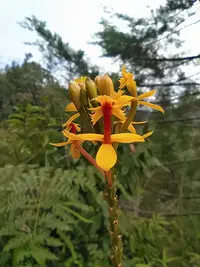
The flowering bracts of this species shift from green to yellow and red as the inflorescence matures, creating the tricolor effect that gives the plant its name.

Distinctive narrow form

Compared with many related air plants, this species has unusually narrow, stiff leaves and a slender, elongated inflorescence, which helps distinguish it from similar Tillandsia in the wild and in cultivation.

Epiphyte of open forests

In its native Central American and Mexican habitats, this plant often grows as an epiphyte on tree branches in open, seasonally dry forests, where it is adapted to strong light and good air movement.

Botan icon

Did you know?

This species forms a special mutualistic relationship with tiny microorganisms on its leaf surfaces, which live among the trichomes and help process nutrients dissolved in rainwater and mist that the plant absorbs directly through its leaves.

FAQs about Tillandsia tricolor

Lack of blooming often comes from insufficient light, too little air movement, or irregular watering. Stable warmth and a slight rise in humidity can help. Mature plants bloom once, then gradually produce offsets that replace them.

Grow Healthy Plants with Botan Care

Keep your plants happy and healthy with plant identification, disease detection, and easy care guidance.

Botan plant care app — identify plants on mobile

Explore More Plants