Secure tank water
Always keep clean, low-mineral water in the central cup but tilt and flush the tank every 3–4 weeks to remove debris and prevent bacterial buildup that can rot the central rosette.

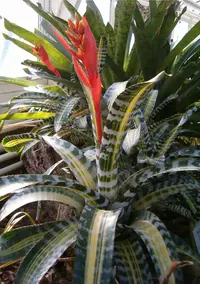
The Amazonian zebra-plant, Aechmea chantinii, is a tank-forming bromeliad grown mainly for its bold foliage and striking flowering spike. It forms a rosette of stiff, upright leaves, often banded in silver against deep green, with a tall, colorful inflorescence emerging from the center.
This species is native to the Amazon region, where it grows as an epiphyte on trees, collecting water in its leaf tank rather than relying on deep roots. Its slow growth, tolerance of indoor conditions, and modest care needs make it manageable for many households. Bright, filtered light, moderate room temperatures, and a free-draining mix support healthy growth and help explain how to care for Amazonian Zebra-plant over time.

Care Difficulty
Moderate Care

Light Preference
Bright Indirect Light

Water Requirements
Moderate Water

Temperature Preference
Tropical / Frost Sensitive

Hardiness Zone
11–12

Soil Texture
Loamy, Sandy, Organic-rich

Soil pH
Acidic (5.5–6.5), Slightly acidic (6.5–7.0)

Soil Drainage
Well-drained

Fertilization
Light (every 4–6 weeks)
Scan your plant to receive care tips personalized for your specific plant
Available on iOS and Android
This bromeliad prefers bright, filtered light that mimics high-canopy rainforest conditions.
Watering focuses on both the central cup and the potting mix, while avoiding constant saturation.
This species prefers warm, frost-free conditions similar to a tropical understory.
This bromeliad prefers moderately humid air but tolerates typical indoor levels if not too dry.
This species prefers a loose, airy, fast-draining mix similar to epiphytic orchid substrates.
This bromeliad is well suited to container growing due to its compact, shallow root system.
This bromeliad benefits from light, controlled feeding during its active warm-season growth.
Pruning for Aechmea chantinii focuses on hygiene and managing offsets rather than shaping.
Container-grown plants need infrequent repotting because roots stay relatively compact.
Propagation of this bromeliad is most reliable through division of offsets, known as pups.
This tropical epiphyte is frost-sensitive and needs warm, stable conditions in winter.

Plant Health Check
Not sure what's wrong with your plant? Check your plant's health inside the app.
This species is known for its stiff, arching leaves with contrasting horizontal light and dark bands, especially pronounced on the leaf undersides, which give it the common name zebra bromeliad.
Its rosette forms a deep central tank that naturally collects rainwater and organic debris in the wild, creating a small aquatic microhabitat that supports insects, frogs, and microorganisms.
The plant produces a tall, upright flower spike with stiff, often red to orange bracts that can stay colorful for several months, while the true flowers appear briefly along the spike and are usually less conspicuous.

Aechmea chantinii is native to the Amazon basin, where it often grows as an epiphyte on trees rather than in soil, anchoring itself to bark with roots that mainly provide support while the plant takes up most of its water and nutrients through specialized leaf scales called trichomes.
Blooming usually occurs once the rosette is mature and well established. A plant kept too cool, too dark, underfed, or frequently disturbed may delay flowering. Stable warmth, consistent moisture, and time are the main requirements.
Keep your plants happy and healthy with plant identification, disease detection, and easy care guidance.