Provide cane support
Install slim stakes or a small trellis and loosely tie canes with soft plant ties to keep tall growth upright and reduce the risk of stems snapping under the weight of leaves and flowers.

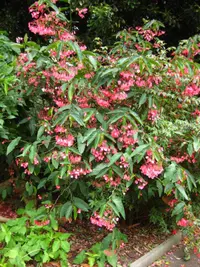
Scarlet begonia, Begonia coccinea, is a cane-type begonia grown mainly for its hanging clusters of red flowers and glossy green leaves. It forms upright, bamboo-like stems and can reach a substantial height indoors with time and proper support.
This species comes from tropical regions of Brazil, where it grows in warm, humid, partially shaded habitats. Its relatively fast growth, strong flowering habit, and tolerance of indoor conditions make it approachable for many home growers.
It prefers bright, indirect light, evenly moist but not soggy soil, and good air circulation, which helps explain how to care for Scarlet begonia successfully.

Care Difficulty
Moderate Care

Light Preference
Bright Indirect Light

Water Requirements
Moderate Water

Temperature Preference
Tropical / Frost Sensitive

Hardiness Zone
10–11

Soil Texture
Loamy, Peaty, Organic-rich

Soil pH
Acidic (5.5–6.5), Slightly acidic (6.5–7.0)

Soil Drainage
Moist but well-drained

Fertilization
Light (every 4–6 weeks)
Scan your plant to receive care tips personalized for your specific plant
Available on iOS and Android
This cane-type begonia prefers bright, indirect light for steady flowering and compact growth.
This species likes evenly moist but not saturated soil, with slight drying between waterings.
This plant grows best in warm, frost-free conditions with modest day–night temperature swings.
This species prefers moderately high, stable humidity for best foliage and flower performance.
Begonia coccinea needs a light, airy, organic-rich mix that drains rapidly but stays slightly moist.
This species is well suited to container growing due to its upright, cane-like stems and moderate root system.
Begonia coccinea responds well to light, consistent feeding during the active growing season.
Thoughtful pruning keeps Begonia coccinea compact, bushy, and flowering well.
Container-grown Begonia coccinea benefits from periodic repotting to maintain root health and steady growth.
Begonia coccinea is most commonly propagated from stem cuttings taken during the warm growing season.
Begonia coccinea is frost-tender and needs protection in regions with cold winters.

Plant Health Check
Not sure what's wrong with your plant? Check your plant's health inside the app.
This species is native to the Atlantic Forest of Brazil, where it grows as an understory shrub in warm, humid, partially shaded habitats rather than as a ground-hugging plant.
It belongs to the cane begonias, developing upright, bamboo-like stems with nodes that can root when in contact with a suitable substrate, which helps the plant spread and regenerate in its natural environment.
The scarlet, drooping flower clusters produce separate male and female flowers on the same plant and are primarily visited by small insects such as bees that transfer pollen between flowers.
Lack of blooms usually comes from insufficient light, irregular feeding, or old, spent stems. Provide bright, indirect light, use a balanced fertilizer at low strength in the growing season, and prune leggy or woody canes to stimulate new flowering growth.
Keep your plants happy and healthy with plant identification, disease detection, and easy care guidance.