Portland Spurge Care (Euphorbia portlandica)

Portland Spurge

About Portland Spurge

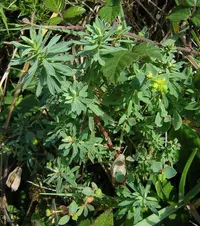
Portland spurge, Euphorbia portlandica, is a compact, mound-forming perennial from coastal areas of western Europe, including parts of the British Isles. It typically grows low to the ground with stiff, branching stems, narrow bluish-green leaves, and small yellow-green flower clusters framed by showy bracts.

This species is adapted to windy, sandy, and often nutrient-poor seaside habitats, which makes it naturally tolerant of drought and poor soils. Once established, it usually needs little attention, so it can suit low-maintenance gardens if placed correctly.

To care for Portland Spurge successfully, provide plenty of sun, sharply drained soil, and avoid overwatering, especially in heavy or compacted ground.

Main Plant Requirements

Care Difficulty

Easy Care

Light Preference

Full Sun

Water Requirements

Low Water

Temperature Preference

Cool Climate

Hardiness Zone

6–9

Soil Texture

Sandy, Loamy, Rocky

Soil pH

Slightly acidic (6.5–7.0), Neutral (7.0)

Soil Drainage

Well-drained

Fertilization

Minimal (feed rarely)

Get Personalized Care Plan

Scan your plant to receive care tips personalized for your specific plant

Available on iOS and Android

How to Care for the Portland Spurge

This coastal perennial thrives in bright, open sites with plenty of sun exposure.

  • Provide 6–8 hours of direct sun daily; morning sun plus light afternoon exposure suits Portland Spurge in most climates.
  • Tolerates light partial shade, but dense shade reduces compact growth and flowering, causing stems to stretch and weaken.
  • In very hot inland areas, protect from harsh afternoon sun to reduce leaf scorch and water stress, especially in dry summer periods.

This drought-tolerant species prefers infrequent, deep watering in sharply drained soil.

  • Allow the top 3–5 cm of soil to dry completely before watering; in sandy coastal soils this may happen quickly after rain.
  • Increase watering slightly in the main growth period if stems begin to droop or new growth stalls, but avoid constant moisture.
  • Reduce watering in cool or wet seasons, and watch for yellowing, mushy stems as a sign of overwatering in Euphorbia portlandica.

This hardy perennial copes well with cool, exposed coastal conditions when planted in suitable soil.

  • Optimal growth occurs around 55–70°F (13–21°C), especially in spring and early summer when soil is moist but free-draining.
  • Mature plants usually tolerate down to about 10–15°F (-12 to -9°C) in well-drained sites, though young plants are more cold-sensitive.
  • Handles summer heat up to about 85–90°F (29–32°C) if soil is not waterlogged; prolonged frost or freezing in saturated soil increases rot risk.

This coastal euphorbia handles a wide humidity range but prefers relatively dry air.

  • Aim for 30–50% humidity, similar to most heated indoor spaces and dry outdoor sites.
  • Portland Spurge tolerates dry air well; issues usually arise only with stagnant, overly damp air around dense foliage.
  • Humidity stress shows as lingering surface moisture, fungal spotting, or soft stems; increase air circulation rather than misting to reduce excess humidity.

This species needs lean, very free-draining soil to prevent root and crown rot.

  • Use a sandy or gritty mix, such as 50% coarse sand or grit with 50% loam-based compost, to mimic its native coastal habitats.
  • Ensure rapid drainage; water should pass through the pot or bed within seconds, not sit on the surface.
  • Keep pH slightly alkaline to neutral (about 7.0–8.0) by adding a small amount of garden lime if the base mix is acidic.
  • Avoid heavy clay, high peat mixes, or sites where water pools, as these reduce aeration and greatly increase rot risk for Euphorbia portlandica.

This species is suitable for container growing when given a stable, free-draining setup.

  • Choose a wide, shallow pot to accommodate the fibrous root system and reduce tipping from wind exposure.
  • Use a heavy clay or ceramic container in exposed sites so the plant’s branching growth does not make the pot unstable.
  • Raise the pot on feet or spacers so drainage holes stay clear and excess water escapes quickly after rain or watering.

This species is adapted to lean, sandy or rocky soils and usually needs little or no feeding in the ground.

Light pruning helps maintain the compact, clumping habit of Euphorbia portlandica and removes damaged growth.

  • Carry out pruning in late winter or early spring before strong new growth starts.
  • Use clean, sharp hand pruners and wear gloves to avoid contact with the milky sap.
  • Remove dead, diseased, or badly damaged stems at the base to reduce stress and disease risk.
  • Thin crowded or leggy shoots to improve air flow and maintain a neat, balanced shape.

This plant is most often grown in rock gardens or coastal beds, so transplanting is more common than container repotting.

  • Transplant in early spring or early fall when temperatures are mild and soil is workable.
  • Look for signs such as stunted growth, clumps shading each other, or poor flowering before moving plants.
  • Lift with a wide soil ball, disturbing roots as little as possible, and replant at the same depth in sharply drained soil.
  • Water in gently, then keep soil just slightly moist until growth resumes, avoiding waterlogging that can cause root rot.

Propagation of Euphorbia portlandica is usually done by seed or careful division of established clumps.

  • Collect ripe seeds in late summer and sow in pots or trays with gritty, well-drained mix, kept cool and lightly moist.
  • Divide small sections of the clump in early spring, ensuring each piece has healthy roots and several buds.
  • Replant divisions promptly into free-draining soil and water sparingly until re-established.
  • Provide bright light, good air flow, and protection from heavy rain while new roots form.

This coastal species is generally cold hardy in much of the UK and similar climates, needing only minimal winter attention.

  • In colder inland zones, apply a light 3–5 cm gravel or bark mulch around the crown without burying it.
  • Ensure soil drainage stays excellent over winter to prevent crown and root rot in saturated ground.
  • Container plants in marginal zones can be moved to a cold frame or unheated shelter to avoid prolonged freeze–thaw cycles.

Care Tips

Salt-wind hardening

If planting near the coast, gradually expose young plants to increasing wind and salt spray over 2–3 weeks by moving containers closer to the final site, which reduces shock and improves long-term resilience when growing Portland Spurge.

Self-seeding management

Mark and leave a few healthy, mature stems to set seed, then lightly rake or disturb the soil surface in late autumn to help seeds contact the soil while still removing excess seedlings in spring to prevent overcrowding.

Succulent-safe handling

Always wear gloves and long sleeves when cutting or dividing the plant, and rinse tools promptly after use to avoid skin irritation from the milky sap and prevent dried sap from gumming up blades.

Companion groundcover use

Plant low, non-invasive groundcovers around the base to reduce soil splash onto stems, limit weed competition, and keep the root zone slightly cooler without increasing humidity around the crown.

Targeted winter protection

In colder regions, apply a light, gritty mulch layer (such as coarse sand or fine gravel) around but not touching the crown in late autumn to protect roots from freeze–thaw cycles while keeping the base dry and rot-resistant.

Common Pests and Diseases

Aphids

This pest feeds on tender new stems and flower shoots, sucking sap and causing distortion and sticky honeydew on Portland spurge. This can lead to sooty mold growth on affected areas and weaken flowering.

Solution

Rinse colonies off outdoor plants with a firm stream of water and repeat every few days until numbers drop. On persistent infestations, spot-treat clusters with a ready-to-use insecticidal soap or neem oil, applying in the early morning and avoiding open flowers to protect pollinators while still following sound Euphorbia portlandica care instructions.

Euphorbia rust

This disease produces small orange-brown pustules or spots on the undersides of leaves, sometimes with yellowing or early leaf drop. Symptoms include patchy thinning of the clump where infection is heavy.

Solution

Remove and discard affected leaves and any heavily infected stems as soon as symptoms are seen, and avoid overhead watering to keep foliage dry. Improve air circulation around plants by spacing and light trimming of nearby vegetation, and where rust recurs, use a labeled fungicide for ornamental perennials early in the season according to the product directions.

Powdery mildew

This disease appears as a white or gray powdery coating on leaves and stems, especially in warm, dry weather with poor airflow. Symptoms include reduced vigor and premature yellowing of older foliage.

Solution

Prune to open up crowded clumps and nearby plants, and water at soil level to keep foliage dry. Remove and bin heavily affected leaves and, if needed, apply a sulfur or potassium bicarbonate fungicide labeled for ornamentals at the first sign of infection, repeating as directed to protect new growth.

Mealybugs

These insects appear as white, cottony clusters in stem joints and on roots of container-grown plants, feeding on sap and slowing growth. This pest may cause yellowing, leaf drop, and sticky honeydew on nearby surfaces.

Solution

On light infestations, dab visible clusters with cotton swabs dipped in isopropyl alcohol and repeat weekly until no new insects appear. For more established problems, unpot the plant, wash roots and stems under lukewarm water, remove infested soil, then repot into fresh, free-draining mix and use a systemic insecticide labeled for ornamental perennials if the problem persists.

Crown and stem canker

This disease causes sunken, darkened lesions at the base of stems or on lower shoots, which can girdle stems and cause wilting or dieback. Symptoms include localized collapse of individual stems while the rest of the clump may appear healthy at first.

Solution

Cut out and discard affected stems down into healthy tissue, sterilizing tools between cuts with alcohol or a 10% bleach solution. Improve drainage and avoid wounding the crown, and where plants repeatedly develop cankers in the same spot, remove severely affected clumps and replant healthy divisions into a new, better-drained location to reduce pathogen buildup.

Interesting Facts

Atlantic dune specialist

This coastal spurge is naturally restricted to sandy dune systems around the Atlantic coasts of western Europe, where it grows in open, wind‑exposed sites close to the sea.

Salt and wind tolerant

The plant shows strong tolerance to salt spray and abrasive winds, allowing it to persist where many other broadleaf species cannot compete.

Compact, long-lived clumps

It typically forms low, dense clumps that can persist for many years in stable dune grassland, helping to bind and stabilize loose sand around its root zone.

FAQs about Portland Spurge

This species forms small clumps and spreads slowly by short rhizomes and self-seeding. It usually stays contained in well-managed borders. Remove unwanted seedlings and spent flower heads if a very tight, controlled planting is desired.

Grow Healthy Plants with Botan Care

Keep your plants happy and healthy with plant identification, disease detection, and easy care guidance.

Botan plant care app — identify plants on mobile

Explore More Plants