


Winter rest period
Provide a cool, bright, and almost completely dry rest period in winter (40–50°F if possible) to encourage dense spination and reliable spring flowering when caring for lacespine nipple cactus.

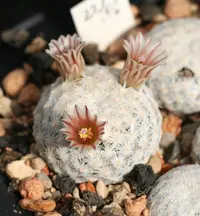
Mammillaria lasiacantha, commonly called lacespine nipple cactus, is a small, slow-growing desert cactus with a compact, rounded shape. It usually stays miniature and often forms tight clusters over time.
The plant is covered in fine, white, lace-like spines that protect it from intense sun and help it blend into its rocky surroundings. In late winter or spring, it can produce small, pale pink to white flowers arranged in a ring near the top.
This species is native to arid regions of northern Mexico and the southwestern United States, where it grows in very well-drained, rocky soils. Its drought tolerance and small size make it suitable for containers, but how to care for lacespine nipple cactus depends on providing bright light, minimal watering, and gritty soil.

Care Difficulty
Moderate Care

Light Preference
Full Sun

Water Requirements
Low Water

Temperature Preference
Warm Climate

Hardiness Zone
9–11

Soil Texture
Sandy, Rocky, Loamy

Soil pH
Slightly acidic (6.5–7.0), Neutral (7.0)

Soil Drainage
Well-drained

Fertilization
Minimal (feed rarely)
Scan your plant to receive care tips personalized for your specific plant
Available on iOS and Android
This small desert cactus needs bright, mostly direct sun that mimics open, arid habitats.
This drought-adapted cactus requires infrequent, thorough watering and fast-draining soil.
This species prefers warm, dry conditions with a cool but not freezing winter rest.
This desert cactus prefers very dry air and usually does not need humidity adjustment indoors.
Mammillaria lasiacantha performs best in a very fast-draining, mineral-rich substrate that dries quickly between waterings.
This species is very suitable for container growing due to its compact, shallow root system.
This small desert cactus needs only light feeding to stay healthy in cultivation.
Mammillaria lasiacantha needs almost no pruning, but minor cleanup maintains health and appearance.
This cactus prefers to stay slightly root bound and only needs infrequent repotting.
Propagation is possible but slow, most often done from seeds for this species.
This desert cactus needs a cool, very dry winter rest and is only moderately frost tolerant.

Plant Health Check
Not sure what's wrong with your plant? Check your plant's health inside the app.
This species has very fine, white, hair-like radial spines that create a dense, snowy covering, helping reflect intense sun and visually blending the plant into the pale desert gravel where it grows.
In habitat, this cactus often stays only a few centimeters tall and partially sunken into the soil, an adaptation that reduces water loss and protects it from extreme temperature swings in the Chihuahuan Desert.
Unlike many tropical cacti, it can tolerate brief light frosts and near-freezing temperatures in its native range, provided the soil is completely dry, reflecting its evolution in high-elevation, arid environments.

Field botanists often locate this cactus only when it flowers, because the small, low-growing body is almost invisible against the rocky substrate until the ring of pale pink to whitish blooms appears around the crown like a tiny halo.
Lack of flowers usually comes from insufficient winter rest, light, or age. This species needs several years to mature, very bright light, and a cool, dry winter period to set buds, then gradual watering in spring.
Keep your plants happy and healthy with plant identification, disease detection, and easy care guidance.

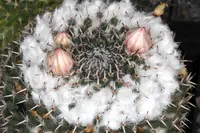
Mammillaria formosa
Mammillaria formosa
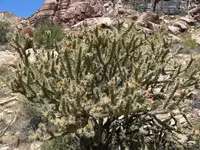
buck-horn cholla
Cylindropuntia acanthocarpa
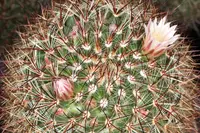
Mammillaria discolor
Mammillaria discolor
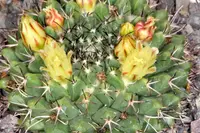
Mammillaria karwinskiana
Mammillaria karwinskiana
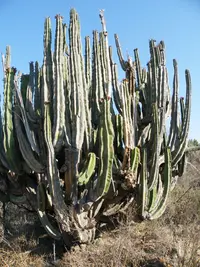
Isolatocereus dumortieri
Isolatocereus dumortieri
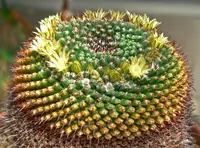
Mammillaria gigantea
Mammillaria gigantea
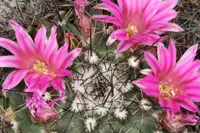
Mammillaria melanocentra
Mammillaria melanocentra
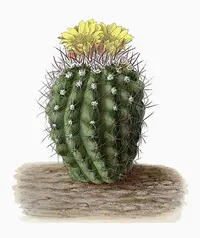
Copiapoa coquimbana
Copiapoa coquimbana