buck-horn cholla Care (Cylindropuntia acanthocarpa)

buck-horn cholla

About buck-horn cholla

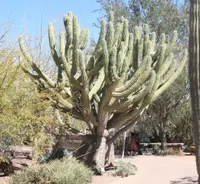
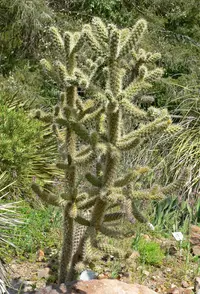
Buck-horn cholla, Cylindropuntia acanthocarpa, is a branching desert cactus known for its stiff, many-jointed stems lined with dense, sharp spines. It forms upright, woody clumps that can become shrubby, with showy yellow to orange spring flowers followed by spiny fruits. This species is native to arid regions of the southwestern United States and northern Mexico, where it thrives in rocky, well-drained soils and intense sun. Cylindropuntia acanthocarpa is drought tolerant and slow growing, but the heavy spination makes handling and repotting difficult. For those who want to learn how to care for buck-horn cholla, it suits bright, dry conditions and minimal watering when grown in containers or xeric landscapes.

Main Plant Requirements

Care Difficulty

Easy Care

Light Preference

Full Sun

Water Requirements

Low Water

Temperature Preference

Warm Climate

Hardiness Zone

8–11

Soil Texture

Sandy, Loamy, Rocky

Soil pH

Slightly acidic (6.5–7.0), Slightly alkaline (7.0–7.5)

Soil Drainage

Well-drained

Fertilization

Minimal (feed rarely)

Get Personalized Care Plan

Scan your plant to receive care tips personalized for your specific plant

Available on iOS and Android

How to Care for the buck-horn cholla

This desert cactus needs intense, direct sun to maintain compact, healthy growth.

  • Provide 6–10 hours of full, direct sun daily; open, south- or west-facing exposures suit buck-horn cholla best in arid climates.
  • Plant in a site with unobstructed light; it tolerates brief partial shade, but extended shade causes weak, elongated segments and fewer flowers.
  • In very hot regions, mild afternoon shade in midsummer prevents sunscald on new growth, while winter sun should remain as direct as possible.

This species is highly drought-adapted and must dry thoroughly between waterings.

  • Allow soil to dry completely to at least 5–10 cm depth before applying any water; the surface should feel dusty, not cool or slightly damp.
  • Use very fast-draining, mineral-rich soil on a slope or raised mound so water runs off quickly and never pools around Cylindropuntia acanthocarpa roots.
  • Reduce or withhold watering in cool months; signs of overwatering are blackened, mushy pads, while severe wrinkling and shrinking segments indicate prolonged drought stress.

This cactus thrives in hot, arid conditions and tolerates a wide temperature range once established.

  • Ideal growing temperatures are 70–95°F (21–35°C), with good airflow and low humidity to prevent fungal issues.
  • Mature plants can tolerate brief drops to about 15–20°F (-9 to -6°C) if soil is completely dry, but young plants are more cold-sensitive.
  • It handles intense heat above 100°F (38°C) if roots are deep and soil stays dry; avoid sudden cold snaps after warm, wet periods, which increase tissue damage and rot risk.

This desert cactus prefers very dry air and usually does not need humidity adjustment indoors or outdoors.

This cactus needs a very fast-draining, mineral-based growing medium to prevent root rot.

  • Use a gritty mix, such as 50% cactus potting mix with 50% coarse mineral material like pumice, crushed granite, or coarse sand.
  • Aim for a soil pH around 6.0–7.5, which suits Cylindropuntia acanthocarpa in most regions.
  • Ensure the mix feels loose and airy, with large particles that prevent compaction and allow rapid water movement.
  • Avoid peat-heavy, fine, or water-retentive mixes that stay wet longer than 1–2 days after watering.

This species can be grown in containers if the pot is chosen to match its dry, top-heavy growth habit.

  • Select a wide, heavy container to counterbalance tall, branched stems and reduce tipping in wind or on balconies.
  • Leave extra space at the rim so spiny segments do not easily snag passersby or nearby objects.
  • Choose unglazed terracotta rather than plastic to allow faster moisture evaporation from the root zone.

This desert cactus needs minimal feeding, but light fertilization can support container-grown buck-horn cholla in active growth.

  • Use a low-dose, balanced cactus fertilizer (around 5-5-5) or diluted balanced liquid feed at 1/4–1/2 strength.
  • Apply once in mid-spring and again in early summer; avoid feeding outside the main growing season.
  • Skip fertilizer in winter dormancy to prevent soft, cold-sensitive growth and root damage.
  • Ensure soil is well-drained and slightly dry before feeding, then water lightly to distribute nutrients.

Pruning Cylindropuntia acanthocarpa is mainly corrective, focusing on safety and plant health rather than shaping.

  • Perform light pruning in late spring after any frost risk has passed.
  • Remove dead, diseased, storm-damaged, or dangerously leaning segments using long-handled loppers or a pruning saw.
  • Thin out crowded or crossing stems only where access paths or visibility are needed.
  • Disinfect tools between cuts and handle segments carefully, as any piece left on soil can root and spread.

This cactus is usually grown in the ground; transplanting or container repotting is infrequent and should be done with care.

  • Consider transplanting only if the plant is small or container-bound, with roots circling the pot or growth clearly slowed.
  • Schedule moves for late spring to early summer, when soil is warm and the plant is actively growing.
  • Transplant or repot roughly every 3–5 years, stepping up only 2–5 cm in container diameter with very gritty, fast-draining mix.
  • Minimize root disturbance, keep roots dry for several days after moving, then reintroduce water gradually to limit transplant shock.

Cylindropuntia acanthocarpa is commonly propagated from stem cuttings, which root reliably in warm, dry conditions.

  • Take healthy stem segments in late spring or early summer using sturdy, protective tools and gloves.
  • Allow cut pieces to callus in a dry, shaded place for 7–14 days until cut surfaces are firm.
  • Set callused segments upright in gritty, barely moist cactus mix and keep at 70–85°F with bright light.
  • Water very lightly until strong roots form and new growth appears, then transition slowly to normal drought-tolerant care.

This cactus is reasonably cold hardy in dry climates but benefits from simple winter precautions, especially in wetter or colder regions.

  • Established plants tolerate brief light freezes if soil is very well-drained.
  • In marginal climates, add a 5–8 cm layer of gravel or mineral mulch around the base to keep the root zone dry.
  • Tilt or mound planting sites so water drains away from the crown during winter rains.
  • Move container plants to an unheated, very bright, frost-free spot with almost no water until spring.

Care Tips

Use gravel mulch

Apply a 2–5 cm top layer of coarse gravel around the base to keep stems dry at soil level, reduce rot risk, and discourage weeds without trapping excess moisture.

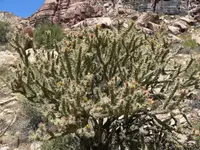
Stabilize heavy stems

If tall, top-heavy stems start leaning, anchor them with discreet rock placement or a short, rigid stake, keeping ties loose so the tissue is not constricted as the cactus expands.

Plan for arm detachment

Position the plant where dropped joints can remain on gritty soil to root naturally, or place a shallow tray of dry, sandy mix beneath outdoor specimens to catch and reuse fallen segments safely when growing buck-horn cholla.

Winter rain protection

In regions with cool, wet winters, place a clear, vented rain cover or cold frame over the plant from late fall to early spring to shield the root zone from prolonged saturation while still allowing full light and airflow.

Handle spines safely

When pruning or moving segments, wear thick leather gloves and use long-handled tongs, then remove any stuck spines or glochids with tweezers and adhesive tape before continuing work to avoid injuries and accidental breakage.

Common Pests and Diseases

Cochineal scale

This pest appears as white cottony or crusty patches clinging to the green joints, often along ribs and in areoles (spine clusters). Symptoms include sticky pads, yellowing tissue, and sometimes sooty mold on the excreted honeydew.

Solution

Remove heavily infested joints and dispose of them away from other cacti, then hose remaining pads with a strong water jet to dislodge insects. For persistent colonies, dab individual scale with cotton swabs dipped in 70% isopropyl alcohol or use a targeted insecticidal soap, repeating every 7–10 days until no new insects appear; keep the plant dry between treatments.

Cactus longhorn beetle

This pest bores into stems at or near the base, leaving oval entry holes, sawdust-like frass, and sudden stem collapse. Symptoms include yellowing, shriveling segments above the damage, and eventual death of affected stems.

Solution

Inspect regularly in warm months and remove any wilted or collapsing stems promptly, cutting well below the damaged tissue and destroying the material. Hand-pick adult beetles at dusk or night using a flashlight, reduce mulch or dense groundcover around the plant to limit hiding places, and avoid overwatering, which makes tissues softer and easier for larvae to penetrate.

Fusarium stem canker

This disease causes sunken, discolored lesions on joints that may ooze or dry into corky patches, often spreading along the stem. Symptoms include segments that turn dull, soften, and may detach, especially after mechanical injury or prolonged humidity.

Solution

Cut out affected areas with a sterile knife well into healthy tissue, then allow cuts to dry and callus fully in warm, dry air before any watering. Disinfect tools between cuts, avoid overhead watering and crowded plantings, and discard severely affected plants to prevent spread in sandy or gravelly cactus beds, which are typical sites for Cylindropuntia acanthocarpa care instructions.

Bacterial soft rot

This disease produces foul-smelling, water-soaked areas that quickly turn mushy, usually starting at wounds or insect feeding sites. Symptoms include pads that collapse, become discolored, and may leak watery, brown fluid.

Solution

Immediately remove and discard all affected joints, cutting back into firm, unblemished tissue and disinfecting tools between cuts. Improve air movement, avoid splashing water on stems, and prevent injuries from rough handling or frost so that bacteria have fewer entry points; severely rotted plants are best removed entirely to protect nearby cacti.

Spider mites

These insects cause fine stippling, a dusty or faded look, and very fine webbing on joints, especially in hot, dry, stagnant air. Symptoms include gradual loss of green color, roughened surfaces, and slower growth.

Solution

Spray stems with a firm stream of water to wash off mites, then increase airflow and avoid very hot, stagnant corners near reflective walls where heat builds. For ongoing issues, use insecticidal soap or a light horticultural oil labeled for cacti, applying in the early morning or late afternoon and repeating at 5–7 day intervals, ensuring the plant is kept out of intense sun right after treatment.

Interesting Facts

Highly variable spines

This species is known for its extreme variation in spine color and length, with stems on a single plant sometimes carrying pale yellow, reddish, or even brownish spines of different densities, which can complicate field identification compared with other chollas.

Desert nurse plant role

In parts of the Mojave and Sonoran deserts it often grows near other shrubs and can act as a partial nurse plant, offering some shade and structural protection that aids establishment of seedlings of other desert species beneath its canopy.

Hybridization in the wild

This cholla frequently hybridizes with closely related Cylindropuntia species where their ranges overlap, producing intermediate forms that show mixed stem and spine traits and contribute to taxonomic difficulty in the group.

Botan icon

Did you know?

The hooked spines of this species are so efficient at attaching to fur and clothing that they significantly aid seed dispersal by animals and humans, allowing detached stem segments containing viable areoles to be carried long distances and root in new locations when they fall to the ground.

FAQs about buck-horn cholla

This desert cactus grows best outdoors in hot, sunny, very dry conditions. Indoors, light and airflow are usually insufficient long term. Buck-horn cholla indoor care works only in very bright, arid spaces, often as a short-term display.

Grow Healthy Plants with Botan Care

Keep your plants happy and healthy with plant identification, disease detection, and easy care guidance.

Botan plant care app — identify plants on mobile

Explore More Plants