blue agave Care (Agave tequilana)

Also known as: Blue Agave
blue agave

About blue agave

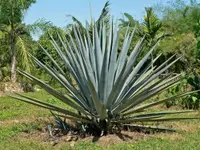
Blue agave, Agave tequilana, is a succulent native to arid regions of Mexico, especially highland areas with strong sun and well-drained soils. It forms a striking rosette of stiff, blue-gray leaves with sharp tips and edges. Mature plants can become quite large and architectural in the landscape. Growth is generally slow, but the plant is long-lived and flowers only once before dying. Its drought tolerance and low nutrient needs make it relatively easy to maintain in dry climates or low-rainfall gardens. Understanding how to care for blue agave starts with providing bright light, minimal watering, and gritty, fast-draining soil.

Main Plant Requirements

Care Difficulty

Moderate Care

Light Preference

Full Sun

Water Requirements

Low Water

Temperature Preference

Tropical / Frost Sensitive

Hardiness Zone

9–11

Soil Texture

Sandy, Loamy, Rocky

Soil pH

Slightly acidic (6.5–7.0), Neutral (7.0)

Soil Drainage

Well-drained

Fertilization

Minimal (feed rarely)

Get Personalized Care Plan

Scan your plant to receive care tips personalized for your specific plant

Available on iOS and Android

How to Care for the blue agave

Agave tequilana needs strong sun to build firm leaves and natural blue-gray color.

  • Provide 6–8 hours of direct sun daily; full sun is ideal in dry climates, with light afternoon shade in very hot regions above 95°F (35°C).
  • Young plants and blue agave in containers benefit from filtered afternoon light to reduce leaf scorch and pale, bleached patches.
  • In cooler seasons, maximize open exposure; in summer, monitor for brown, crispy leaf edges that signal excess intensity, or elongated, leaning growth that indicates insufficient light.

Agave tequilana is highly drought-tolerant and prefers infrequent, deep watering.

  • Outdoors in well-drained soil, water only when the top 5–8 cm are completely dry and leaves just begin to look slightly less firm.
  • In summer, this may mean watering every 2–4 weeks; in cooler months, reduce to very occasional watering or none if rainfall is sufficient.
  • Ensure fast drainage to prevent root rot; soft, yellowing, or swollen leaves indicate overwatering, while sharply curling or wrinkled lower leaves suggest prolonged drought.

This agave thrives in warm, arid to semi-arid climates with good airflow.

  • Ideal growing temperatures are 70–90°F (21–32°C), with strong light and low to moderate humidity.
  • Mature plants tolerate brief dips to about 25°F (−4°C), but young plants and new offsets are damaged by frost and should be protected from freezing conditions.
  • Heat up to 100–105°F (38–41°C) is tolerated if soil is fast-draining; in extreme heat waves, avoid overhead watering during peak sun to limit tissue burn.

Humidity is rarely a concern for Agave tequilana in typical indoor and outdoor conditions.

Agave tequilana needs very fast-draining, mineral-based soil to prevent root rot.

  • Use a gritty mix such as 50–60% coarse sand or fine gravel combined with cactus mix or lean loam.
  • Keep organic matter low; use only a small amount of compost to avoid holding excess water around the roots.
  • Target slightly acidic to neutral pH around 6.0–7.0, which supports nutrient availability without stressing the roots.
  • For containers, add extra pumice or perlite to increase aeration and keep the root zone open and oxygenated.

This species is suitable for container growing when the pot is chosen to manage its strong, top-heavy rosette.

  • Choose a wide, heavy container such as thick terracotta or concrete to prevent tipping as the rosette enlarges.
  • Select a pot only 2–5 cm wider than the root ball to reduce unused, constantly wet substrate around the roots.
  • Place the container where wind cannot easily catch the leaf rosette, since the plant’s weight can shift the pot over time.

Agave tequilana needs only light, occasional feeding to support growth in poor, sandy soils.

  • Use a low-dose, balanced NPK fertilizer or very thin layer of compost in spring as growth starts.
  • Feed container plants 1–2 times per growing season with liquid fertilizer diluted to 25–50% strength.
  • Avoid high-nitrogen products, which cause weak, elongated growth and reduce stress tolerance.
  • Stop feeding in late summer so blue agave can harden growth before cooler weather.

Agave tequilana requires minimal pruning focused on cleanliness and safety, not reshaping.

  • Best time is late winter to early spring, before strong new growth begins.
  • Remove dead, diseased, or damaged leaves at the base using sharp, clean pruning saw or heavy shears.
  • Cut away leaves that block access or pose a hazard, but avoid cutting into healthy central rosette.
  • Pruning mainly improves airflow and hygiene around the plant and reduces risk of pests near the crown.

Container-grown Agave tequilana or young field plants need infrequent but careful repotting or transplanting.

  • Plan work for late spring to early summer when soil is warm and recovery is faster.
  • Look for roots circling the pot, bulging container sides, or slowed growth as signals to move up 1 pot size.
  • Lift the plant gently, tease apart circling roots, and trim only broken or rotten roots with sterile tools.
  • Replant into sharply draining, gritty mix, keep soil barely moist for 1–2 weeks, and shade lightly to reduce transplant shock.

Agave tequilana is most commonly multiplied from offsets rather than from seed in home settings.

  • Divide and lift offsets in warm late spring or early summer when they are at least 10–15 cm across.
  • Expose the base, cut the pup cleanly from the parent with a sterile knife, keeping some roots attached.
  • Allow cut surfaces to dry and callus for several days in shade to reduce rot risk.
  • Plant in a coarse, fast-draining mix, keep just barely moist, and provide bright light with good airflow for rooting.

Agave tequilana is frost sensitive and needs structured winter protection in climates colder than mild subtropics.

  • Avoid exposure below about 28–30°F; extended freezes can kill foliage and the crown.
  • In-ground plants benefit from gravelly, fast-draining soil and a dry site to limit winter rot.
  • Apply a dry mineral mulch, such as coarse gravel, around the root zone to insulate and drain excess water.
  • Move container plants under cover or indoors to a bright, cool, very dry location before the first hard frost.

Care Tips

Root zone gravel

When planting in the ground, lay a 5–10 cm layer of coarse gravel or crushed rock under and around the root zone to keep the crown dry and reduce the risk of root and crown rot on heavy or slow-draining soils.

Safe offset removal

Remove offsets with a clean, sharp knife once they have formed a distinct rosette and at least a few roots, then let the cut surfaces dry for 3–7 days before replanting to prevent infection and improve establishment.

Spine management

For plants near walkways, carefully trim just the spine tips with clean pruning shears instead of removing whole leaves so the plant keeps its structure while reducing the risk of injury.

Winter rain protection

In climates with cold, wet winters, place a simple clear plastic or polycarbonate cover over the plant (without sealing the sides) to keep excess rain off the crown while still allowing full light and air movement.

Rock mulch ring

Use a wide ring of rocks or mineral mulch instead of organic mulch around the base to reflect heat, dry the neck of the plant quickly after rain, and discourage rodents from nesting near the crown when growing blue agave.

Common Pests and Diseases

Agave snout weevil

This pest bores into the base of the plant, causing collapse of the central rosette and rapid yellowing or wilting. Symptoms include a rotten, foul-smelling crown and presence of grubs inside the stem base.

Solution

Remove and destroy any infested plants, including as much of the root system as possible, to prevent spread. Avoid fresh injuries at the plant base, use clean tools, and in high-risk outdoor areas consider preventive soil drenches or stem-base treatments with an appropriate systemic insecticide labeled for weevils, applied according to local regulations.

Agave mite

These insects are microscopic eriophyid mites that feed inside tight leaf bases, causing distorted new growth, scarring, and corky or rough patches on leaves. Symptoms include stunted rosettes and sometimes a greasy or mottled appearance near the core.

Solution

Remove and discard heavily deformed plants or severely affected leaves to reduce the mite reservoir. Keep plants well spaced, avoid overhead watering into the crown, and in confirmed infestations use a miticide specifically labeled for eriophyid mites, following all safety directions and repeating as recommended to target multiple life stages.

Bacterial soft rot

This disease causes water-soaked, mushy tissue beginning in the heart or leaf bases, often accompanied by a strong foul odor. Symptoms include rapid collapse of leaves and a slimy texture at the crown or wounds.

Solution

Cut out and dispose of all affected tissue as soon as symptoms appear, and discard plants that are extensively rotted to protect nearby specimens. Reduce excess moisture around the base, avoid overhead watering into the rosette, improve drainage, and always use clean, disinfected tools when handling plants, especially when following any blue agave care instructions that involve pruning or dividing.

Anthracnose

This disease produces tan to dark brown spots on leaves, often with a darker border and possible concentric rings. Symptoms include coalescing lesions that can cause large dead areas and weakened tissue along the leaf blade.

Solution

Prune and discard affected leaves, cutting back into healthy tissue and sterilizing tools between plants. Improve air circulation, avoid wetting the foliage, and if disease pressure is high, apply a copper-based or other labeled fungicide at the first sign of spotting, repeating as directed in humid or rainy periods.

Scale insects

These insects appear as small, fixed bumps on leaves or along the leaf bases and may be brown, gray, or white. Symptoms include sticky honeydew, sooty mold growth, and gradual loss of vigor with yellowing patches on leaves.

Solution

Wipe or gently scrub scales from leaves with a soft brush and diluted insecticidal soap, then rinse with water, repeating weekly until populations are reduced. For persistent infestations, use a systemic insecticide labeled for scale on ornamental succulents and isolate affected plants to prevent spread.

Interesting Facts

Tequila sugar source

The distilled spirit tequila is legally required to be made primarily from the cooked and fermented heart, or piña, of this single species, which stores high levels of inulin-type fructans as its main carbohydrate reserve.

Specialized bat pollination

In its native range, the plant’s tall night-blooming flower stalks are adapted for pollination by nectar-feeding bats, especially the Mexican long-nosed bat, which relies on the abundant nectar produced in the tubular flowers.

Long juvenile phase

This species typically remains in a vegetative rosette for many years before flowering once and then dying, a life strategy called semelparity that allows it to accumulate large energy reserves in the piña.

Botan icon

Did you know?

Commercial plantations often propagate this species almost entirely by vegetative offsets or tissue culture rather than seed, which increases genetic uniformity in tequila crops and can make them more vulnerable to pests and diseases over time.

FAQs about blue agave

This species typically flowers only once at maturity, which can take 7–20 years depending on climate, soil, and overall vigor. Lack of bloom is usually normal immaturity, not a care problem, when growing blue agave outdoors.

Grow Healthy Plants with Botan Care

Keep your plants happy and healthy with plant identification, disease detection, and easy care guidance.

Botan plant care app — identify plants on mobile

Explore More Plants