Pachypodium bispinosum Care

Pachypodium bispinosum

About Pachypodium bispinosum

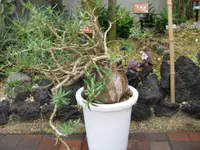
Pachypodium bispinosum is a small succulent shrub with a swollen, bottle-shaped caudex and short, spiny branches. It belongs to the dogbane family and is grown mainly as a collector’s plant. Native to arid regions of South Africa, it is adapted to strong light, high temperatures, and dry conditions. In cultivation it stays compact and produces narrow leaves and pale, tubular flowers during the growing season. Its slow growth, sensitivity to excess moisture, and need for sharp-draining soil can make it more challenging for beginners. With stable warmth, bright light, and careful watering, it is manageable for growers who learn how to care for Pachypodium bispinosum.

Main Plant Requirements

Care Difficulty

Moderate Care

Light Preference

Full Sun

Water Requirements

Low Water

Temperature Preference

Tropical / Frost Sensitive

Hardiness Zone

10–11

Soil Texture

Sandy, Loamy, Rocky

Soil pH

Slightly acidic (6.5–7.0), Neutral (7.0)

Soil Drainage

Well-drained

Fertilization

Minimal (feed rarely)

Get Personalized Care Plan

Scan your plant to receive care tips personalized for your specific plant

Available on iOS and Android

How to Care for the Pachypodium bispinosum

This drought-tolerant caudiciform prefers bright, strong light to build a compact, sturdy form.

  • Provide 6–8 hours of direct sun daily, ideally with morning sun and some protection from harsh midafternoon summer sun in very hot climates.
  • In mild climates it can grow in full sun; in hotter areas, use light afternoon shade or filtered light to prevent stem scorch and leaf burn.
  • In winter, shorter days slow growth; move container plants to the brightest possible spot to prevent stretching and support Pachypodium bispinosum care instructions.

Watering should mimic a desert climate, with deep drinks followed by dry periods.

  • Allow the top 3–5 cm of soil to dry fully before watering; in active growing season this may mean watering every 7–14 days depending on heat and pot size.
  • Use a very fast-draining, gritty mix; water thoroughly until it drains, then discard runoff so the caudex and roots do not sit in saturated soil.
  • Reduce watering sharply in cool months when leaves drop; wrinkling of the caudex signals mild thirst, while yellowing, soft stems, or a mushy base indicate overwatering.

This species prefers warm, dry conditions and is highly sensitive to frost.

  • Aim for 70–85°F (21–29°C) during active growth, with short peaks up to 95°F (35°C) tolerated if soil is dry and ventilation is good.
  • Protect from cold below 50°F (10°C); extended exposure under 45°F (7°C) can damage roots and caudex tissue.
  • Never allow frost; brief drops near 32°F (0°C) may kill young tips, and sustained freezing can be fatal, so move potted plants under cover before cold snaps.

This succulent tolerates a wide humidity range and usually prefers relatively dry air.

  • Aim for 30–50% humidity; avoid sustained conditions above 60% which increase rot risk.
  • Dry indoor air is usually fine; do not add humidity unless air is extremely dry and leaf tips shrivel.
  • Humidity stress appears as soft, yellowing caudex tissue or blackened leaf bases; improve air movement and let the medium dry thoroughly.

Soil must be very fast-draining and highly aerated to protect the caudex from rot.

  • Use a gritty, sandy mix such as 50–60% mineral components (pumice, coarse perlite, lava rock, or coarse sand) with 40–50% lean cactus mix.
  • Target slightly acidic to neutral pH around 6.0–7.0, avoiding heavy lime or strongly alkaline media.
  • Increase aeration by using large, irregular particles (3–8 mm) and avoiding fine peat that compacts when dry.
  • For Pachypodium bispinosum, never use dense, water-retentive garden soil or pure compost, which keeps roots wet too long.

This species is well suited to container growing when stability and drainage are carefully managed.

  • Choose a low, wide pot that supports the swollen caudex and reduces the chance of tipping as stems elongate.
  • Unglazed terracotta is useful because it allows faster evaporation, helping the mix dry fully between waterings.
  • Select a pot only 2–4 cm wider than the caudex to prevent excess wet substrate around the sensitive root zone.

This caudiciform succulent benefits from light feeding during active growth but is sensitive to excess nutrients.

  • Use a balanced liquid fertilizer (around 10-10-10 or 20-20-20) diluted to 25–50% strength for Pachypodium bispinosum.
  • Apply every 4–6 weeks during spring–summer when new growth is visible.
  • Avoid organic compost in pots, as it can hold too much moisture and cause root issues.
  • Stop feeding in fall and winter when the plant is dormant to prevent soft, weak growth.

Pruning needs are minimal and focus mainly on plant health and safe handling of the spiny stems.

  • Best time for light pruning is late winter to early spring, before strong new growth begins.
  • Remove dead, shriveled, or damaged stems with clean, sharp pruners, taking care around the spines of Pachypodium bispinosum.
  • Thin out badly crossing or rubbing branches only if they risk damage or disease entry points.
  • Avoid heavy structural cuts, which can scar the caudex and slow growth for a long period.

This species prefers a tight pot and dislikes frequent disturbance of its thick, water-storing roots.

  • Look for roots circling the drainage holes, pot cracking, or stalled growth as signs it needs a larger container.
  • Plan repotting for late winter to early spring, just before the main growing season starts.
  • Expect to move up a pot size only every 3–5 years if growth is steady and the plant stays healthy.
  • Gently loosen the root ball, use a fast-draining cactus mix, and avoid watering for 3–5 days after repotting to limit root stress.

Propagation is usually done from seed and is considered slow and somewhat specialized for home growers.

  • Sow fresh seeds of Pachypodium bispinosum in late spring to early summer for best germination.
  • Use a sterile, gritty cactus mix kept slightly moist, with bottom warmth around 75–85°F and bright, indirect light.
  • Lightly cover seeds, maintain good air movement, and avoid waterlogging to reduce damping-off, a common seedling disease.
  • Stem cuttings root poorly and are not a standard method, so most plants available commercially come from seed.

This succulent is not frost hardy and needs considered winter care in most temperate climates.

  • Move container plants indoors before temperatures drop below 40°F, providing bright light and good airflow.
  • Keep Pachypodium bispinosum almost dry in winter, watering only enough to prevent complete shriveling of the caudex.
  • Maintain indoor temperatures around 50–65°F during dormancy to reduce stress and root rot risk.
  • In marginal climates outdoors, grow in pots rather than ground to allow easy relocation during cold spells.

Care Tips

Controlled root restriction

Use a slightly undersized, heavy pot and delay repotting until roots clearly circle the drainage holes, as mild root restriction helps maintain a compact caudex and reduces the risk of overly lush, weak growth.

Winter rest management

In late fall, gradually reduce watering and stop fertilizing once leaves drop, keeping the plant cool and dry so the caudex does not rot during its natural dormant period.

Safe handling routine

When moving or repotting, use folded thick paper, tongs, or layered towels to grip the base instead of bare hands, which protects both you and the spines and prevents damage to the growing tips.

Targeted pest inspection

Inspect the junctions between spines and stem and the undersides of leaves every few weeks with a magnifier, since mealybugs and spider mites often hide in these tight spots and are easiest to control when found early.

Gradual light shifts

After bringing the plant indoors or outdoors, increase light levels over 7–14 days by moving it closer to the window or into longer sun exposure stepwise, which prevents caudex and leaf scorching while growing Pachypodium bispinosum.

Common Pests and Diseases

Mealybugs

This pest commonly settles in stem crevices and around the base of spines, sucking sap and weakening the caudex and shoots. Symptoms include cottony white clusters, sticky honeydew, and distorted new growth.

Solution

Isolate the plant, then dab visible insects with cotton swabs soaked in 70% isopropyl alcohol and repeat weekly until no new clusters appear. Increase light and airflow, avoid overfertilizing, and use a systemic insecticide labeled for succulents if infestations persist, following Pachypodium bispinosum care instructions for watering to prevent additional stress.

Red spider mites

These insects thrive in hot, very dry indoor air and can cause fine stippling, dull grayish leaves, and webbing between spines and leaf bases. This pest often appears when the plant is kept in strong heat with very low humidity and poor air movement.

Solution

Shower the plant with a firm stream of lukewarm water to remove mites, protecting the soil from getting soggy, then improve air circulation and avoid placing the plant next to heating vents. If activity continues, apply a miticide or insecticidal soap labeled for spider mites, repeating at the interval stated on the product label to break the life cycle.

Scale insects

These insects attach firmly to stems and the caudex as small brown or gray bumps, sucking sap and weakening the plant over time. Symptoms include sticky honeydew, black sooty mold on nearby surfaces, and patchy yellowing or thinning growth.

Solution

Gently scrape or pry off individual scales with a fingernail or soft tool, then wipe stems with a cloth or cotton pad lightly moistened with diluted alcohol or insecticidal soap. Monitor closely for several weeks and, if new scales appear, use a systemic insecticide suitable for woody succulents to reach hidden individuals under the bark-like surface.

Fungal stem canker

This disease affects wounded or overwatered areas of the caudex or lower stems, leading to sunken, dark, sometimes oozing lesions. Symptoms include localized softening, cracking, and eventual dieback above the infected area if not controlled.

Solution

Cut away affected tissue with a sterile, sharp blade back to firm, healthy tissue, then let the wound dry in bright, indirect light for several days before watering again. Disinfect tools between cuts, discard all infected material, keep the plant in a warm, airy spot, and ensure the soil dries thoroughly between waterings to reduce further fungal activity.

Bacterial soft rot

This disease can quickly turn parts of the caudex or lower stem into soft, foul-smelling, water-soaked tissue, often following mechanical damage or prolonged wetness. Symptoms include rapid collapse of affected areas and a strong unpleasant odor from the rotting tissue.

Solution

Immediately isolate the plant, cut away all affected tissue well into firm healthy material with sterile tools, and allow the wound to dry and callus in a warm, dry, well-ventilated place before any watering. Reduce watering frequency, avoid water sitting around wounds or the neck of the caudex, and discard the plant if rot continues spreading despite removal, as bacterial soft rot is very difficult to stop once advanced.

Interesting Facts

Caudex with seasonal rhythm

This species forms a swollen, tuberous caudex that stores water and gradually enlarges over many years, then sheds most or all of its leaves in winter to reduce water loss while relying on the stored reserves.

Paired defensive spines

Each leaf base develops into a rigid pair of spines, a characteristic reflected in the name bispinosum, which helps protect the plant from herbivores in its native arid habitats of South Africa and the Eastern Cape.

Fragrant tubular flowers

Mature plants produce clusters of pale pink to purple, tubular flowers with a sweet scent, which in habitat attract insect pollinators such as moths and bees early in the growing season.

Botan icon

Did you know?

In habitat, Pachypodium bispinosum often grows partially buried among stones or rocky slopes, with only the upper part of its caudex visible, an adaptation that protects its water-storing tissues from temperature extremes and intense solar radiation.

FAQs about Pachypodium bispinosum

This species generally performs best outdoors in warm, bright, dry climates, where light and air circulation are stronger. In cooler regions, it is often grown in pots and moved indoors for winter protection and controlled conditions.

Grow Healthy Plants with Botan Care

Keep your plants happy and healthy with plant identification, disease detection, and easy care guidance.

Botan plant care app — identify plants on mobile

Explore More Plants